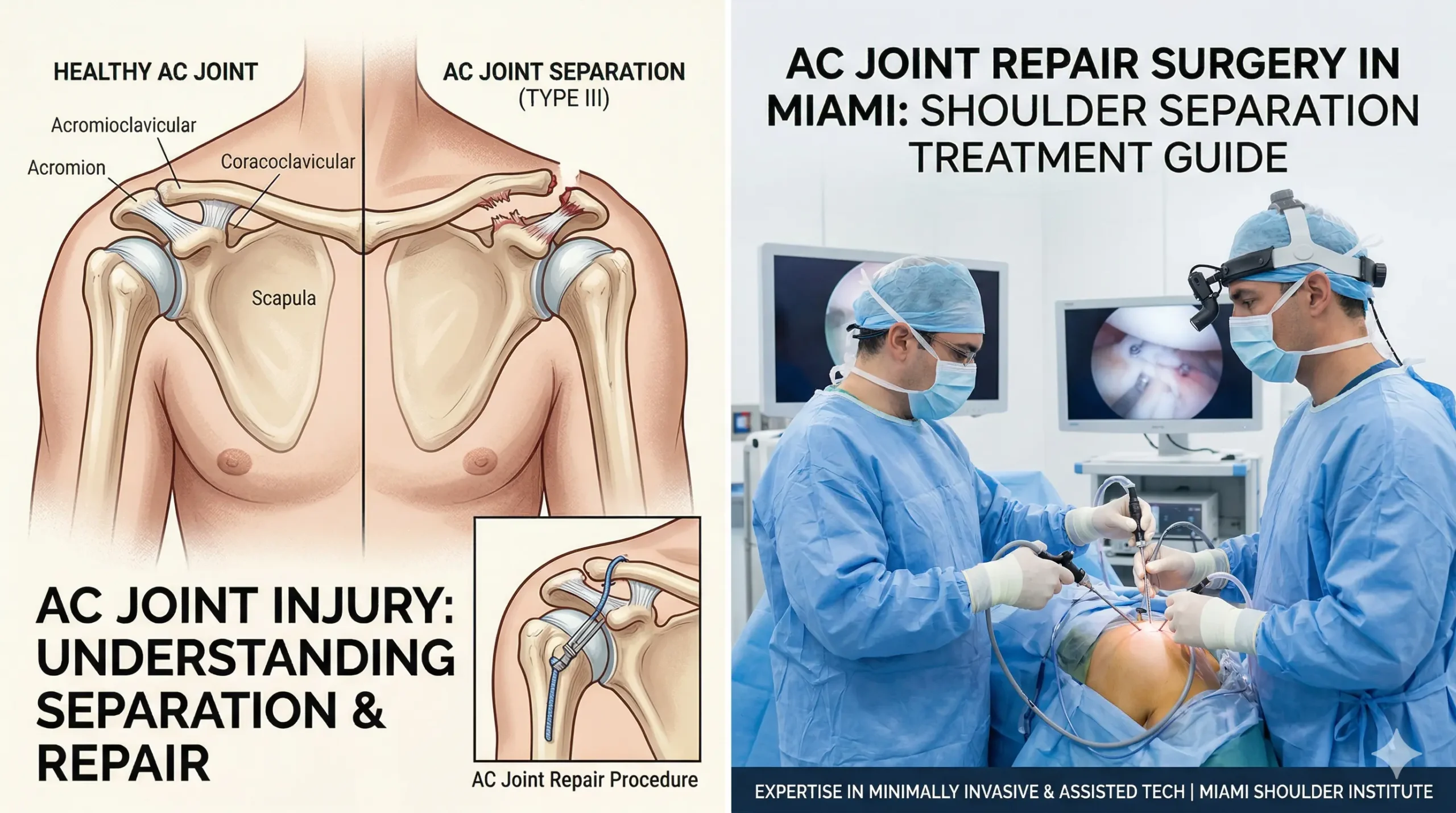
An AC (acromioclavicular) joint injury—commonly known as a shoulder separation—can cause pain, instability, and visible deformity at the top of the shoulder. These injuries are often seen in athletes or after falls and direct impact. While mild cases may heal with rest and therapy, severe injuries may require surgical intervention. AC joint repair surgery Miami patients consider is designed to restore alignment, stability, and shoulder function. At Miami Shoulder Institute, care focuses on precise diagnosis and advanced surgical techniques tailored to each patient.
The AC joint connects the collarbone (clavicle) to the highest point of the shoulder blade (acromion). This joint is stabilised by ligaments that can be stretched or torn during trauma.
A shoulder separation occurs when these ligaments are damaged, leading to:
AC joint injuries commonly result from:
Prompt evaluation helps determine the severity and appropriate shoulder separation surgery Miami patients may require.
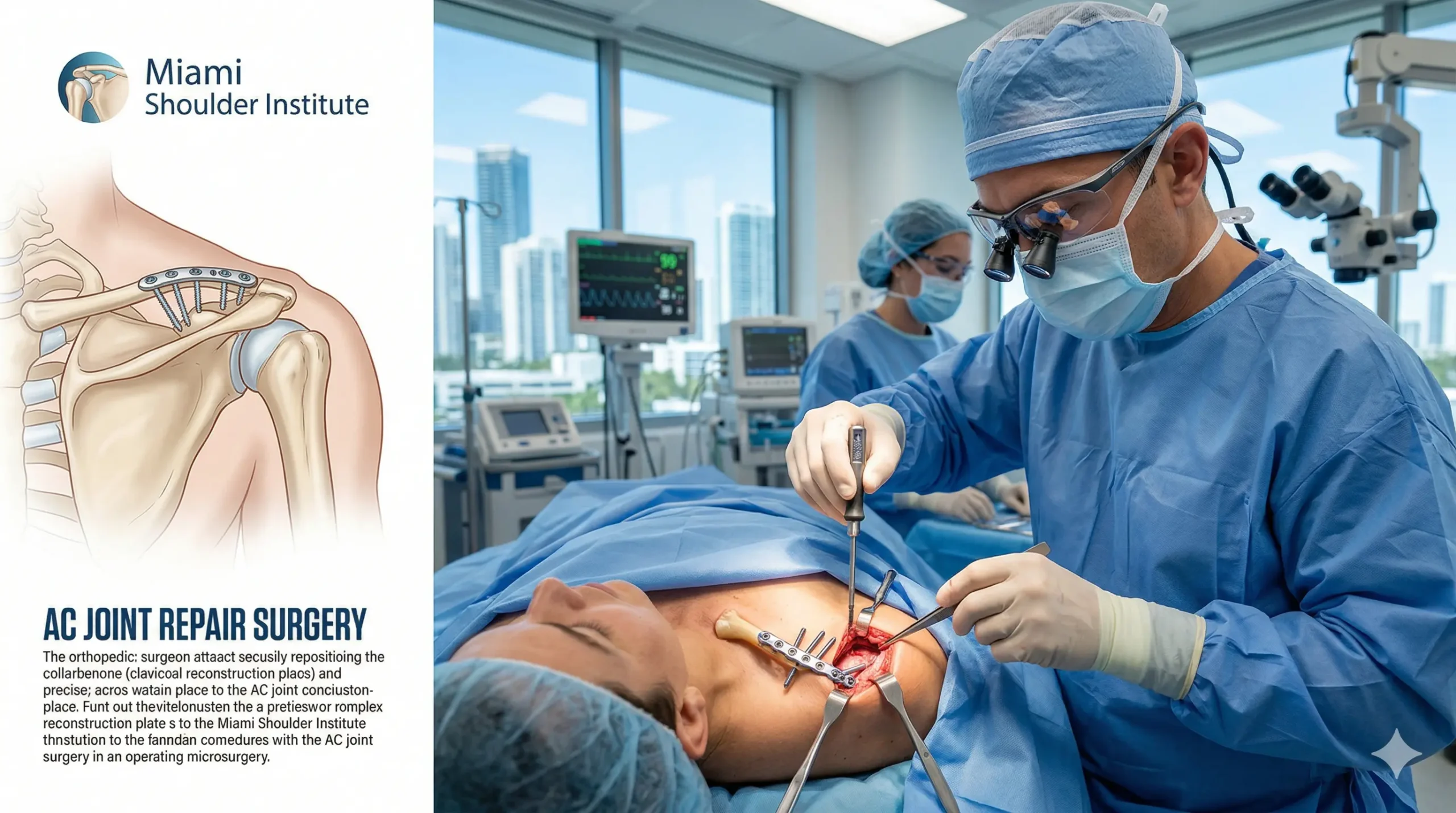
Not all AC joint injuries require surgery. However, AC joint repair surgery Miami may be recommended when:
A detailed assessment by an orthopedic shoulder surgeon Miami patients trust ensures that surgery is recommended only when necessary.
AC joint repair surgery focuses on restoring proper alignment of the joint and stabilising the damaged ligaments. The procedure may involve:
Modern techniques aim to minimise tissue damage and improve long-term outcomes.
With advancements in shoulder surgery Miami FL, many AC joint repairs are performed using minimally invasive or assisted techniques. These approaches allow for:
Miami Shoulder Institute uses modern surgical methods to support safe and effective treatment.
Recovery after AC joint surgery is essential for restoring full shoulder function. Patients typically follow a structured plan that includes:
Rehabilitation plays a key role in achieving long-term stability and preventing re-injury.
With proper surgical care and rehabilitation, many patients regain full shoulder strength and return to their normal activities. Early treatment and consistent recovery planning are important for achieving the best results.
A shoulder separation involves the AC joint, while a dislocation affects the main shoulder joint.
No. Mild injuries often heal with non-surgical treatment. Surgery is recommended for severe ligament damage.
Recovery typically takes several weeks to months, depending on rehabilitation progress.
Yes. Many patients return to sports after completing rehabilitation and regaining strength.
If pain, swelling, or instability persists after an injury, evaluation by a specialist is recommended.
Miami Shoulder Institute is dedicated to delivering world-class care with compassion, expertise, and integrity. Your mobility, our mission.