

 EN EN
EN EN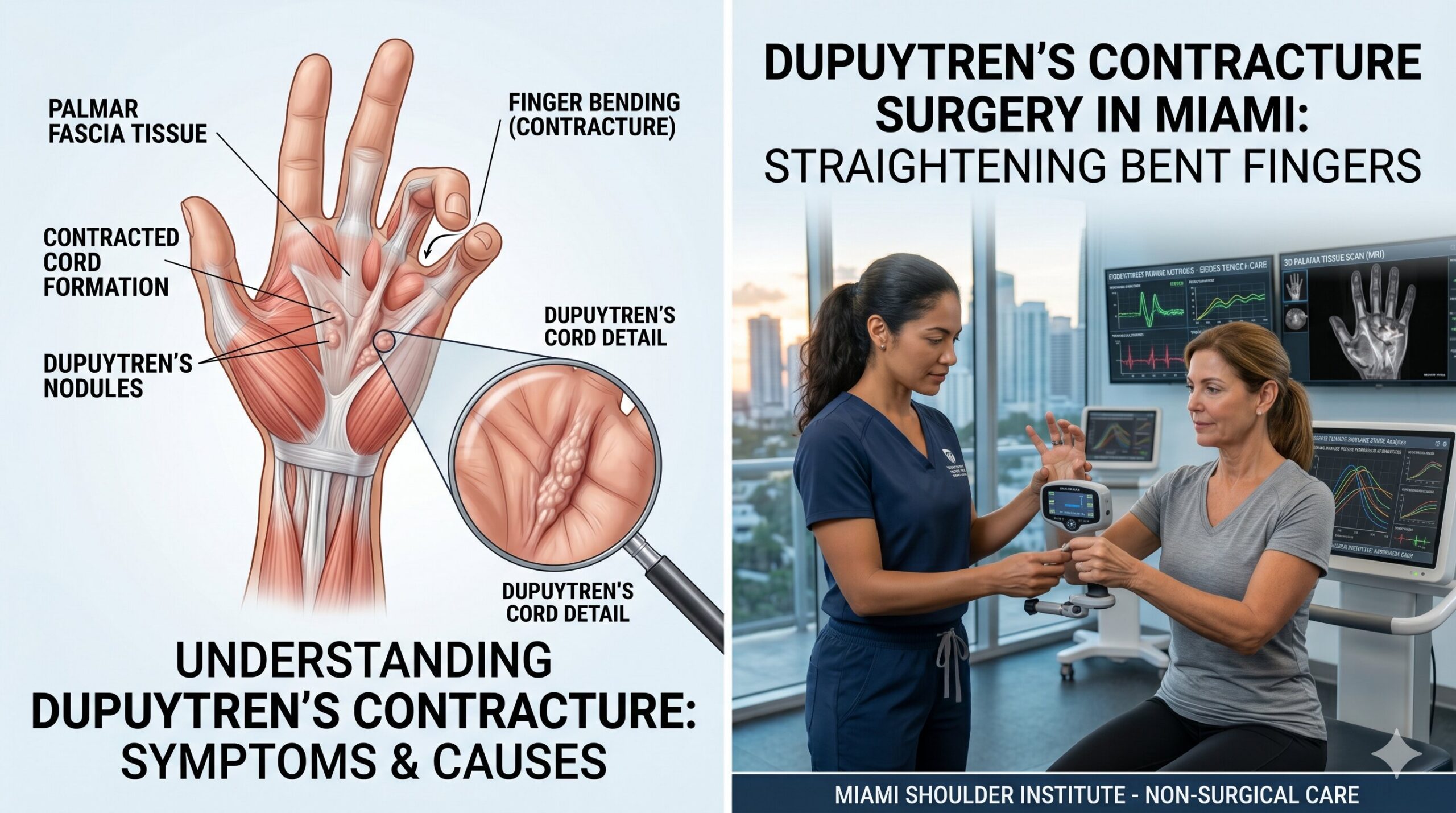
Dupuytren’s contracture is a progressive hand condition that causes one or more fingers to bend toward the palm, making it difficult to fully straighten them. Over time, this can interfere with everyday tasks like gripping, shaking hands, or placing the hand flat on a surface. When the condition advances and limits function, Dupuytren’s contracture surgery Miami patients consider may be necessary to restore movement. At Miami Shoulder Institute, care focuses on precise diagnosis and advanced surgical treatment for hand conditions.
Dupuytren’s contracture occurs when the connective tissue beneath the skin of the palm thickens and tightens. This leads to the formation of cords that gradually pull the fingers inward.
The condition typically affects the ring and little fingers and may progress slowly over time.
You may notice:
Early finger deformity treatment Miami patients seek can help manage symptoms before they worsen.
The exact cause of Dupuytren’s contracture is not always clear, but several factors may increase risk:
If symptoms progress, evaluation for hand surgery Miami may be recommended.

Not all cases require surgery. However, dupuytrens contracture surgery Miami may be considered when:
A detailed assessment helps determine the most appropriate treatment approach.
Advanced hand plastic surgery techniques are often used to release tight cords and restore finger alignment. The goal is to improve hand function while preserving surrounding structures.
Surgical treatment may involve:
Modern techniques aim to improve precision and reduce recovery time.
Recovery after Dupuytren’s surgery is essential for maintaining results. Patients typically receive:
Rehabilitation helps prevent stiffness and supports long-term improvement.
Many patients experience improved finger movement and better hand function after surgery. While recurrence can occur, early treatment and proper care improve long-term outcomes.
It is caused by thickening of the tissue beneath the skin of the palm, often influenced by genetic and age-related factors.
No. Surgery is recommended when finger bending significantly affects hand function.
Recovery varies but may take several weeks to months with proper rehabilitation.
Yes, recurrence is possible, but proper care can help manage the condition effectively.
If you notice progressive finger bending or difficulty straightening your fingers, evaluation is recommended.