

 ES ES
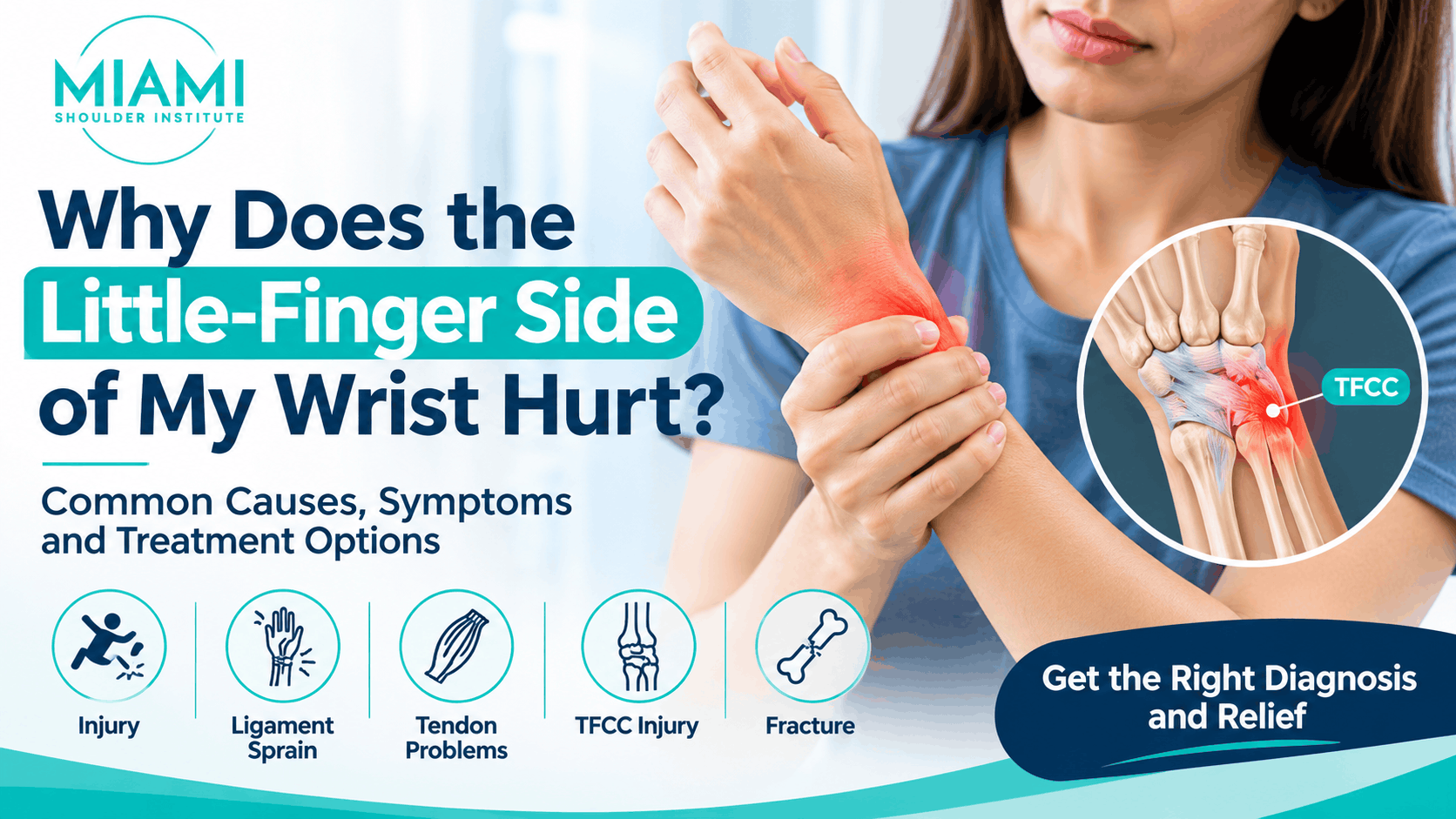
Pain on the little-finger side of the wrist is called ulnar-sided wrist pain. It can develop after a fall, a twisting injury, repetitive wrist movements, or gradual changes in the wrist’s tissues. Common causes include a triangular fibrocartilage complex (TFCC) injury, wrist ligament sprain, tendon irritation, and certain fractures or joint conditions.
The cause is not always obvious from the location of the pain alone. If discomfort persists, worsens with gripping or forearm rotation, or is accompanied by clicking, weakness, or instability, a clinical assessment can help identify the underlying problem and guide treatment.
The ulnar side is the side of the wrist closest to the little finger. It contains several structures that work together to support movement, grip, and forearm rotation.
These include:
Because several structures occupy this relatively small area, different conditions can produce similar symptoms
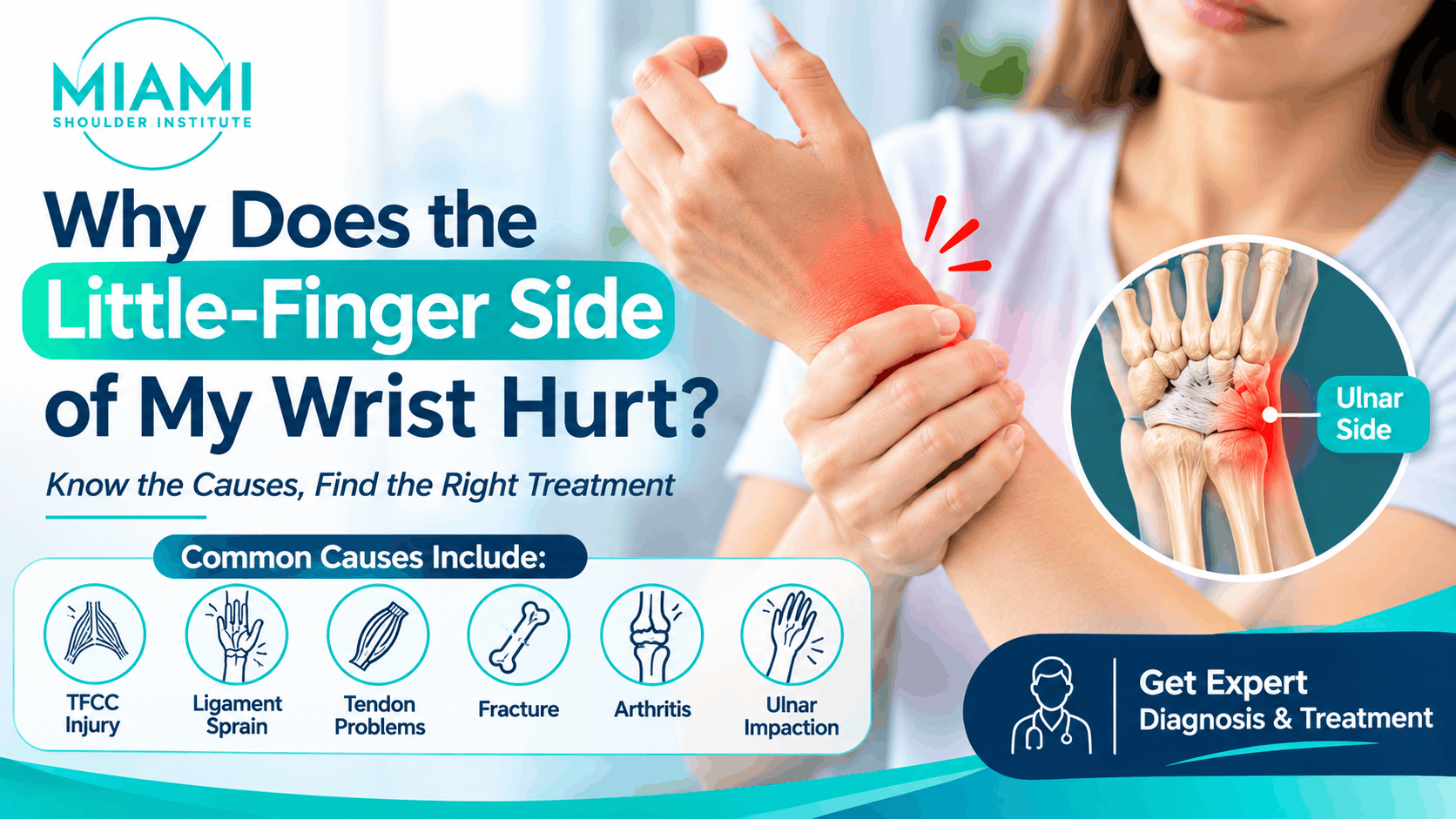
1. TFCC Injury
The triangular fibrocartilage complex helps stabilise the ulnar side of the wrist, particularly during forearm rotation and activities that place pressure through the hand.
A TFCC injury may occur after a fall onto an outstretched hand, a forceful twisting movement, or repeated wrist loading. Degenerative changes can also affect the TFCC over time.
Possible symptoms include:
Not every TFCC abnormality causes symptoms, so examination findings must be considered alongside imaging.
2. Wrist Ligament Injury
Wrist ligaments connect bones and help keep the joints stable. A sudden twist, fall, or forceful movement may stretch or tear a ligament.
Symptoms can include pain, tenderness, swelling, reduced movement, and sometimes a sense that the wrist is unstable. The exact symptoms depend on which ligament is affected and how severe the injury is.
A ligament injury may occur alongside a TFCC injury or another wrist condition.
3. Extensor Carpi Ulnaris (ECU) Tendon Problems
The ECU tendon runs along the ulnar side of the wrist and helps extend and stabilise it.
Tendon irritation may develop from repetitive loading or an acute injury. In some cases, the tendon can move abnormally from its normal position, causing snapping or clicking.
ECU-related symptoms may include:
A dynamic examination or ultrasound may help assess tendon movement when this condition is suspected.
4. Wrist Fracture
A fracture involving the ulna or one of the small wrist bones can cause pain on the little-finger side of the wrist.
Fractures may follow a fall, direct impact, or other significant trauma. Symptoms can include swelling, bruising, tenderness, and difficulty moving or using the hand.
A fracture cannot be reliably ruled out based on the absence of visible deformity. X-rays or other imaging may be needed after an injury.
5. Ulnar Impaction
Ulnar impaction occurs when the ulna places excessive pressure on structures on the ulnar side of the wrist. This may contribute to irritation or damage involving cartilage and the TFCC.
Symptoms can include pain during gripping, lifting, or wrist movement. The condition may be associated with anatomical differences in the relative lengths of the forearm bones or changes following an injury.
6. Arthritis or Joint Irritation
Arthritis affecting the wrist or distal radioulnar joint can cause pain, stiffness, and reduced movement.
Symptoms may develop gradually and become more noticeable during activity or after periods of rest. Imaging can help assess joint changes when arthritis is suspected.
Also Read More – Why Does My Wrist Hurt When I Put Weight on My Hand?
The symptoms vary depending on the cause, but common features include:
| Symptom | What it may feel like |
| Pain with gripping | Discomfort when holding a cup, carrying bags, or opening a jar |
| Pain with rotation | Symptoms when turning a key or rotating the forearm |
| Clicking or snapping | A sound or sensation during wrist movement, sometimes painful |
| Weak grip | Difficulty holding objects firmly |
| Tenderness | Pain when pressing around the little-finger side of the wrist |
| Swelling | Puffiness around the wrist after injury or irritation |
| Instability | A feeling that the wrist shifts, gives way, or lacks support |
These symptoms can overlap across different conditions. Their presence does not confirm a specific diagnosis.
Gripping and twisting place forces on several structures on the ulnar side of the wrist.
When you grip an object, the wrist must stabilise while the fingers generate force. Turning the forearm also requires coordinated movement between the radius, ulna, and surrounding soft tissues.
If a ligament, tendon, joint, or the TFCC is injured, these movements may increase pressure or cause the affected structure to move in a painful way.
For example, opening a jar combines gripping with forearm rotation. Turning a door handle requires wrist stability and coordinated rotation. These actions may aggravate an existing injury, but they do not identify which structure is responsible.
Diagnosis usually begins with a medical history and physical examination.
Medical History
A clinician may ask:
These details help narrow down possible causes.
Physical Examination
The wrist may be assessed for tenderness, swelling, range of motion, grip strength, and joint stability.
The clinician may examine the TFCC region, tendons, and distal radioulnar joint. Specific tests may help identify a suspected condition, but no single examination manoeuvre is reliable for every cause of ulnar-sided wrist pain.
Imaging
Imaging may be recommended depending on the injury and examination findings.
Imaging findings should be interpreted alongside symptoms and examination results.
Treatment depends on the underlying cause, severity, stability of the wrist, and the person’s functional needs.
Activity Modification
Temporarily reducing painful activities can help limit repeated stress on the wrist. This may involve modifying heavy lifting, forceful gripping, repetitive twisting, or exercises that place weight through the hand.
Wrist Brace or Splint
A brace or splint may help protect the wrist and reduce painful movement. The type and duration of support depend on the diagnosis and should be guided by a healthcare professional.
Medication
Pain-relieving or anti-inflammatory medication may be appropriate for some people. Medication choice depends on medical history, other medicines, and possible side effects, so individual advice is important.
Rehabilitación
A tailored rehabilitation programme may help restore movement, strength, and control. Depending on the diagnosis, it may include gentle mobility exercises, progressive strengthening, and functional training.
Exercises should be adjusted if they cause significant pain or aggravate symptoms.
Surgery
Surgery may be considered for selected injuries that do not improve with appropriate non-surgical care or involve significant structural damage or instability.
The procedure depends on the cause. A TFCC tear, tendon instability, fracture, and ligament injury may require different approaches. Surgery is not necessary for every case of ulnar-sided wrist pain.
Read More – Wrist Pain After Push-Ups: Injury, Technique or Overuse?
Arrange an assessment if:
Seek urgent medical attention after a significant injury if there is severe pain, marked swelling, visible deformity, numbness, unusual colour changes, or a cold hand.
Little-finger-side wrist pain can arise from several different structures, so identifying the cause is an important step towards appropriate care.
Miami Shoulder Institute offers an orthopaedic-focused approach to evaluating wrist and hand concerns. Assessment may include reviewing the injury history, examining wrist movement and stability, and considering imaging when clinically appropriate.
Treatment recommendations depend on the diagnosis and individual needs. If symptoms are persistent or affect everyday activities, a specialist evaluation can help clarify the cause and discuss suitable next steps.
Pain on the little-finger side of the wrist can result from a TFCC injury, wrist ligament injury, tendon problem, fracture, or joint condition. Symptoms such as pain during gripping, twisting, clicking, and reduced strength can help guide an evaluation, but they do not establish the diagnosis on their own.
If wrist pain persists or interferes with daily activities, a clinical assessment can help identify the underlying cause and determine whether activity modification, support, rehabilitation, or another treatment is appropriate.
1. What is pain on the little-finger side of the wrist called?
Pain on the little-finger side of the wrist is called ulnar-sided wrist pain. It can arise from the TFCC, ligaments, tendons, bones, or joints.
2. Can a TFCC injury cause pain on the little-finger side of the wrist?
Yes. The TFCC is located on the ulnar side of the wrist and helps stabilise the joint. An injury may cause pain, clicking, weak grip, or discomfort during forearm rotation.
3. Why does the little-finger side of my wrist hurt when I grip?
Gripping places force through the wrist and requires the surrounding structures to stabilise the joint. A TFCC injury, tendon problem, ligament injury, or other condition may cause pain during gripping.
4. Can wrist ligament injuries cause clicking?
Yes. Some ligament injuries can affect wrist stability and cause painful clicking or clunking. However, clicking can also arise from tendon movement or other joint mechanics.
5. Does ulnar-sided wrist pain always mean a TFCC tear?
No. Other causes include ECU tendon problems, fractures, arthritis, ulnar impaction, and injuries to other wrist ligaments. A clinical assessment is needed to distinguish between them.
6. What tests are used to diagnose ulnar-sided wrist pain?
Diagnosis may involve a physical examination and imaging such as X-rays, MRI, ultrasound, or CT. The choice depends on the suspected cause and the clinical findings.
7. Can little-finger-side wrist pain improve without surgery?
Yes. Many conditions are initially managed with activity modification, wrist support, medication when appropriate, and rehabilitation. Surgery may be considered when symptoms persist or significant structural damage or instability is present.
8. When should I seek medical care for wrist pain?
Seek assessment if pain persists, follows an injury, limits movement, reduces grip strength, or occurs with painful clicking or instability. Severe pain, deformity, numbness, or a cold or discoloured hand after injury requires urgent attention