

 ES ES
ES ES
Medically Reviewed by Dr. Alejandro Badia, MD, FACS – Hand & Upper Extremity Orthopedic Surgeon
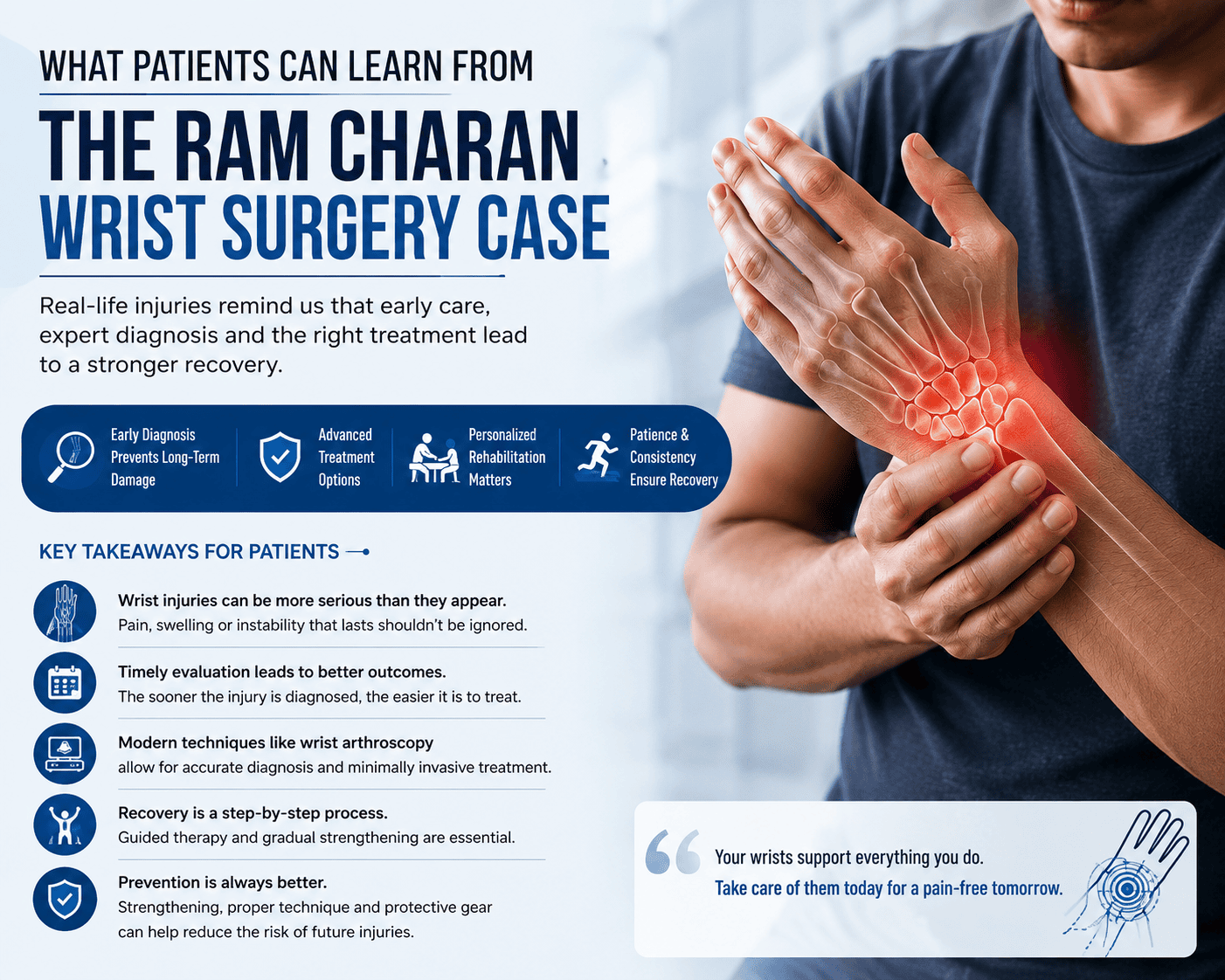
When a well-known athlete or celebrity undergoes surgery, it often raises awareness about injuries that many people overlook. Recent reports of Ram Charan’s wrist surgery have prompted questions about how wrist injuries occur, why some require surgery, and what patients should know if they experience persistent wrist pain.
As a hand and wrist surgeon, I frequently see patients who initially believed their injury was “just a sprain.” Unfortunately, by the time they seek specialist care, the condition has often progressed, making treatment more complex and recovery longer.
The important takeaway isn’t the celebrity news itself—it’s the reminder that persistent wrist pain deserves proper medical evaluation. Whether you’re an athlete, a fitness enthusiast, an office professional, or someone recovering from a fall, understanding the signs of a wrist injury can help you make informed decisions about your health.
This guide explains how the wrist works, common sports-related injuries, symptoms that shouldn’t be ignored, diagnostic methods, treatment options, recovery expectations, and ways to protect your wrists from future injuries.
Although the wrist appears to be a small joint, it is one of the most complex structures in the human body.
It consists of:
These components work together to provide the flexibility and strength needed for daily activities such as writing, typing, lifting objects, playing sports, and performing precise hand movements.
Because of this complexity, damage to even one ligament or tendon can significantly affect wrist function.
Wrist injuries are among the most frequent orthopedic injuries because the wrist naturally absorbs force during many everyday activities.
Common causes include:
Even seemingly minor injuries can involve significant damage to ligaments, cartilage, tendons, or bones.
Ligaments connect bones and stabilize the wrist.
A ligament injury may occur after:
Symptoms often include:
If left untreated, ligament injuries may lead to chronic instability and arthritis.
The Triangular Fibrocartilage Complex (TFCC) acts as a shock absorber on the little-finger side of the wrist.
TFCC injuries commonly occur in:
Patients may experience:
Not every fracture causes obvious deformity.
Small fractures may initially appear similar to a sprain.
Common symptoms include:
Prompt diagnosis is important because untreated fractures may heal improperly and affect long-term wrist function.
Tendons connect muscles to bones and allow smooth wrist and finger movement.
Overuse, trauma, or sudden force may cause:
Symptoms include:
Cartilage cushions the wrist joint and allows smooth movement.
Damage may result from:
Without treatment, cartilage injuries may contribute to early arthritis.
Many wrist injuries improve with rest, but persistent symptoms should never be ignored.
Seek evaluation if you experience:
Early evaluation can often prevent long-term complications.
One of the biggest mistakes patients make is delaying specialist consultation.
Many people hope symptoms will resolve naturally, but untreated injuries may worsen over time.
Early diagnosis offers several benefits:
The sooner the correct diagnosis is made, the better the opportunity to preserve wrist function.
Every patient begins with a comprehensive clinical evaluation.
Depending on the injury, additional investigations may include:
Physical Examination
Assessment of:
X-rays
Useful for identifying:
MRI
MRI provides detailed visualization of:
CT Scan
CT imaging may be recommended for complex fractures or joint injuries.
Wrist Arthroscopy
In some cases, wrist arthroscopy serves both diagnostic and therapeutic purposes.
Using a small camera inserted through tiny incisions, the surgeon can directly visualize the joint and treat certain conditions during the same procedure.
Treatment depends on the diagnosis, severity of injury, activity level, and patient goals.
Conservative Treatment
Many wrist injuries can be successfully managed without surgery.
Conservative options include:
Patients with mild injuries often recover well with appropriate rehabilitation.
Surgical Treatment
When conservative care is insufficient or the injury is unstable, surgery may be recommended.
Common procedures include:
Modern techniques often allow treatment through minimally invasive approaches, reducing tissue damage and supporting faster recovery.
Recovery does not end after surgery.
A structured rehabilitation program is essential for restoring:
Recovery timelines vary depending on the injury and treatment but typically involve:
Phase 1: Protection
Phase 2: Early Motion
Phase 3: Strengthening
Phase 4: Return to Activity
Patients who follow rehabilitation protocols closely often achieve the best outcomes.
While not every injury can be avoided, several preventive measures can reduce risk.
Warm Up Before Activity
Prepare muscles and joints before sports or exercise.
Strengthen the Forearm
Strong forearm muscles help stabilize the wrist.
Use Proper Technique
Poor technique in sports and weightlifting increases injury risk.
Wear Protective Equipment
Wrist guards may be appropriate for:
Avoid Overuse
Take breaks during repetitive activities and maintain ergonomic workstations.
Don’t Ignore Pain
Persistent discomfort is often an early warning sign. Seeking medical advice early may prevent a minor injury from becoming a major problem.
Can wrist injuries heal without surgery?
Many mild sprains and tendon injuries improve with rest, splinting, physiotherapy, and activity modification. However, unstable ligament tears, certain fractures, or persistent symptoms may require surgical treatment.
How do I know if my wrist injury is serious?
Pain lasting more than a few days, swelling, weakness, instability, clicking, numbness, or difficulty using your hand should be evaluated by a specialist.
Is wrist arthroscopy a major surgery?
No. Wrist arthroscopy is a minimally invasive procedure performed through very small incisions, allowing surgeons to diagnose and treat many wrist conditions with less disruption to surrounding tissues.
How long does recovery take?
Recovery depends on the specific injury and treatment. Minor injuries may improve within a few weeks, while surgical cases may require several months of rehabilitation.
Can I return to sports after wrist surgery?
Many patients successfully return to sports after completing rehabilitation and receiving clearance from their surgeon. Recovery timelines vary based on the injury and individual healing.
Dr. Alejandro Badia, MD, FACS is an internationally recognized Hand and Upper Extremity Orthopedic Surgeon with decades of experience treating conditions affecting the hand, wrist, elbow, and shoulder.
He specializes in:
Dr. Badia is committed to combining advanced surgical techniques with patient education, helping individuals make informed decisions and achieve the best possible outcomes.
The recent reports surrounding Ram Charan’s wrist surgery remind us of an important lesson: wrist injuries should never be underestimated. While the details of his condition have not been publicly disclosed, the situation underscores how essential early diagnosis and expert care can be for anyone experiencing persistent wrist pain.
Whether your injury resulted from sports, exercise, a fall, or everyday activities, timely evaluation can help identify the underlying problem and guide the most appropriate treatment. Advances in modern hand and wrist surgery—including minimally invasive techniques and personalized rehabilitation—have significantly improved recovery and long-term outcomes for many patients.
If you’re dealing with ongoing wrist pain, weakness, or limited movement, don’t wait for symptoms to worsen. Early assessment by a qualified hand and wrist specialist can make all the difference in restoring function and helping you return to the activities you enjoy.
Schedule a Consultation
If you’re experiencing persistent wrist pain or have recently suffered a wrist injury, schedule a consultation with Dr. Alejandro Badia to receive a comprehensive evaluation and personalized treatment plan.
Learn more about wrist injuries, explore available treatment options, or book an appointment today to take the first step toward recovery.