

 ES ES
ES ES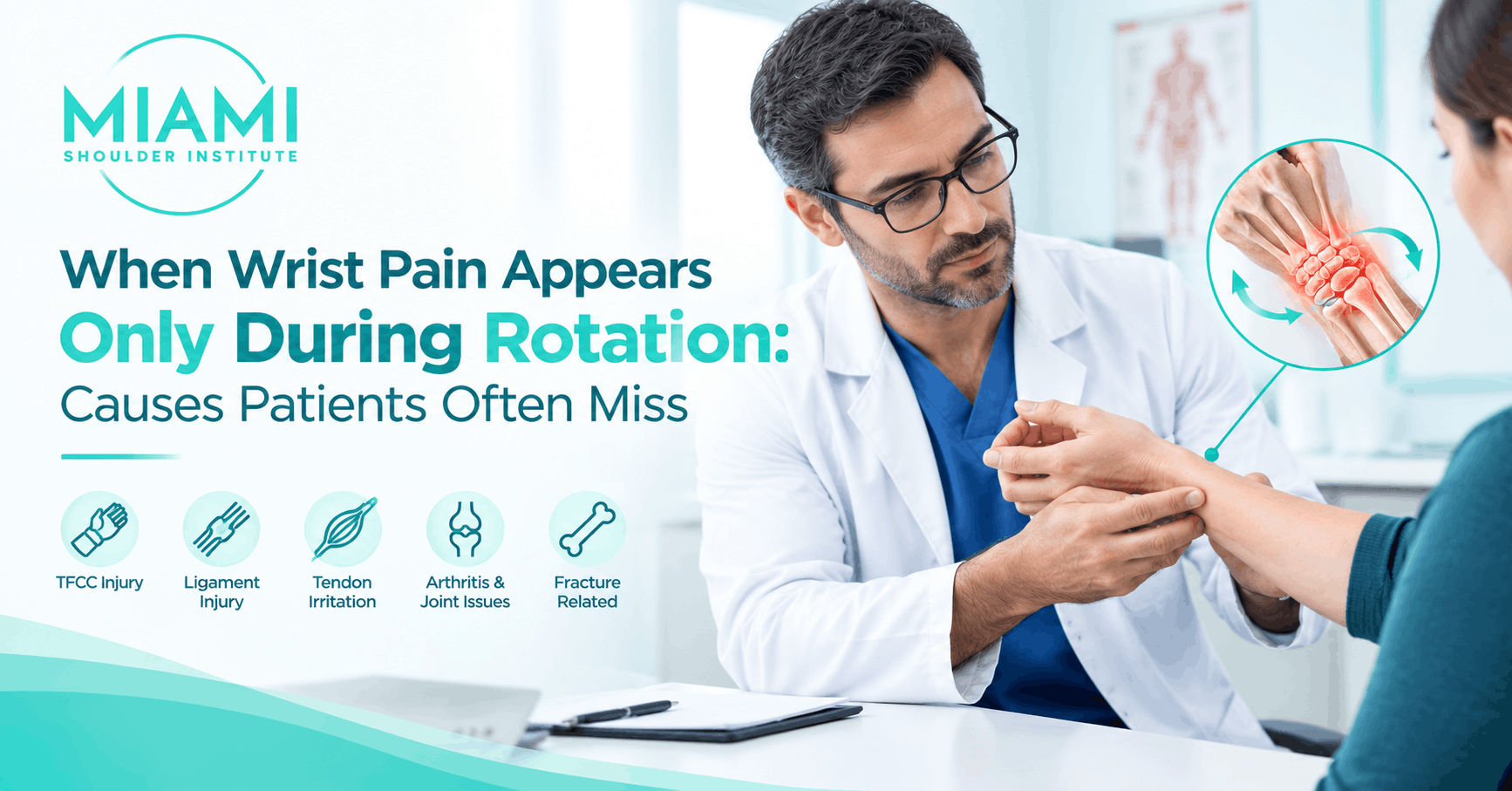
Wrist pain when rotating the hand or forearm can have several causes, ranging from a minor soft-tissue problem to a ligament injury, tendon condition, fracture-related problem or instability around the wrist and distal radioulnar joint. The movement of turning a key, opening a jar, using a screwdriver or rotating the palm up and down places specific demands on the wrist and forearm.
Common causes of rotational wrist pain include TFCC injury, wrist ligament injuries, tendon irritation, arthritis, previous fractures, joint instability and overuse. Pain may occur when turning the palm upward or downward, rotating the wrist from side to side, gripping while rotating, or combining rotation with weight-bearing.
A TFCC injury is an important potential cause, particularly when pain is located on the little-finger side of the wrist. The triangular fibrocartilage complex helps stabilise the joint between the radius and ulna and supports the ulnar side of the wrist. TFCC problems can cause pain, weakness, clicking or popping during forearm rotation.
However, not every case of forearm rotation pain is caused by the TFCC. The symptoms can overlap with other wrist conditions, which is why a clinical examination is important.
If rotational wrist pain persists, repeatedly returns, follows an injury or is accompanied by clicking, weakness or instability, evaluation by a wrist specialist can help determine the underlying cause.
The wrist does not work in isolation.
When you rotate your forearm, the radius moves relative to the ulna, while the wrist and hand coordinate with this movement. Several ligaments, tendons and joints contribute to smooth and controlled rotation.
This is why seemingly simple activities can expose wrist problems.
For example, you may notice pain when:
If the wrist is comfortable at rest but painful during rotation, the movement itself can provide an important clue about which structures may be involved.
However, the movement cannot identify the exact diagnosis by itself.
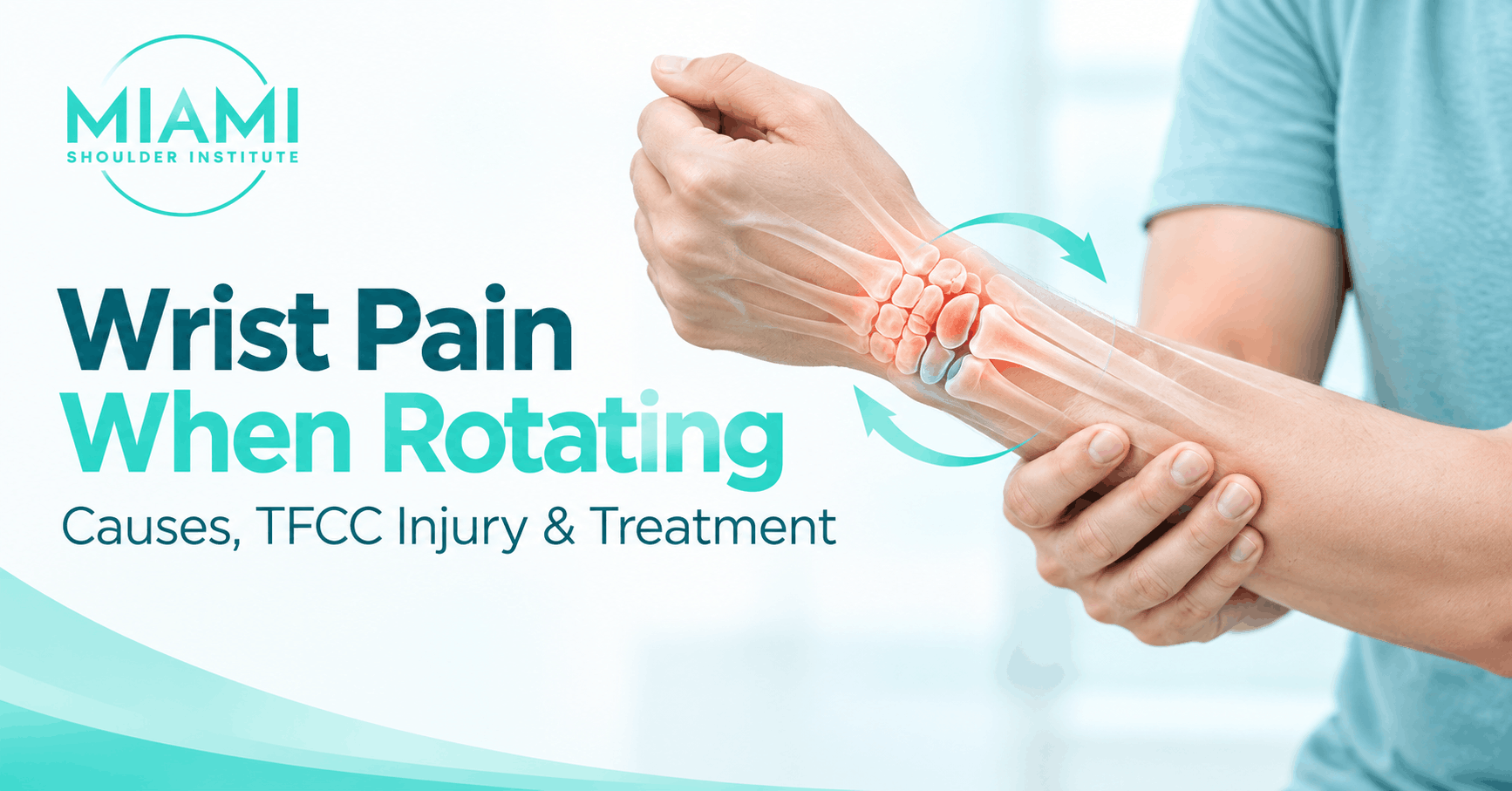
It is useful to distinguish between pain that feels primarily located at the wrist and pain that travels through the forearm.
Wrist pain when rotating usually refers to discomfort perceived around the wrist joint or the area where the hand meets the forearm.
Forearm rotation pain may be felt closer to the forearm and can occur when turning the palm up or down.
These symptoms can overlap because the wrist and forearm function as a connected mechanical system.
The distal radioulnar joint, or DRUJ, is particularly important during forearm rotation. Problems affecting this region can produce pain when the forearm moves between pronation and supination.
A TFCC injury is one of the important causes of rotational wrist pain.
The triangular fibrocartilage complex is a group of tissues that helps support the ulnar side of the wrist and stabilise the relationship between the radius and ulna.
TFCC injuries can result from:
Symptoms can include:
The relationship between TFCC problems and rotation is important because the TFCC contributes to stability during movement of the forearm.
Specialist guidance notes that clicking or popping may occur while turning the forearm, and that TFCC problems can cause pain, weakness and limited motion.
Importantly, not every TFCC tear seen on an MRI causes symptoms. Some people can have imaging findings without pain or functional problems. The imaging result therefore needs to be interpreted alongside the patient’s symptoms and examination.
Also Read More – 8 Possible Reasons Your Shoulder Pops or Cracks During Workouts
The distal radioulnar joint is located between the lower ends of the radius and ulna near the wrist.
It plays an important role in forearm rotation.
If the joint becomes unstable following trauma or ligament/TFCC damage, rotation can become painful or feel abnormal.
Some people describe:
DRUJ stability is often considered when evaluating ulnar-sided wrist symptoms.
A specialist may assess stability with specific physical examination manoeuvres and compare the affected wrist with the opposite side.
Ligaments connect bones and help maintain wrist stability.
An injury to one of the wrist ligaments may cause pain during movement, particularly when the wrist is loaded or rotated.
Some ligament injuries are relatively mild.
Others can affect the relationship between the small carpal bones and lead to instability.
Symptoms may include:
Intercarpal ligament injuries can be difficult to diagnose because symptoms and physical examination findings are not always specific. Imaging and, in selected situations, wrist arthroscopy may be used to clarify the diagnosis.
Tendons transfer force from muscles to bones.
Several tendons cross the wrist and contribute to wrist and hand movement.
Repetitive rotation, gripping or lifting can overload these tissues.
Tendon-related pain may be more noticeable during:
Unlike some ligament or TFCC injuries, tendon problems may produce more localised pain along the tendon.
A physical examination can help distinguish tendon pain from joint or ligament-related symptoms.
Arthritis can affect the wrist and cause pain, stiffness and reduced movement.
When joint surfaces become damaged or inflamed, rotation may become uncomfortable.
Symptoms can include:
Wrist arthritis may develop gradually or occur following a previous injury.
If rotational pain is accompanied by progressive stiffness rather than an isolated acute injury, joint-related causes may need to be considered.
A previous fracture can sometimes contribute to long-term wrist or forearm symptoms.
This is particularly relevant when the injury involved the distal radius or structures important for the relationship between the radius and ulna.
Even after a fracture has healed, changes in alignment or joint mechanics may influence movement.
Patients may notice:
Persistent symptoms after fracture healing should be assessed rather than assumed to be a normal part of recovery.
The small bones of the wrist can also be injured during falls or other trauma.
Some carpal injuries may initially resemble a simple sprain.
Persistent pain after an injury, especially when accompanied by reduced function, should be evaluated.
Certain fractures may not be obvious on initial imaging, depending on the injury and timing of the evaluation.
The clinical history and examination therefore remain important even when early X-rays do not fully explain persistent symptoms.
Not every rotational wrist problem results from a single traumatic event.
Repetitive movements can place repeated loads on the wrist.
This may happen with:
Pain may initially occur only after prolonged activity.
If the activity continues without modification, symptoms may become more frequent.
Identifying the activity that triggers the pain can help a clinician understand the mechanical demands being placed on the wrist.
Some nerve conditions can produce pain, tingling, numbness or weakness around the hand and wrist.
Nerve symptoms often differ from mechanical joint pain.
You may notice:
If rotational movement consistently triggers mechanical wrist pain without sensory symptoms, a joint, ligament or tendon problem may be more likely, but the distinction requires clinical assessment.
TFCC-related symptoms often occur on the little-finger side of the wrist.
A person may experience pain during:
Clicking or popping during rotation can also occur.
However, these symptoms are not exclusive to TFCC problems.
Other structures around the ulnar side of the wrist can produce similar symptoms, which is why diagnosing a TFCC injury based solely on symptom location is not reliable.
Read More – Shoulder Surgery in Miami: Cost, Insurance, and What to Expect
Turning the palm upward or downward involves forearm rotation.
These movements are called supination and pronation.
The radius and ulna must coordinate during these movements, while surrounding ligaments and soft tissues help maintain stability.
Pain during this motion can therefore be associated with:
The location and quality of the pain can provide clues.
For example, pain on the little-finger side with clicking may raise concern for an ulnar-sided wrist problem, while more diffuse forearm pain may have a different origin.
Combining rotation with gripping increases the mechanical demand on the wrist.
This is why some patients notice pain when:
A TFCC injury may produce pain during rotation and gripping, while tendon conditions can also become symptomatic when the muscles are loaded.
If the pain occurs repeatedly with the same activity, reducing the aggravating load and seeking an evaluation can help prevent the problem from being repeatedly irritated.
A wrist specialist may begin by asking detailed questions about:
Physical Examination
The examination may assess:
Special examination techniques may be used when a TFCC or ligament injury is suspected.
Because ulnar-sided wrist pain can have several possible causes, clinical examination is particularly important.
Not every patient with rotational wrist pain needs every imaging test.
The appropriate test depends on the suspected cause.
X-Ray
X-rays can evaluate:
MRI
MRI can provide information about soft tissues, including:
However, an MRI finding should be interpreted in context. For example, TFCC tears can sometimes be present in people without pain or functional symptoms.
CT
CT can provide detailed information about bone anatomy and may be useful for certain complex fractures or alignment problems.
Wrist Arthroscopy
Wrist arthroscopy uses a small camera inserted into the joint through a small portal.
It can help directly evaluate internal wrist structures and, in selected cases, allow treatment during the same procedure.
For some intercarpal ligament injuries, specialist guidance identifies wrist arthroscopy as an important diagnostic tool when clinical assessment and imaging do not provide a complete answer.
Yes.
Many causes of rotational wrist pain can initially be managed without surgery, depending on the diagnosis.
Treatment may include:
For TFCC problems specifically, non-operative management is commonly considered initially when there is not gross instability. Treatment may include immobilisation and activity modification, with surgery considered for selected persistent or unstable injuries.
The appropriate treatment should be based on the specific injury rather than the amount of pain alone.
Surgery is not automatically required simply because rotational wrist pain has lasted for a certain amount of time.
It may be considered when there is an identifiable structural problem that has not responded appropriately to conservative treatment or when instability or another significant problem requires surgical correction.
Potential situations include:
For TFCC injuries, treatment decisions can depend on the location and type of tear as well as wrist stability.
Activity Modification
The first step may be reducing or temporarily modifying activities that consistently trigger symptoms.
This could include limiting:
The goal is not necessarily complete rest but reducing excessive stress on the affected structure.
Splinting
A wrist brace or splint may help limit painful movement in selected conditions.
The appropriate duration depends on the diagnosis.
Rehabilitation
Once symptoms are controlled and the injured tissues are ready, rehabilitation may focus on:
Rehabilitation should be adjusted according to the condition and recovery stage.
Medication
Pain-relieving or anti-inflammatory medication may be considered when appropriate for the individual.
Patients should discuss medication options with a healthcare professional, particularly when they have other medical conditions or take other medicines.
Injections
In selected conditions, an injection may be considered as part of treatment.
The appropriateness of an injection depends on the diagnosis and individual circumstances.
You should consider seeing a wrist specialist when:
Urgent assessment may be appropriate after significant trauma, particularly when there is visible deformity, severe pain, loss of sensation or changes in finger colour or temperature.
Read More – Top Shoulder Surgeons in Miami Offering Advanced Orthopedic Care
Not every wrist injury can be prevented.
However, some strategies can reduce unnecessary repetitive stress.
Warm up before demanding activity
Gradually preparing the wrist and forearm before sports or strength training may help the body adapt to increased loads.
Increase training gradually
Avoid suddenly increasing weight, repetitions or training frequency.
Use appropriate technique
Poor technique can place unnecessary stress on the wrist during lifting or sports.
Take breaks from repetitive work
If your job requires repeated rotation, short breaks and changes in task position may reduce cumulative loading.
Strengthen progressively
Appropriate forearm and wrist strengthening can help improve capacity for physical activity.
Do not ignore persistent symptoms
Pain that repeatedly returns during the same movement deserves attention rather than being repeatedly pushed through.
Athletes can be particularly susceptible to rotational wrist problems because many sports require repetitive wrist and forearm movement.
Examples include:
Athletic wrist injuries can involve high-load movements, weight-bearing and repetitive rotation. Current specialist education emphasises sport-specific assessment, progressive loading and functional rehabilitation when managing athletic wrist injuries.
Returning to sport should be gradual and based on symptoms, strength, movement, stability and the demands of the specific activity.
Read More – Best Exercises After Shoulder Surgery in Miami
Why does my wrist hurt when I rotate it?
Wrist pain when rotating can be caused by a TFCC injury, ligament problem, tendon irritation, arthritis, previous fracture, instability or another wrist condition. The exact cause depends on the location of the pain and examination findings.
Why does my wrist hurt when I turn my palm up and down?
Turning the palm involves forearm rotation. Problems involving the TFCC, distal radioulnar joint, ligaments, tendons or previous fracture-related changes can cause pain during this movement.
Is a TFCC injury the most common cause of wrist rotation pain?
A TFCC injury is an important cause of rotational and ulnar-sided wrist pain, but it is not the only possible cause. Other wrist structures can produce similar symptoms.
What does a TFCC injury feel like?
A TFCC injury may cause pain on the little-finger side of the wrist, clicking or popping, weakness, limited movement and discomfort during forearm rotation or gripping.
Can a TFCC tear heal without surgery?
Some TFCC injuries can initially be treated without surgery using measures such as immobilisation and activity modification. Surgery may be considered when symptoms persist or instability is present.
Can a wrist ligament injury cause pain during rotation?
Yes. A ligament injury can affect wrist stability and produce pain during movement, including certain rotational activities.
Why does my wrist hurt only when I rotate it?
Some wrist problems are relatively quiet at rest but become painful when a particular structure is loaded. Rotation can place specific stress on the TFCC, DRUJ, ligaments and tendons.
Do I need an MRI for wrist rotation pain?
Not necessarily. The need for MRI depends on the clinical examination and suspected diagnosis. X-rays, MRI, CT or other tests may be used when appropriate.
Can wrist rotation pain be caused by an old fracture?
Yes. A previous fracture can sometimes alter wrist or forearm mechanics and contribute to persistent pain or reduced rotation.
When should I see a wrist specialist?
A wrist specialist evaluation is appropriate when rotational pain persists, follows an injury, is associated with weakness or instability, or interferes with work, sports or daily activities.
Wrist pain when rotating can be easy to overlook because the wrist may feel normal during many everyday activities. The problem may only become noticeable when turning a key, opening a jar, using a tool, gripping an object or rotating the palm.
The causes can range from overuse and tendon irritation to ligament injuries, arthritis, previous fractures and instability. A TFCC injury is particularly important to consider when pain occurs on the little-finger side of the wrist and is accompanied by clicking, weakness or pain during rotation.
At the same time, rotational pain does not automatically mean that a TFCC tear or another serious injury is present. Imaging findings must be interpreted alongside symptoms and clinical examination because some structural abnormalities can exist without causing symptoms.
If forearm rotation pain continues, repeatedly returns or develops after an injury, a wrist specialist can evaluate the wrist, determine which structures may be involved and decide whether imaging or treatment is appropriate.
At Miami Shoulder Institute, the focus should be on identifying the underlying cause of wrist symptoms and matching treatment to the patient’s specific diagnosis, functional needs and recovery goals.