

 EN EN
EN ENDirect trauma: A blow to the shoulder, such as during a car accident or a fall onto an outstretched arm.
Sports injuries: Common in contact sports (like football, rugby) or sports involving overhead activities (like volleyball, basketball, or throwing sports).
Overuse injuries: Repetitive overhead movements can weaken the stabilizing structures over time, leading to instability.
Pain: Sudden, severe pain during or immediately after the injury. Persistent pain may occur with repeated instability.
Visible deformity: In cases of dislocation, the shoulder may appear visibly out of place.
Loss of range of motion: Difficulty moving the shoulder, particularly during overhead activities or lifting.
Weakness: A feeling of instability or weakness when using the shoulder.
Clicking or popping: Sensation of catching or popping during movement due to labral tears or loose structures.
History and physical examination: Includes assessing the mechanism of injury, examining range of motion, and performing specific tests (e.g., Apprehension Test, Relocation Test, Load-and-Shift Test).
Imaging:
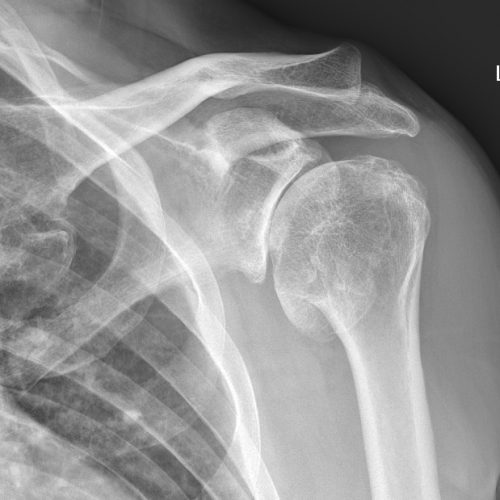
X-rays: To evaluate dislocation, associated fractures, or bone defects.
MRI or MR arthrogram: To identify soft tissue injuries like labral tears, ligament injuries, or Hill-Sachs lesions.
CT scan: May be used to assess bone defects or glenoid morphology.
Reduction: Repositioning the dislocated shoulder back into the joint.
Immobilization: Wearing a sling for a few weeks to allow healing of injured tissues.
Physical therapy: Strengthening exercises to improve rotator cuff and scapular stability; focusing on restoring range of motion and reducing future instability risk.
Activity modification: Avoiding high-risk activities that could lead to recurrent instability.
Arthroscopic Bankart repair: Reattaching and stabilizing a torn labrum and ligaments to the glenoid.
Latarjet procedure: Bone transfer surgery, where a piece of the scapula bone, called the coracoid, is moved to the front of the glenoid to increase stability, typically used for significant bone loss or recurrent dislocations.
Capsular shift or plication: Tightening the joint capsule to reduce laxity.
Remplissage: Filling the Hill-Sachs defect with the infraspinatus tendon to prevent future dislocations. This is performed arthroscopically, typically in conjunction with a labral repair.
Initial phase: Gentle range of motion exercises, pain control, and reducing inflammation.
Strengthening phase: Focus on strengthening rotator cuff and scapular muscles.
Functional phase: Progress to sport-specific or activity-specific exercises.
Strengthening: Focus on strengthening the rotator cuff, scapular stabilizers, and shoulder girdle muscles.
Proper technique: Use correct techniques in sports and activities, especially overhead movements.
Protective gear: Consider using shoulder braces or protective equipment during high-risk activities.