
If you’re wondering why your shoulder hurts more when you lie down, you’re not alone. Shoulder pain at night Miami patients experience is one of the most common reasons people seek evaluation from a shoulder specialist.
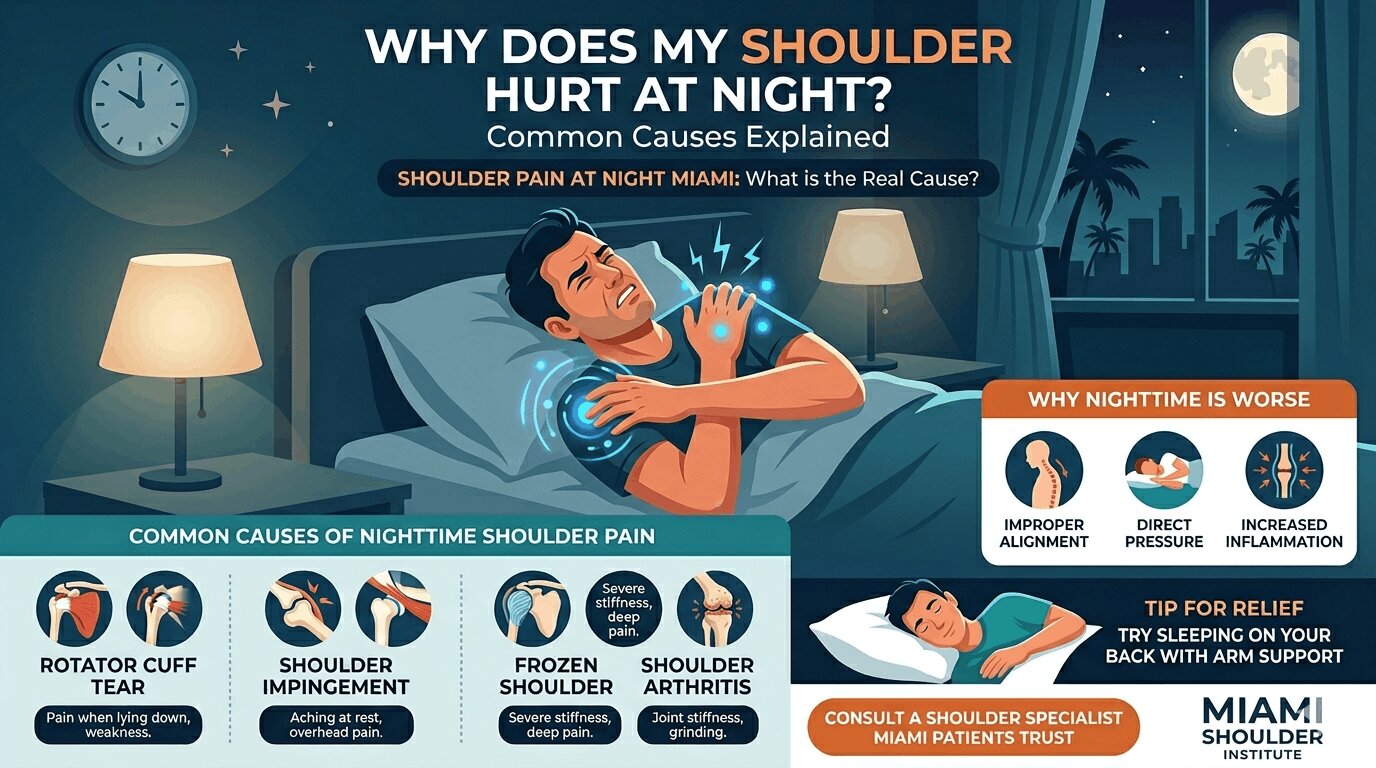
Night shoulder pain can occur because inflammation increases when the body is at rest, certain sleeping positions place pressure on injured tissues, and reduced daytime distractions make discomfort more noticeable. Conditions such as rotator cuff tears, shoulder impingement, frozen shoulder, arthritis, bursitis, and tendon injuries are among the most common causes.
While occasional discomfort may improve with rest, persistent night pain that disrupts sleep should not be ignored.
Many shoulder conditions cause discomfort during activity, but when pain begins interfering with sleep, it often indicates a more significant problem.
Sleep is critical for healing and recovery. Chronic shoulder pain can lead to:
Understanding the underlying cause of shoulder pain Miami patients experience is the first step toward effective treatment.
The shoulder is the most mobile joint in the body. It relies on a complex combination of:
These structures work together to provide flexibility and stability.
When one or more components become injured or inflamed, pain may worsen during certain positions, particularly while sleeping.
1. Rotator Cuff Tears
One of the most common reasons for shoulder pain at night Miami patients report is a rotator cuff injury.
The rotator cuff consists of four muscles and tendons that help stabilize and move the shoulder.
Symptoms often include:
Many patients notice that daytime discomfort becomes significantly worse after going to bed.
2. Shoulder Impingement Syndrome
Shoulder impingement occurs when tendons become compressed between surrounding structures within the shoulder.
Common symptoms include:
Inflamed tissues can become increasingly irritated while resting, making symptoms more noticeable at night.
3. Frozen Shoulder
Frozen shoulder, also known as adhesive capsulitis, causes progressive stiffness and pain.
The condition often develops gradually and typically progresses through stages.
Symptoms include:
Many patients describe nighttime discomfort as one of the most frustrating aspects of frozen shoulder.
4. Shoulder Arthritis
Arthritis can cause gradual degeneration of cartilage within the shoulder joint.
As cartilage wears down, patients may experience:
Nighttime symptoms are particularly common in more advanced cases.
5. Shoulder Bursitis
The shoulder contains fluid-filled sacs called bursae that reduce friction between tissues.
When a bursa becomes inflamed, symptoms may include:
Bursitis often occurs alongside rotator cuff problems or shoulder impingement.
6. Labral Tears
The labrum is a ring of cartilage that helps stabilize the shoulder joint.
Labral injuries may cause:
Athletes and active individuals commonly experience this type of injury.
7. Shoulder Instability
Some patients feel as though the shoulder is slipping, shifting, or partially dislocating.
Instability may result from:
Nighttime positions can place additional stress on unstable shoulders.
Several factors contribute to worsening symptoms at night.
Reduced Movement
During the day, movement helps distribute fluid and reduce stiffness.
At night, prolonged immobility can increase discomfort.
Increased Pressure
Sleeping directly on an injured shoulder compresses tendons and inflamed tissues.
Inflammation
Inflammatory chemicals may accumulate while resting, increasing sensitivity.
Reduced Distractions
Pain often feels more noticeable when external activities and distractions decrease.
Certain sleeping positions commonly worsen symptoms:
Sleeping on the Painful Shoulder
This places direct pressure on injured tissues.
Sleeping With the Arm Overhead
This position may increase impingement and tendon compression.
Poor Neck and Shoulder Alignment
Improper pillow support can place additional strain on the shoulder complex.
Patients experiencing shoulder pain Miami often benefit from:
Sleep on Your Back
This generally places the least stress on the shoulder.
Use Pillows for Support
A pillow under the affected arm may reduce tension.
Avoid Sleeping Directly on the Injured Side
Reducing pressure can help decrease symptoms.
Follow Your Treatment Plan
Consistent rehabilitation often improves both daytime and nighttime symptoms.
Occasional soreness after exercise may not require medical attention.
However, consultation with a shoulder specialist Miami patients trust may be appropriate if:
Early evaluation often leads to more treatment options and better outcomes.
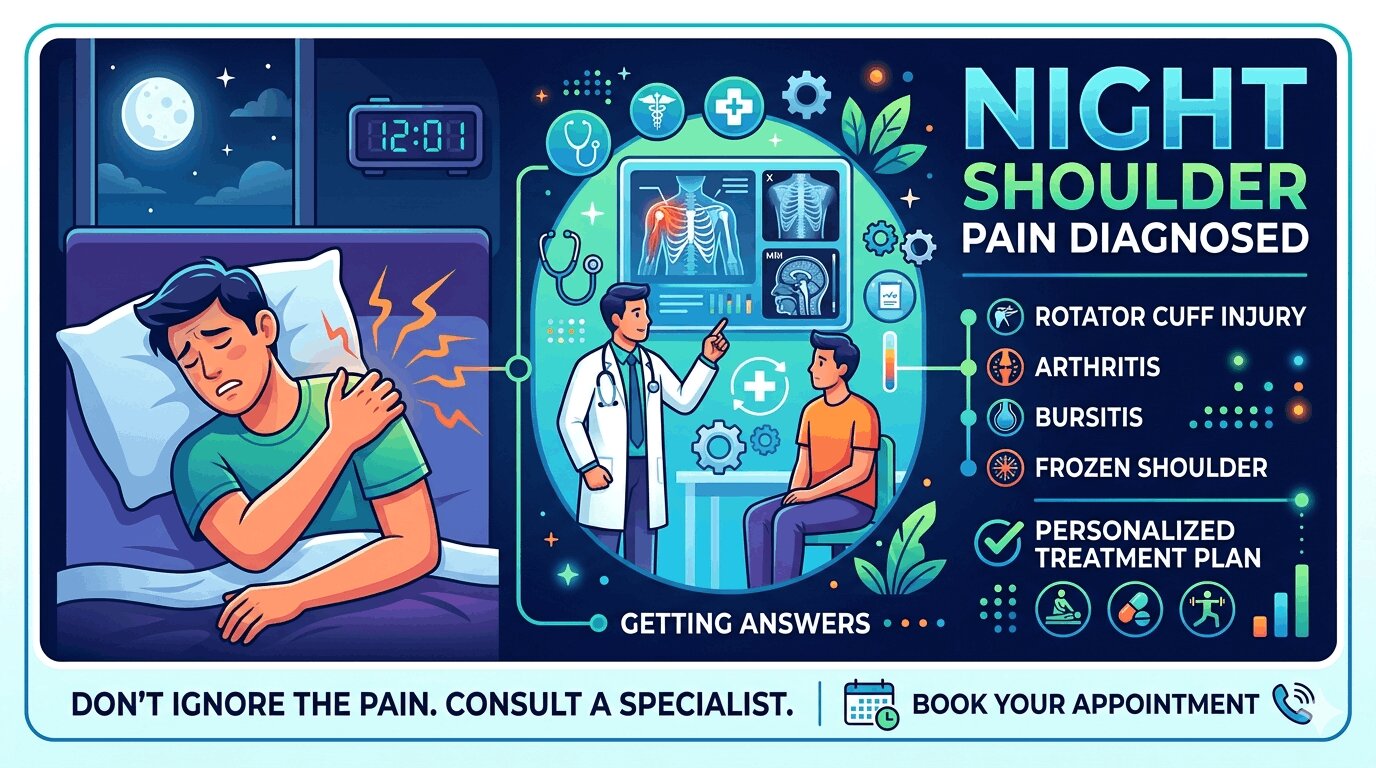
At Miami Shoulder Institute, evaluation may include:
Medical History
Understanding symptom patterns and injury history.
Physical Examination
Assessing motion, strength, and stability.
Imaging Studies
Depending on symptoms, imaging may include:
The goal is to identify the underlying cause and develop an individualized treatment plan.
Read More – Shoulder Surgery in Miami: Cost, Insurance, and What to Expect
Treatment depends on the specific diagnosis.
Options may include:
Physical Therapy
Improves strength, mobility, and shoulder mechanics.
Activity Modification
Reduces aggravating movements.
Anti-Inflammatory Treatment
Helps manage pain and swelling.
Injections
May provide temporary relief in selected cases.
Surgery
In some situations, surgical treatment may be recommended when conservative care fails.
Miami Shoulder Institute focuses exclusively on shoulder conditions and treatment. Patients receive specialized care designed to accurately diagnose the source of pain and create personalized treatment plans.
Whether symptoms are caused by a rotator cuff tear, shoulder impingement, arthritis, instability, or another condition, the goal is always to restore comfort, improve function, and help patients return to their normal lives.
1. Why is my shoulder pain worse at night?
Inflammation, pressure from sleeping positions, and reduced movement often make symptoms more noticeable during the night.
2. Is shoulder pain at night a sign of a rotator cuff tear?
It can be, but other conditions such as frozen shoulder, bursitis, arthritis, and impingement may also cause nighttime pain.
3. What is the best sleeping position for shoulder pain?
Sleeping on your back with proper arm support is often the most comfortable position.
4. When should I see a shoulder specialist?
If pain persists for several weeks, affects sleep, or limits daily activities, evaluation is recommended.
5. Can shoulder pain at night go away without treatment?
Some mild cases improve with rest and rehabilitation, but persistent symptoms should be assessed.
6. Does shoulder arthritis cause nighttime pain?
Yes. Advanced arthritis commonly causes deep aching pain that worsens during the night.
7. Is surgery always needed for shoulder pain at night?
No. Many shoulder conditions improve with non-surgical treatment and rehabilitation.
Also Read About – 8 Possible Reasons Your Shoulder Pops or Cracks During Workouts
Top Shoulder Surgeons in Miami Offering Advanced Orthopedic Care