

 EN EN
EN EN
Loss of hand movement due to nerve damage, tendon injury, or trauma can significantly affect daily life. Simple tasks like gripping, writing, or lifting objects may become difficult or impossible. In such cases, tendon transfer surgery hand Miami patients consider can help restore function by redirecting healthy tendons to replace damaged ones. At Miami Shoulder Institute, advanced surgical techniques are used to improve hand mobility and support long-term recovery.
Tendon transfer surgery is a procedure where a functioning tendon is moved from one part of the hand or arm to another to compensate for a damaged or non-functioning tendon.
This procedure is commonly used when:
The goal is to restore movement and improve hand function.
Not all hand injuries require tendon transfer. However, tendon transfer surgery hand Miami may be recommended when:
Evaluation by a hand surgeon Miami patients trust helps determine if this procedure is appropriate.
Tendon transfer procedures often require advanced hand and microsurgery techniques. These allow surgeons to carefully reposition tendons while preserving surrounding nerves, blood vessels, and tissues.
Microsurgical precision helps:
In complex cases, hand plastic surgery techniques may be used alongside tendon transfer to reconstruct damaged structures and improve both function and appearance.
These procedures aim to:
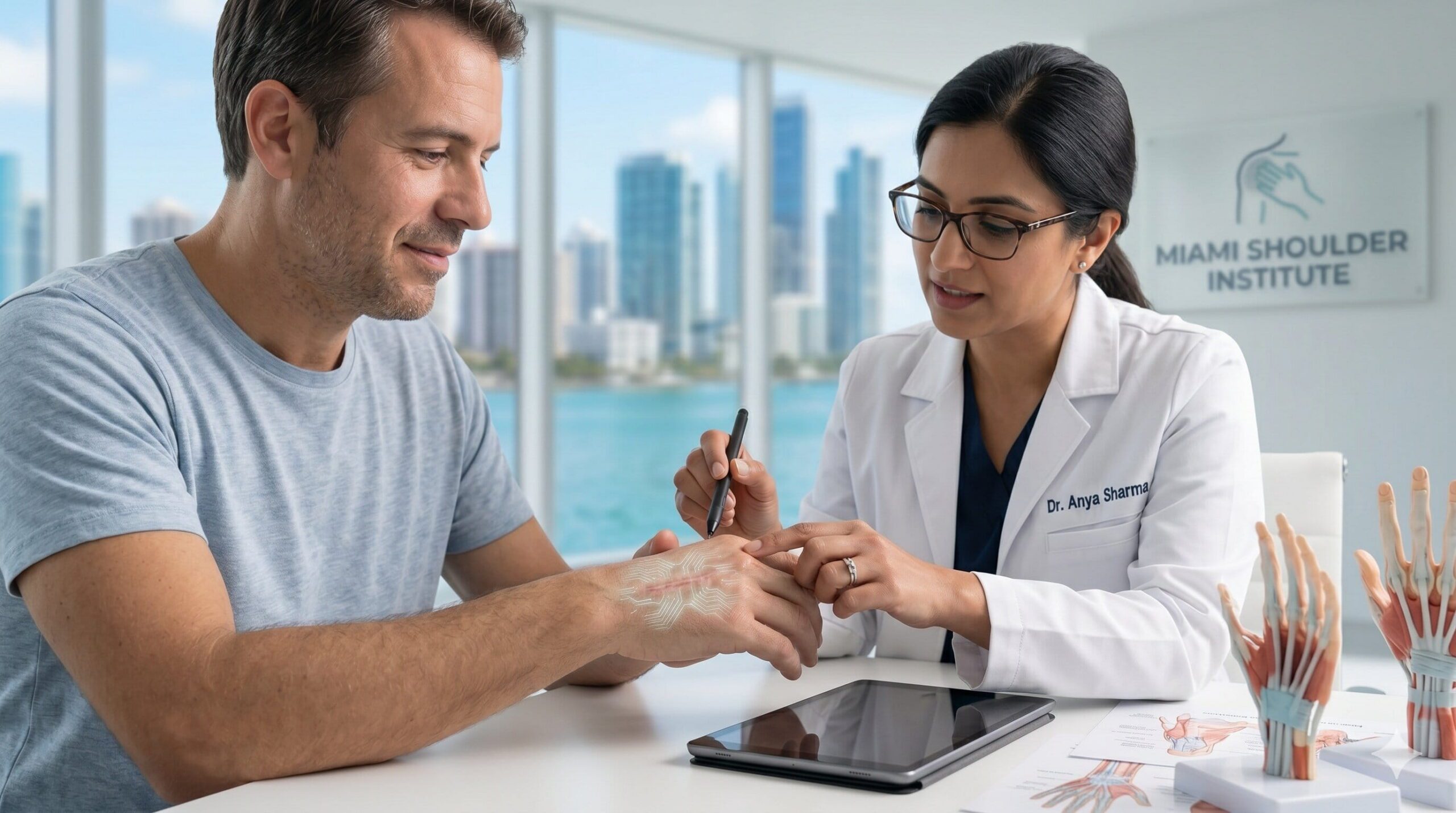
During tendon transfer surgery:
This requires precise planning to ensure proper movement and coordination after healing.
Recovery after tendon transfer surgery is a structured process. Patients typically receive:
Rehabilitation is essential, as the brain and muscles must adapt to the new tendon function.
With expert care and consistent rehabilitation, many patients regain meaningful hand function and improved quality of life. Early intervention and guided therapy play a crucial role in achieving successful outcomes.
It is used to restore movement when tendons or nerves are damaged and cannot function properly.
Yes. The transferred tendon permanently takes over the function of the damaged tendon.
Recovery may take several months, including rehabilitation and retraining of movement.
Many patients regain significant function, though results depend on the severity of the injury and rehabilitation.
Therapy helps retrain muscles and improve coordination after the tendon has been transferred.