
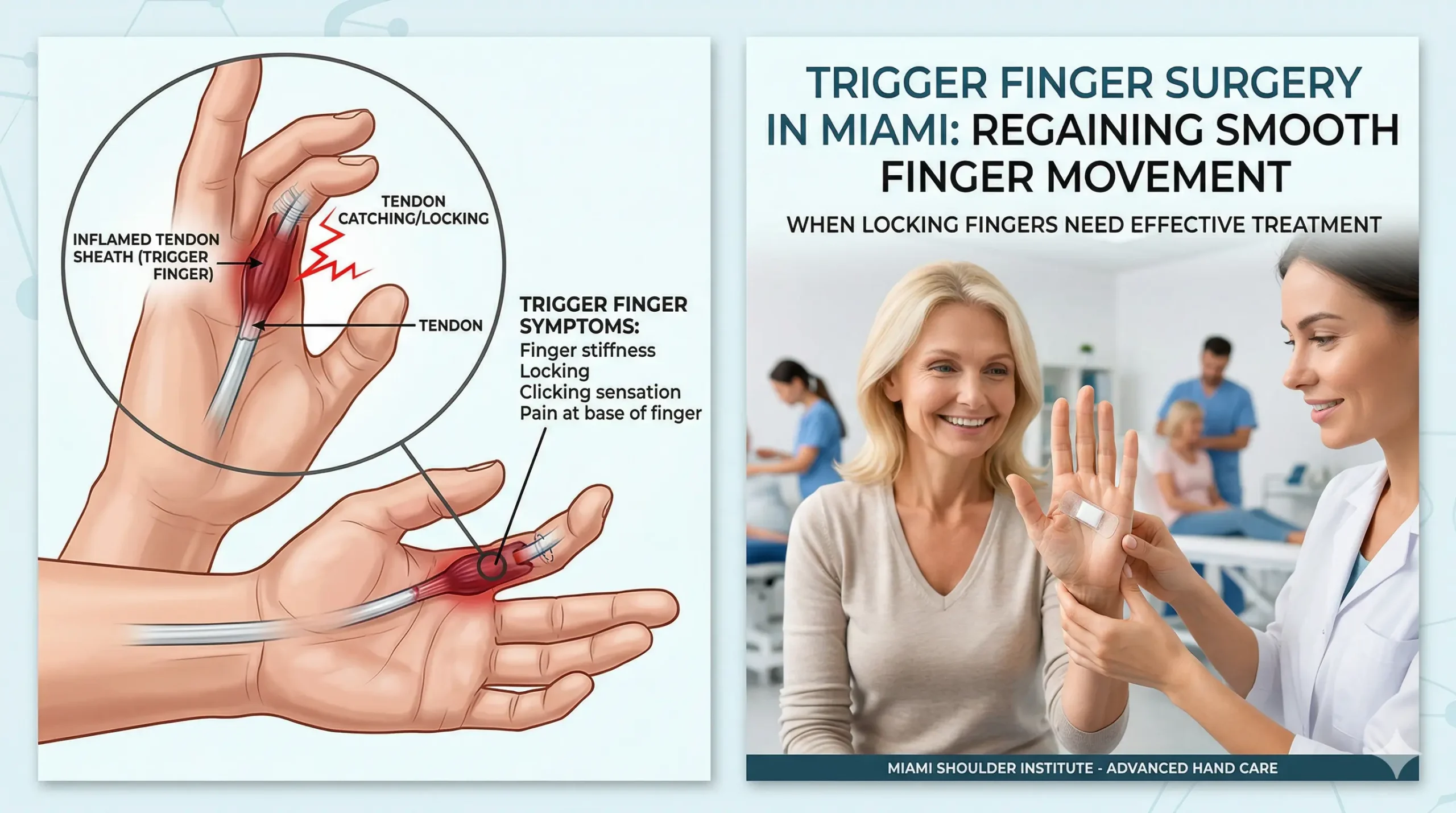
Trigger finger is a common condition that causes one or more fingers to catch, lock, or become stuck in a bent position. This can make simple tasks like gripping, typing, or holding objects uncomfortable and difficult. When symptoms worsen or fail to improve with non-surgical care, trigger finger surgery Miami patients consider may be necessary to restore smooth finger movement. At Miami Shoulder Institute, care focuses on accurate diagnosis and effective surgical treatment for hand and finger conditions.
Trigger finger occurs when the tendon that bends the finger becomes inflamed or thickened, making it difficult to glide smoothly through its sheath. This results in the finger catching or locking during movement.
Commonly affected fingers include the thumb, middle, and ring fingers.
You may need evaluation if you experience:
Early finger locking treatment Miami patients seek can help prevent worsening of the condition.
Trigger finger may develop due to:
If symptoms persist, consultation with a hand surgeon Miami patients trust is recommended.
Not all cases require surgery. However, trigger finger surgery Miami may be recommended when:
A detailed assessment helps determine whether surgery is the best option.
Trigger finger surgery is a relatively simple and effective procedure. It involves releasing the tight portion of the tendon sheath to allow smooth tendon movement.
Key goals of surgery include:
In some cases, advanced hand plastic surgery techniques may be used if there is associated tissue damage.
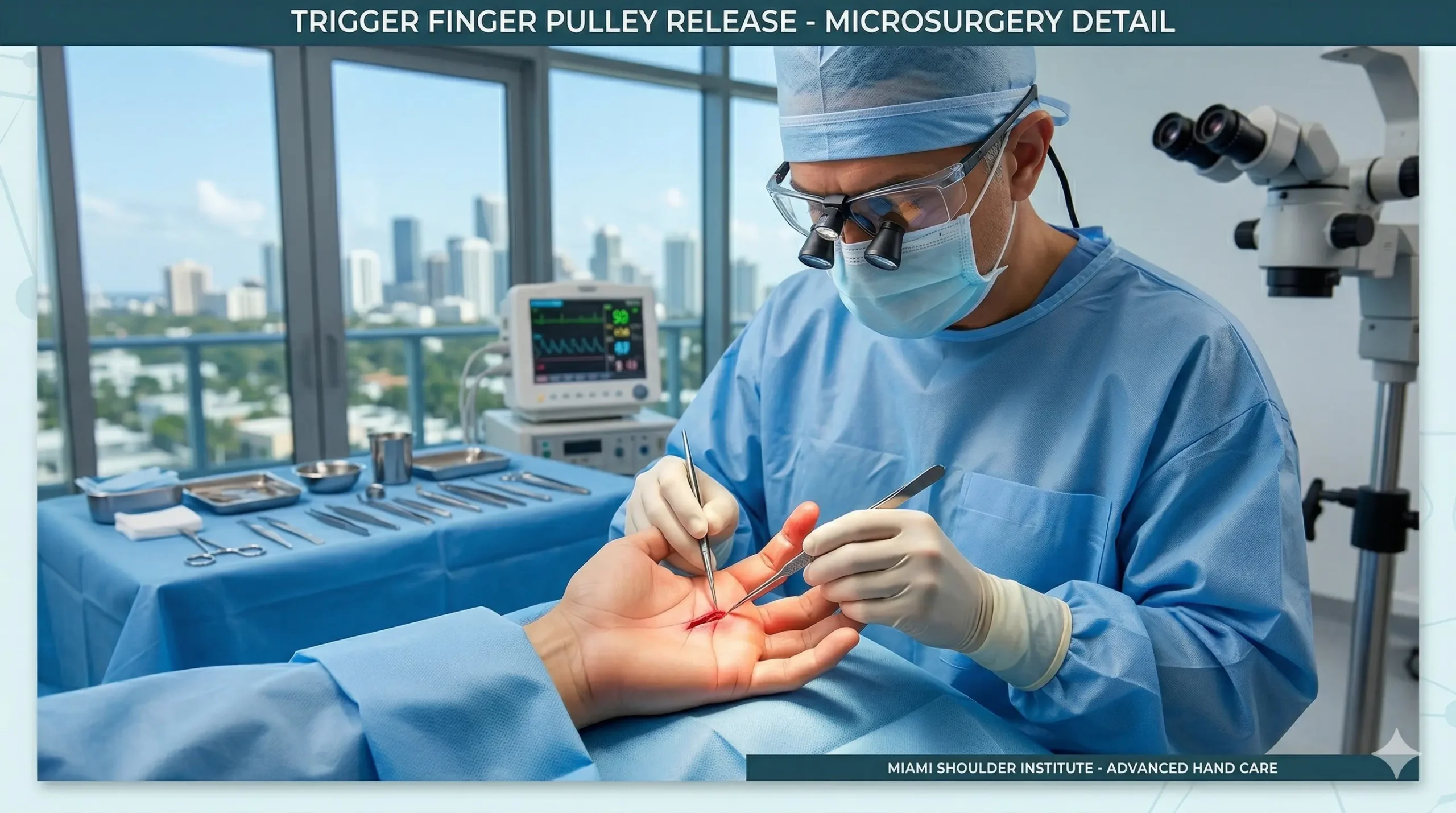
Recovery after trigger finger surgery is usually quick compared to more complex procedures. Patients can expect:
Proper post-operative care helps restore full function and prevent stiffness.
Most patients experience excellent results, with improved finger movement and relief from locking symptoms. Early treatment and appropriate care help ensure long-term success.
Trigger finger is caused by inflammation or thickening of the tendon, preventing smooth movement within its sheath.
The procedure is generally well-tolerated, and post-operative discomfort is mild and temporary.
Most patients recover within a few weeks, with gradual improvement in finger movement.
Recurrence is uncommon, especially when the condition is treated appropriately.
If your finger locks, causes pain, or affects daily activities, specialist evaluation is recommended.

Miami Shoulder Institute is dedicated to delivering world-class care with compassion, expertise, and integrity. Your mobility, our mission.