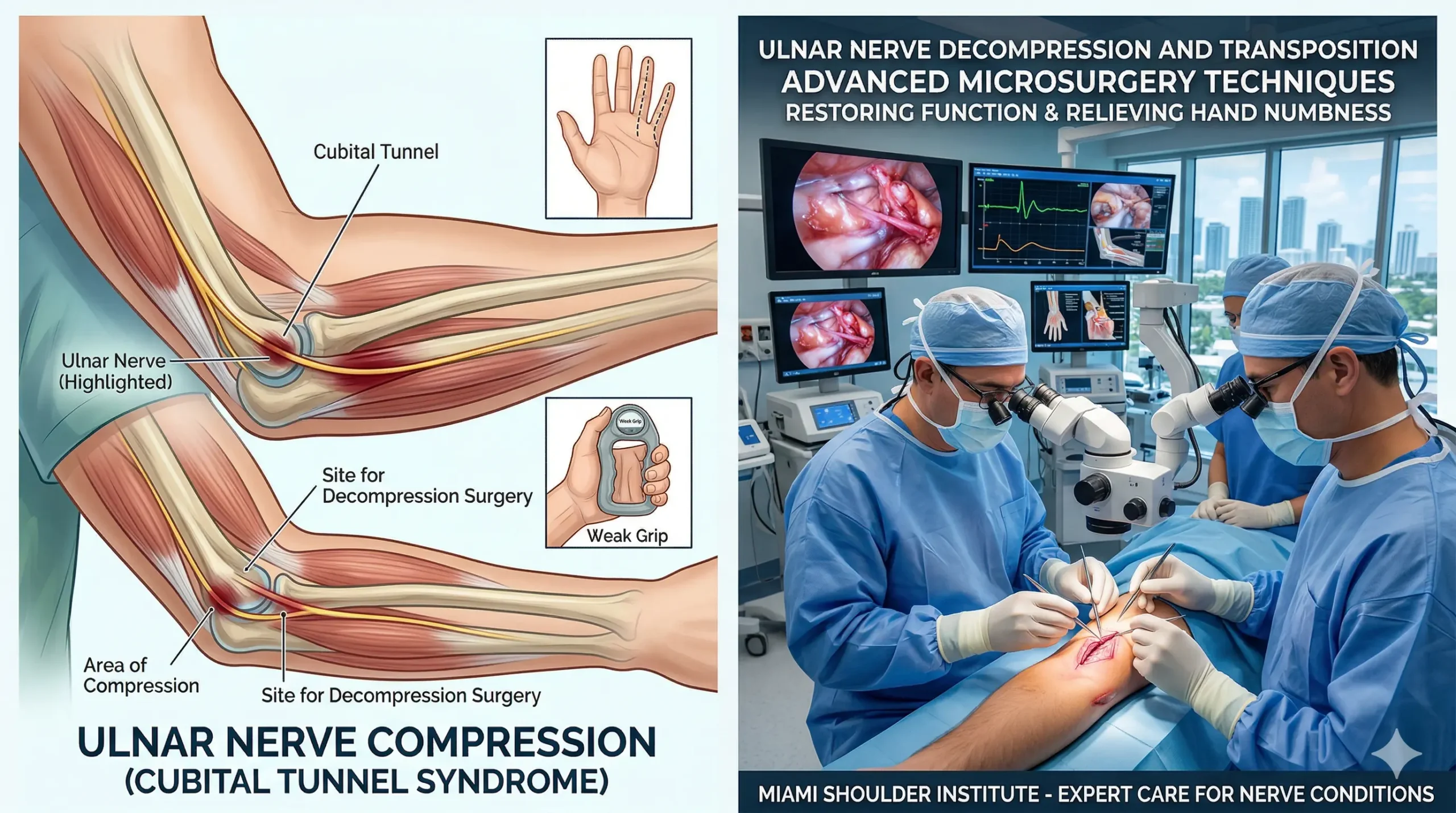
Persistent tingling, numbness, or weakness in the hand—especially in the ring and little fingers—can be a sign of ulnar nerve compression. This condition can worsen over time, affecting grip strength and daily function. When non-surgical treatments fail, ulnar nerve surgery Miami patients consider may be necessary to relieve pressure on the nerve and restore function. At Miami Shoulder Institute, specialised care focuses on accurate diagnosis and advanced surgical techniques for nerve-related conditions of the hand and upper extremity.
The ulnar nerve runs from the neck down to the hand and controls movement and sensation in parts of the hand. It is most commonly compressed at the elbow (cubital tunnel) or wrist.
Compression can lead to:
Early evaluation for hand numbness treatment Miami patients need can prevent long-term nerve damage.
Ulnar nerve compression may develop due to:
If symptoms persist or worsen, further evaluation is essential.
Not all cases require surgery. However, ulnar nerve surgery Miami may be recommended when:
A detailed assessment by a hand specialist Miami patients trust helps determine the most appropriate treatment plan.
Ulnar nerve procedures often involve advanced hand and microsurgery techniques. These allow surgeons to carefully relieve pressure on the nerve or reposition it to reduce irritation.
Surgical options may include:
Microsurgical precision helps protect surrounding structures and improve outcomes.
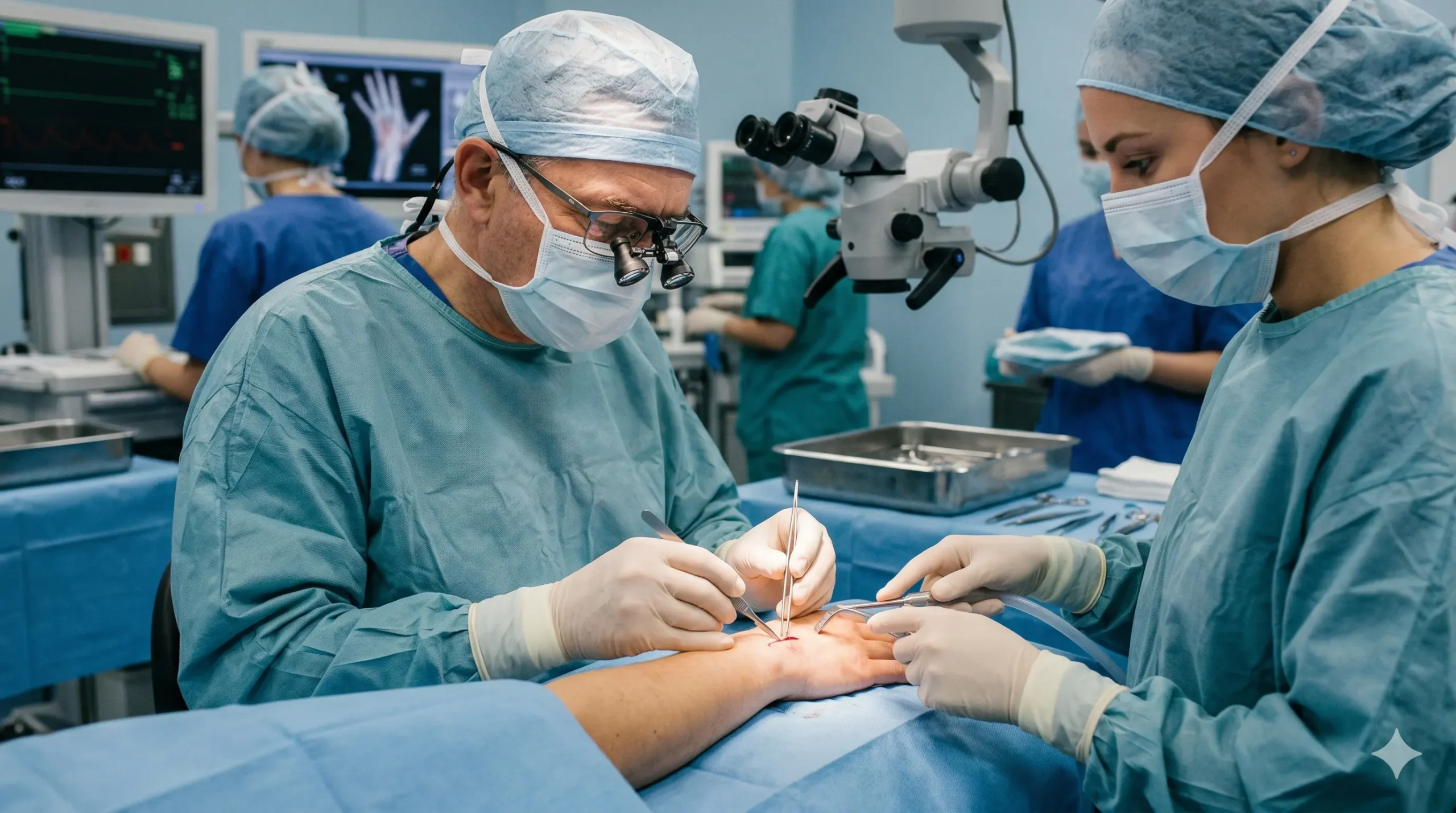
During surgery, the goal is to reduce pressure on the ulnar nerve and restore its normal function. The procedure is carefully planned to minimise disruption while addressing the root cause of compression.
Modern techniques focus on:
Recovery after ulnar nerve surgery varies depending on the severity of the condition. Patients typically receive:
Rehabilitation is essential for restoring function and preventing recurrence.
With timely treatment and proper rehabilitation, many patients experience relief from numbness and improved hand strength. Early intervention plays a key role in preventing permanent nerve damage.
Common symptoms include numbness, tingling, and weakness in the hand, especially in the ring and little fingers.
No. Many cases improve with non-surgical treatment, but surgery is recommended when symptoms persist or worsen.
Recovery varies but may take several weeks to months depending on nerve healing and rehabilitation.
Surgery can relieve pressure and improve function, especially when performed early.
If numbness, tingling, or weakness persists, evaluation by a specialist is recommended.
Miami Shoulder Institute is dedicated to delivering world-class care with compassion, expertise, and integrity. Your mobility, our mission.