
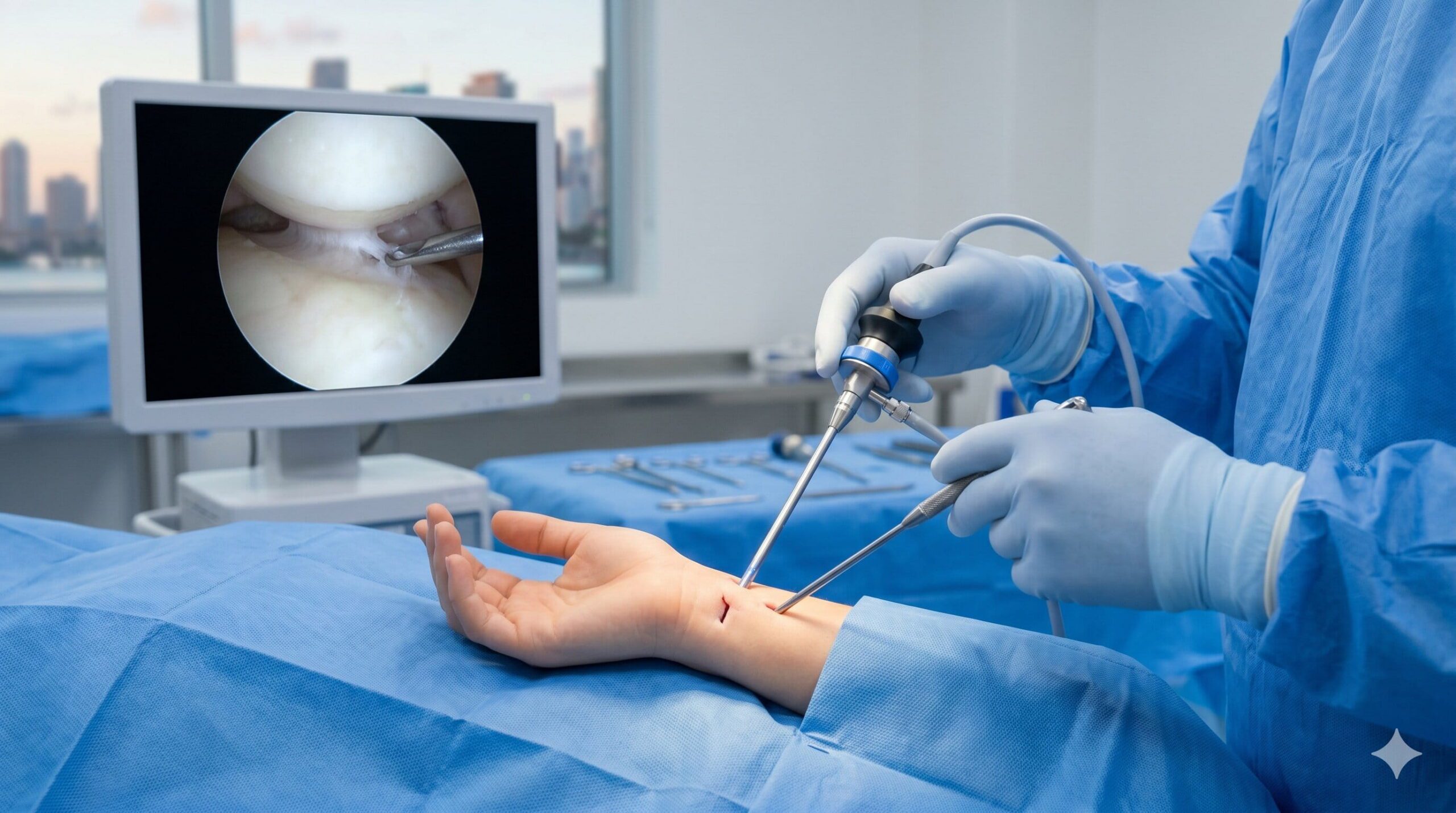
Wrist pain can make even the simplest daily tasks difficult. Activities such as typing, lifting, gripping, driving, exercising, or opening a jar can become uncomfortable when the wrist is injured or inflamed. Because the wrist contains many small bones, ligaments, tendons, cartilage surfaces, and nerves working together in a compact space, accurate diagnosis and precise treatment are essential. When non-surgical care does not provide lasting relief, wrist arthroscopy surgery Miami patients consider may offer an advanced solution with smaller incisions and faster recovery.
At Miami Shoulder Institute, patients receive focused upper-extremity care using modern surgical techniques designed to restore movement, reduce pain, and protect long-term wrist function.
Wrist arthroscopy is a minimally invasive surgical procedure that uses a tiny camera called an arthroscope to look inside the wrist joint. Through very small incisions, specialised instruments are inserted to diagnose and treat internal wrist problems without the need for large open surgery.
This technique allows surgeons to see structures that may not always be fully understood through imaging alone, including:
Because of its precision, arthroscopy is commonly chosen for modern wrist injury treatment Miami patients need when symptoms continue despite conservative care.
Traditional open surgery may still be necessary in certain cases, but arthroscopy offers many benefits when appropriate.
Advantages may include:
For many patients, these benefits make arthroscopy an attractive treatment option.
Ligaments stabilise the wrist bones. A tear may cause clicking, weakness, or pain with movement.
The triangular fibrocartilage complex supports the small-finger side of the wrist. Tears often cause pain during rotation or gripping.
When pain continues without a clear cause, arthroscopy may help diagnose hidden joint problems.
Small fragments inside the joint may create catching sensations or irritation.
Persistent swelling or synovitis may respond well to arthroscopic treatment.
You may benefit from seeing a hand surgeon Miami patients trust if you experience:
Early diagnosis often improves outcomes and may reduce the risk of worsening damage.
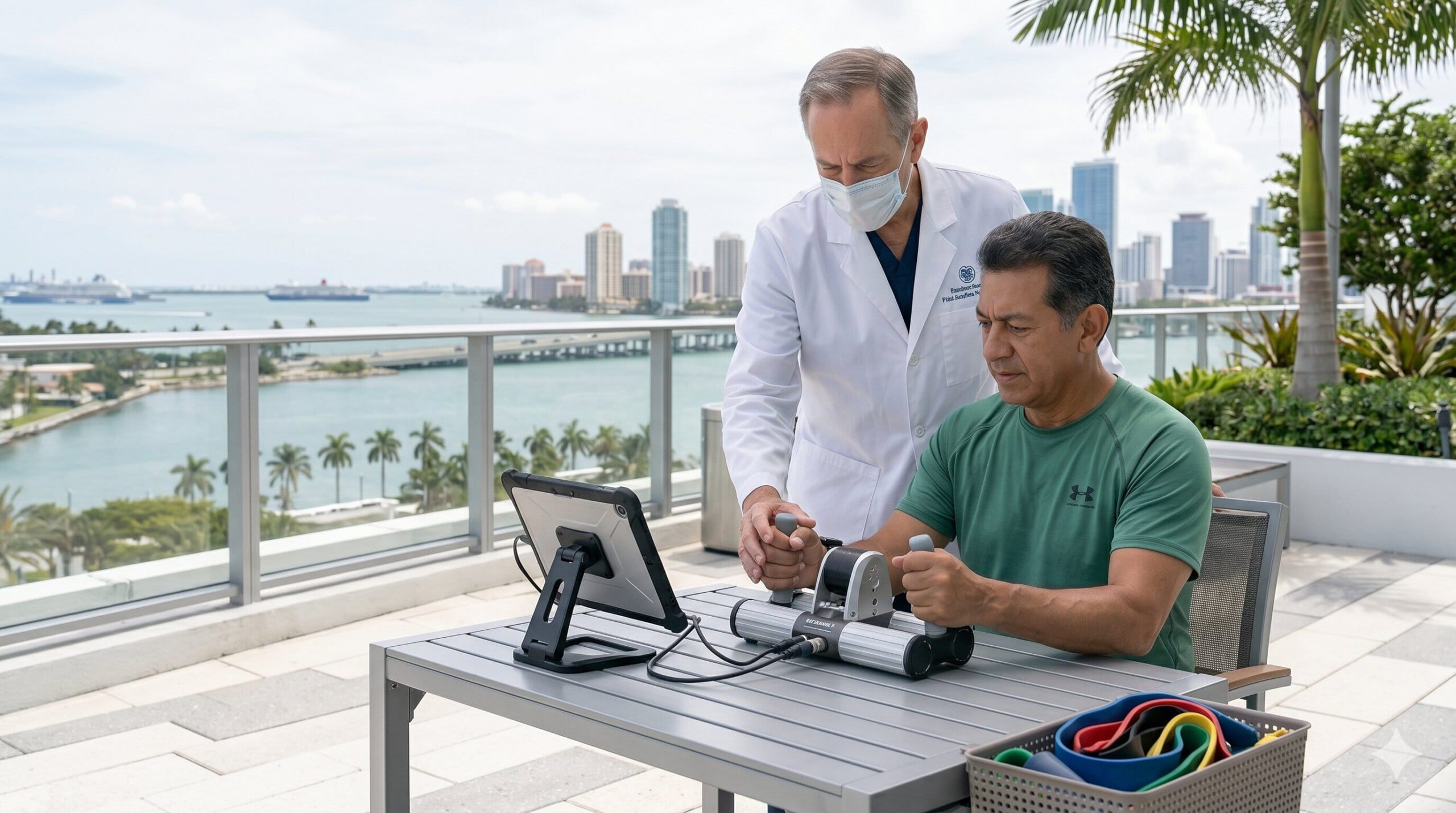
The wrist contains delicate nerves, tendons, ligaments, and blood vessels in a very small area. This is why advanced hand and microsurgery skills are valuable when treating wrist conditions.
Microsurgical principles allow for:
At Miami Shoulder Institute, careful surgical planning is used to support both safety and function.
Although every case is unique, surgery generally follows these steps:
Many arthroscopic procedures are performed efficiently, depending on complexity.
Recovery depends on the specific condition treated. Some diagnostic procedures heal faster than complex repairs.
Typical recovery stages may include:
Patients who follow rehabilitation plans often achieve smoother recovery.
Rehabilitation may involve:
Returning too quickly to lifting or repetitive strain can delay healing, so structured progression matters.
Although known for shoulder expertise, upper-extremity care also includes complex wrist and hand conditions. Miami Shoulder Institute focuses on:
Patients benefit from treatment centred on restoring comfort and confidence in movement.
Most patients experience manageable discomfort after surgery that improves during recovery.
Recovery varies by procedure. Minor procedures may improve within weeks, while repairs may take several months.
Many patients benefit from therapy to restore movement and strength.
Yes. Arthroscopy can directly visualise structures inside the joint.
If pain, weakness, or instability continues despite non-surgical treatment, specialist evaluation may be appropriate.