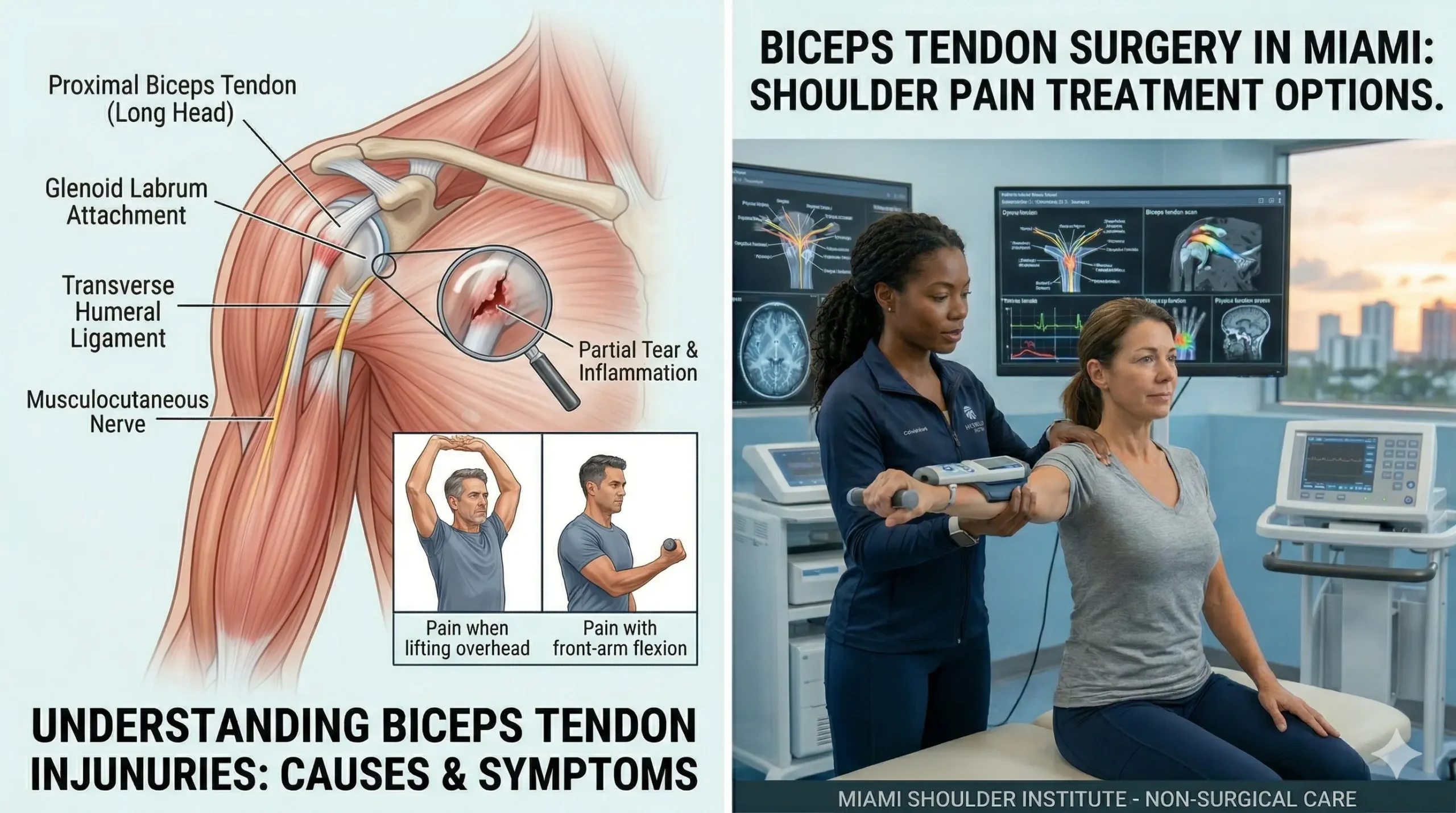
Persistent shoulder pain at the front of the joint, especially during lifting or overhead movement, may be linked to a biceps tendon injury. This condition can limit strength, reduce mobility, and affect everyday activities. When conservative treatments fail, biceps tendon surgery Miami patients consider may provide long-term relief and restore function. At Miami Shoulder Institute, care focuses on accurate diagnosis, advanced surgical techniques, and structured recovery for optimal outcomes.
The biceps tendon connects the biceps muscle to the shoulder and plays a key role in arm movement and stability. Injuries may include inflammation, partial tears, or complete rupture.
Common causes include:
These injuries can lead to pain, weakness, and reduced shoulder function.
You may need evaluation if you experience:
Early diagnosis helps determine whether non-surgical care or shoulder tendon repair Miami is required.
Not all tendon injuries require surgery. However, biceps tendon surgery Miami may be recommended when:
A detailed assessment helps determine the most appropriate treatment plan.
Many biceps tendon procedures are performed using minimally invasive shoulder surgery Miami patients prefer due to smaller incisions and faster recovery. Arthroscopic techniques allow surgeons to repair or reposition the tendon with high precision.
Benefits include:
This approach is commonly used as part of modern shoulder surgery Miami techniques.

Biceps tendon surgery may involve:
The choice of procedure depends on the severity of the injury and patient activity level.
Recovery is a gradual process that requires structured rehabilitation. Patients can expect:
Adhering to the rehabilitation plan is essential for successful recovery.
With expert surgical care and proper rehabilitation, many patients regain shoulder strength and experience significant pain relief. Early treatment improves long-term outcomes and reduces the risk of further complications.
They are commonly caused by overuse, sports activities, heavy lifting, or age-related degeneration.
No. Many mild cases improve with non-surgical treatment, but surgery is recommended for severe or persistent symptoms.
Tenodesis reattaches the tendon, while tenotomy releases it. The choice depends on the condition and patient needs.
Recovery varies but typically takes several weeks to months with rehabilitation.
Yes. Many patients return to sports after completing rehabilitation and regaining strength.