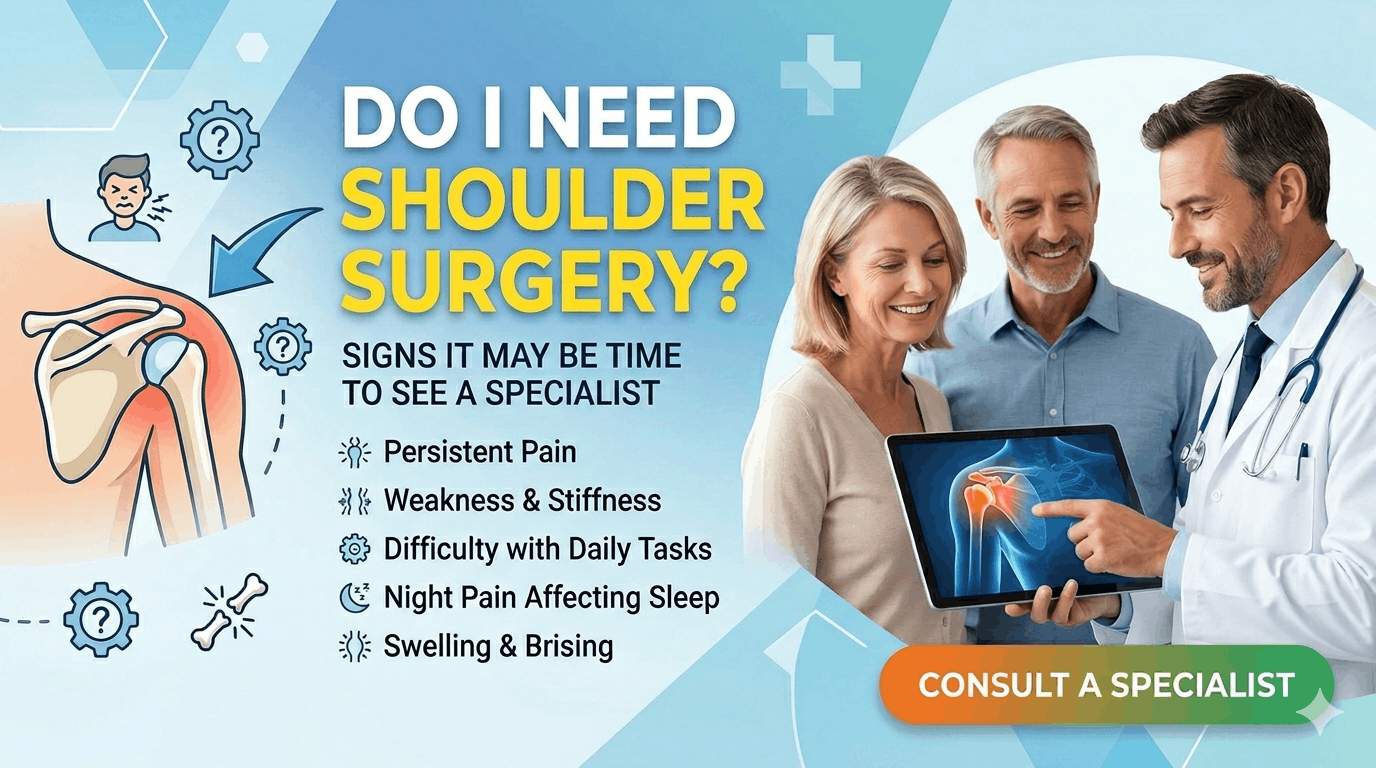
One of the most common questions patients ask is, “Do I need shoulder surgery?“
The answer depends on several factors, including the cause of your shoulder pain, the severity of your symptoms, your activity level, and how well you respond to non-surgical treatment.
Many shoulder conditions improve with physical therapy, activity modification, medication, and rehabilitation. However, when pain becomes persistent, weakness worsens, or shoulder function continues to decline, surgery may be the best option to restore movement and quality of life.
At Miami Shoulder Institute, patients receive comprehensive evaluations to determine whether conservative treatment or shoulder surgery Miami is the most appropriate solution.
The shoulder is one of the most mobile joints in the human body. It relies on muscles, tendons, ligaments, cartilage, and bones working together to provide smooth movement.
When one of these structures becomes damaged, pain and dysfunction can occur.
Common causes of shoulder problems include:
While many of these conditions can initially be treated conservatively, some may eventually require surgical intervention.
1. Persistent Pain That Doesn’t Improve
Mild shoulder pain often improves with rest, therapy, and anti-inflammatory treatment.
However, if you’ve experienced pain for several months despite treatment, it may indicate a more significant structural issue.
Warning signs include:
When shoulder pain becomes chronic, it may be time to consult a shoulder specialist Miami patients trust.
2. Significant Loss of Shoulder Strength
Weakness is often a more concerning sign than pain alone.
If you struggle to:
you may have a rotator cuff tear or another structural injury.
Loss of strength that continues to worsen despite rehabilitation should be evaluated promptly.
3. Your Shoulder Feels Unstable
Many patients describe instability as:
Shoulder instability is particularly common among:
Repeated instability can damage cartilage, ligaments, and bone over time.
4. Limited Range of Motion
If you cannot comfortably:
there may be underlying joint damage.
Loss of motion that does not improve with therapy may require further evaluation.
5. A Confirmed Structural Tear on Imaging
MRI scans often reveal injuries such as:
Rotator Cuff Tears
These tears can cause:
Some partial tears can be managed conservatively, while larger tears may require surgery.
Labrum Tears
Labral injuries commonly cause:
In active individuals, surgical repair may provide the best long-term outcome.
6. Failed Conservative Treatment
Before considering shoulder surgery Miami, many patients try:
If symptoms persist after several months of appropriate treatment, surgery may become a reasonable option.
7. Shoulder Pain Is Affecting Your Quality of Life
One of the most important considerations is how much the condition affects your daily life.
Ask yourself:
If the answer to several of these questions is “no,” surgery may provide meaningful improvement.
Not every shoulder condition requires surgery.
Many patients recover successfully through:
Physical Therapy
Strengthening surrounding muscles often improves shoulder function significantly.
Activity Modification
Reducing aggravating activities can allow tissues to heal.
Rehabilitation Programs
Targeted exercises frequently improve mobility and strength.
Anti-Inflammatory Treatment
Reducing inflammation may relieve symptoms and improve function.
At Miami Shoulder Institute, surgery is generally considered only when appropriate conservative options have been explored.
Rotator Cuff Tears
Large or symptomatic tears may require repair to restore strength and function.
Shoulder Instability
Repeated dislocations often require stabilization procedures.
Labrum Tears
Athletes and active patients may benefit from surgical repair.
Severe Shoulder Arthritis
Joint replacement may become necessary when pain and stiffness become severe.
Shoulder Fractures
Complex fractures occasionally require surgical fixation.
Also Read More – 8 Possible Reasons Your Shoulder Pops or Cracks During Workouts
A consultation with a shoulder specialist Miami patients rely on typically includes:
Medical History Review
Your symptoms, injury history, and goals are discussed.
Physical Examination
Strength, mobility, stability, and pain patterns are evaluated.
Imaging Review
X-rays, MRI scans, or CT scans may be reviewed.
Treatment Discussion
Options may include:
The goal is to develop an individualized plan tailored to your specific condition.
Advancements in surgical techniques have improved outcomes significantly.
Potential benefits include:
Many procedures are now performed arthroscopically through small incisions, resulting in less tissue disruption and faster recovery.
Read More – Shoulder Surgery in Miami: Cost, Insurance, and What to Expect
Recovery varies depending on the procedure performed.
General phases include:
Early Recovery
Rehabilitation Phase
Return to Activity
Patients gradually resume:
Commitment to rehabilitation is one of the most important factors influencing surgical success.
Miami Shoulder Institute focuses exclusively on shoulder conditions and treatment. Patients benefit from:
Whether you need conservative treatment or surgery, the goal is always to restore function and improve quality of life.
1. How do I know if I need shoulder surgery?
If pain, weakness, instability, or loss of function continues despite conservative treatment, surgical evaluation may be appropriate.
2. Can a rotator cuff tear heal without surgery?
Some partial tears can be managed successfully without surgery, but larger tears may require repair.
3. How long should I try physical therapy before considering surgery?
This varies by condition, but many patients attempt conservative treatment for several weeks to months before considering surgery.
4. Is shoulder surgery always the first treatment option?
No. Most shoulder conditions are initially treated with non-surgical methods whenever appropriate.
5. What is the success rate of shoulder surgery?
Success rates depend on the procedure and condition being treated, but many patients experience significant improvements in pain, strength, and function.
6. Can I return to sports after shoulder surgery?
Many patients return to sports and active lifestyles following proper rehabilitation.
7. What if my MRI shows a tear but I don’t have much pain?
Imaging findings alone do not determine treatment. Symptoms, function, and goals are equally important.
Read More – Top Orthopedic Shoulder Surgeons in Miami
Best Shoulder Surgeon in Miami: Diagnosis, Treatment & Recovery Explained