
 EN EN
EN EN
Shoulder surgery is often successful in relieving pain and restoring function. However, in some cases, patients may continue to experience discomfort, instability, or limited movement after a previous procedure. When this happens, revision shoulder surgery Miami patients consider may be necessary to correct the issue and improve outcomes. At Miami Shoulder Institute, care is focused on identifying the root cause of failure and providing advanced surgical solutions tailored to each patient.
Revision shoulder surgery is a procedure performed to correct or improve the results of a previous shoulder operation. It may involve repairing, replacing, or adjusting earlier surgical work to restore proper shoulder function.
This type of surgery is often more complex and requires specialised expertise.
There are several reasons why a previous shoulder surgery Miami FL patients undergo may not deliver the expected results:
A thorough evaluation helps identify the exact cause and guide the appropriate treatment plan.
You may need evaluation for revision shoulder surgery if you experience:
Consultation with an orthopedic shoulder surgeon Miami patients trust is essential for accurate diagnosis.
A shoulder specialist Miami patients rely on plays a critical role in managing complex cases. Revision procedures require careful planning, detailed imaging, and advanced surgical techniques to address underlying problems.
At Miami Shoulder Institute, each case is approached individually to ensure the most effective treatment.
Depending on the cause of failure, revision surgery may involve:
The goal is to restore function, reduce pain, and prevent further complications.
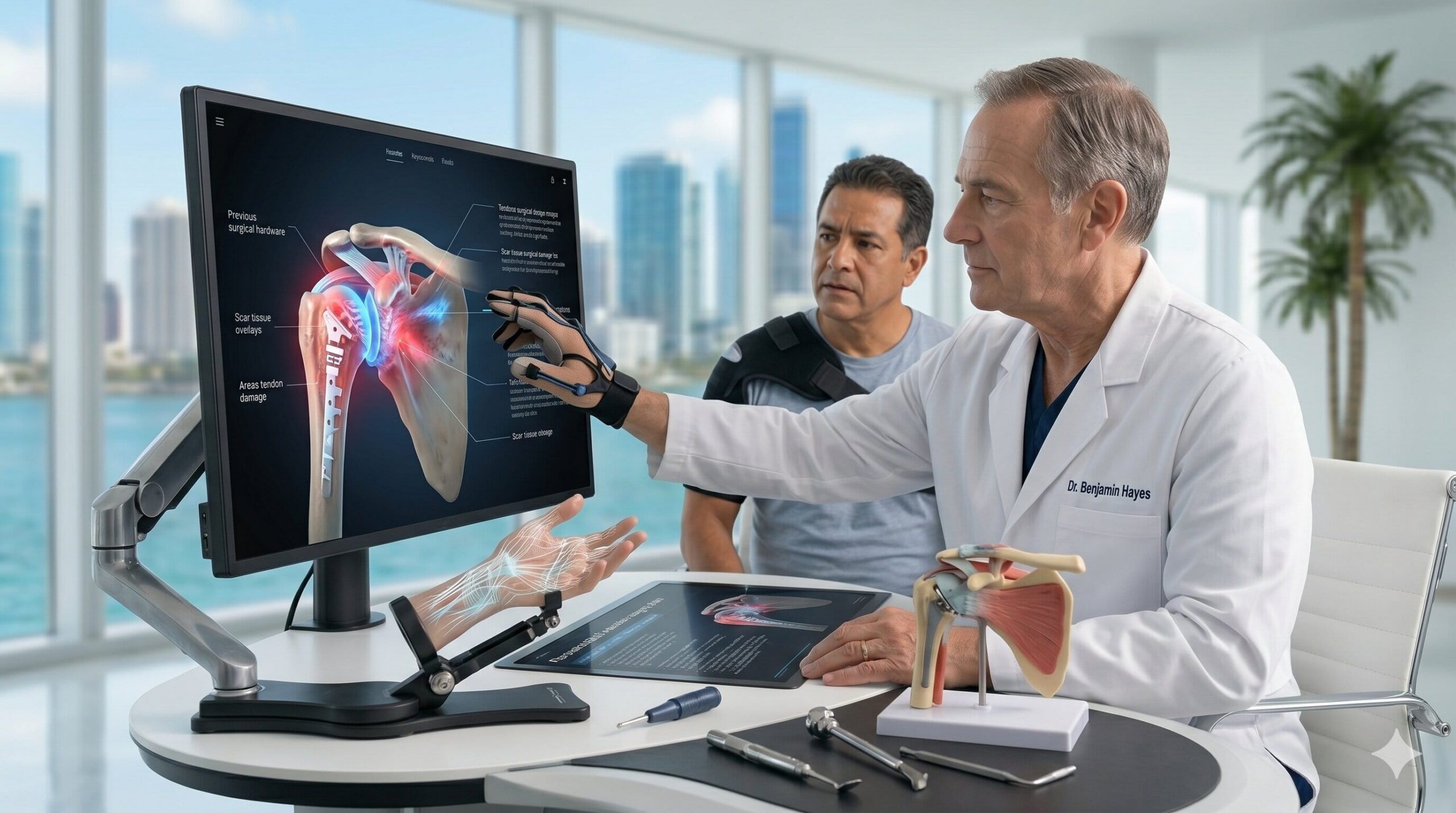
Recovery following revision surgery may take longer than initial procedures. Patients can expect:
Adhering to rehabilitation is essential for achieving the best outcome.
With expert care and proper rehabilitation, many patients experience improved shoulder function and reduced pain after revision surgery. Early intervention and careful planning play a key role in long-term success.
It is a procedure performed to correct or improve the results of a previous shoulder surgery.
You may need it if the initial surgery did not fully resolve the problem or if complications developed.
Yes. It often requires advanced techniques and specialised expertise.
Recovery varies but may take several months depending on the procedure and rehabilitation.
Many patients experience significant improvement, though results depend on the underlying condition.