
 EN EN
EN EN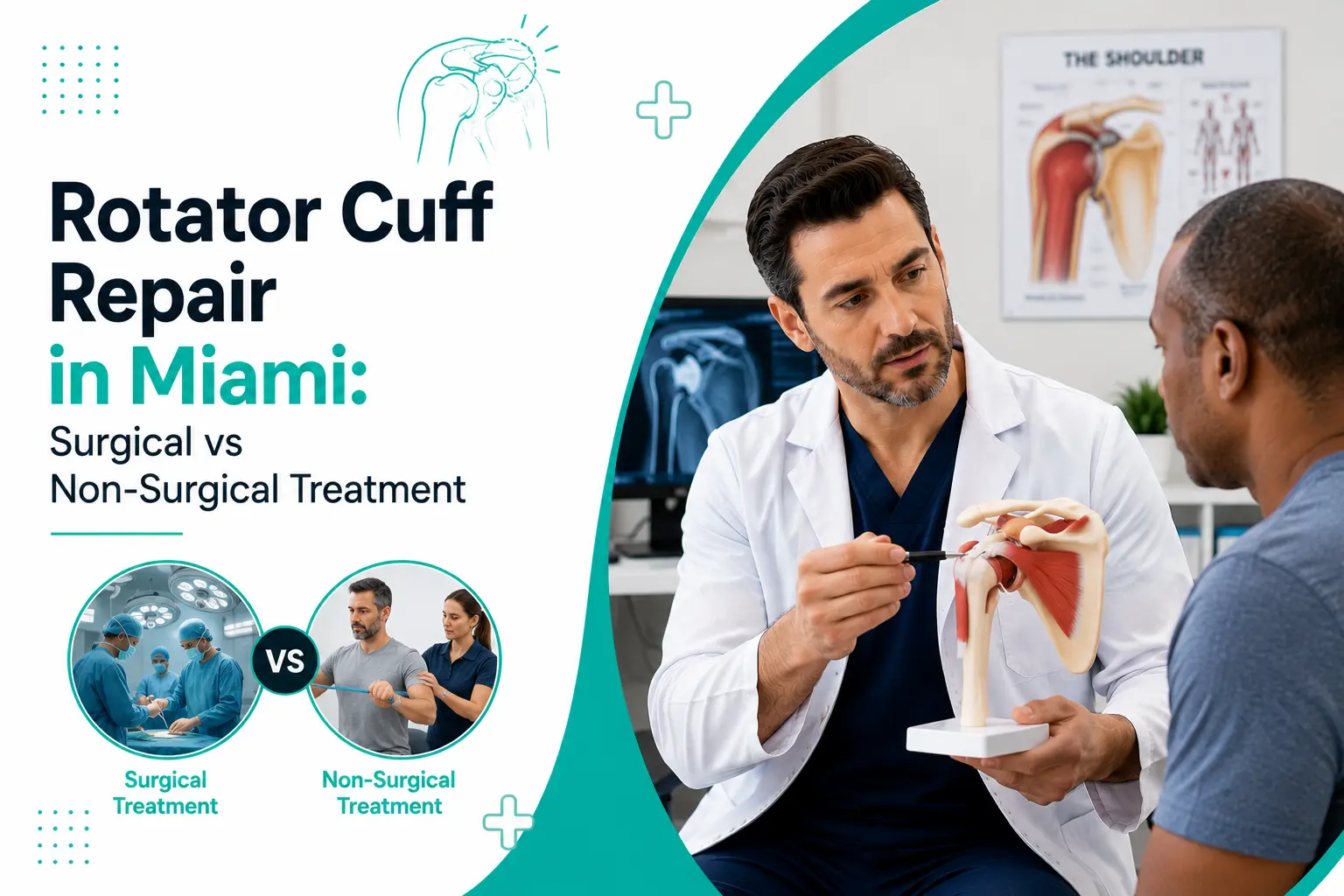
Rotator cuff injuries are one of the most common causes of long-term shoulder pain and weakness. Deciding between surgery and non-surgical care depends on the severity of the injury, symptoms, and daily activity demands. Understanding your options for rotator cuff repair Miami patients seek can help you make a confident decision. At Miami Shoulder Institute, care is focused on accurate diagnosis, personalised treatment, and long-term shoulder health.
The rotator cuff is a group of muscles and tendons that stabilise the shoulder joint and allow smooth arm movement. Tears can develop suddenly due to injury or gradually from wear and tear over time.
Common symptoms include:
Early evaluation by a shoulder pain doctor Miami patients trust is key to preventing the tear from worsening.
You should consult a rotator cuff specialist Miami patients rely on if:
Early diagnosis often allows effective non-surgical treatment.
Not all rotator cuff injuries require surgery. Many partial tears and mild injuries respond well to conservative care.
Non-surgical treatment options may include:
These approaches aim to relieve pain and restore function without surgery.

Surgery may be recommended when:
At Miami Shoulder Institute, rotator cuff repair Miami procedures are carefully planned and tailored to each patient’s condition and lifestyle.
Many rotator cuff repairs are performed using minimally invasive shoulder surgery techniques, such as arthroscopy. This approach offers several benefits, including:
The goal is to restore shoulder strength while minimising disruption to surrounding tissue.
Recovery depends on whether treatment is surgical or non-surgical. Patients receive clear guidance on:
Ongoing follow-up ensures progress remains on track and helps prevent re-injury.
Choosing between surgical and non-surgical treatment depends on the severity of the tear, activity level, and long-term goals. With expert guidance, patients can make informed decisions that support lasting shoulder function and pain relief.
No. Many partial or mild tears improve with non-surgical treatment when diagnosed early.
Recovery varies but often takes several months with structured rehabilitation.
For many patients, minimally invasive techniques allow faster recovery and less pain, but suitability depends on the tear.
Yes. Untreated tears can enlarge over time, leading to increased pain and weakness.
You’ll receive a detailed assessment, diagnosis, and explanation of treatment options to help you decide the best course of care.