
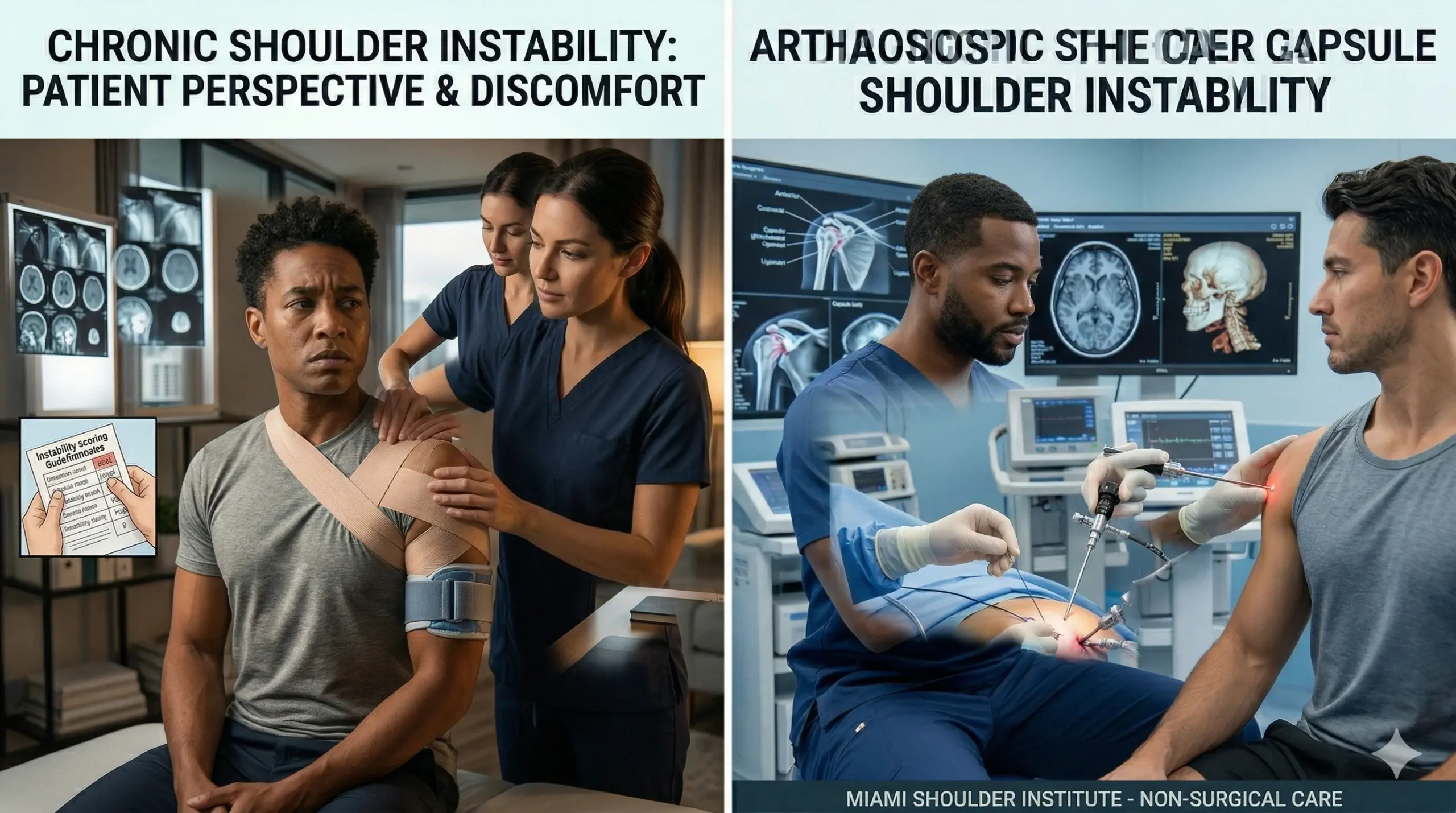
Chronic shoulder instability can make even simple movements feel unreliable or painful. Many patients describe a sensation that the shoulder may “slip out” during activity. This condition often develops after repeated dislocations or ligament damage. When non-surgical treatments are no longer effective, shoulder capsule repair surgery Miami patients consider may be necessary to restore joint stability. At Miami Shoulder Institute, care is focused on precise diagnosis and advanced surgical solutions for long-term shoulder function.
The shoulder capsule is a soft tissue structure that surrounds the joint and helps keep it stable. When the capsule becomes stretched, torn, or weakened, it can lead to instability.
This may result in:
Early evaluation is important to determine the right shoulder instability surgery Miami patients may need.
Shoulder instability can develop due to:
If the capsule does not heal properly, instability may persist and worsen over time.
Not all instability cases require surgery. However, shoulder capsule repair surgery Miami may be recommended when:
Consultation with a shoulder specialist Miami patients trust helps determine the most effective treatment plan.

Most capsule repairs are performed using arthroscopic shoulder surgery Miami patients prefer for its minimally invasive approach. This technique uses small incisions and a camera to repair damaged tissues inside the joint.
Benefits include:
During surgery, the capsule is tightened and stabilised using specialised anchors and sutures.
Shoulder capsule repair surgery focuses on restoring normal joint tension and stability. The procedure may involve:
This helps prevent future dislocations and improves shoulder control.
Recovery after shoulder instability surgery is structured and essential for long-term success. Patients typically follow a rehabilitation plan that includes:
Consistent rehabilitation is key to preventing recurrence.
With expert surgical care and proper rehabilitation, many patients regain shoulder stability, strength, and confidence. Early treatment significantly reduces the risk of ongoing instability and joint damage.
It often results from repeated dislocations, ligament damage, or untreated injuries affecting the shoulder capsule.
No. Surgery is recommended when non-surgical treatments fail or instability persists.
Recovery typically takes several months with structured rehabilitation.
Yes. Arthroscopic techniques allow precise repair and are commonly used for capsule and ligament injuries.
Proper rehabilitation significantly reduces the risk, though recurrence is possible in some cases.