
 EN EN
EN EN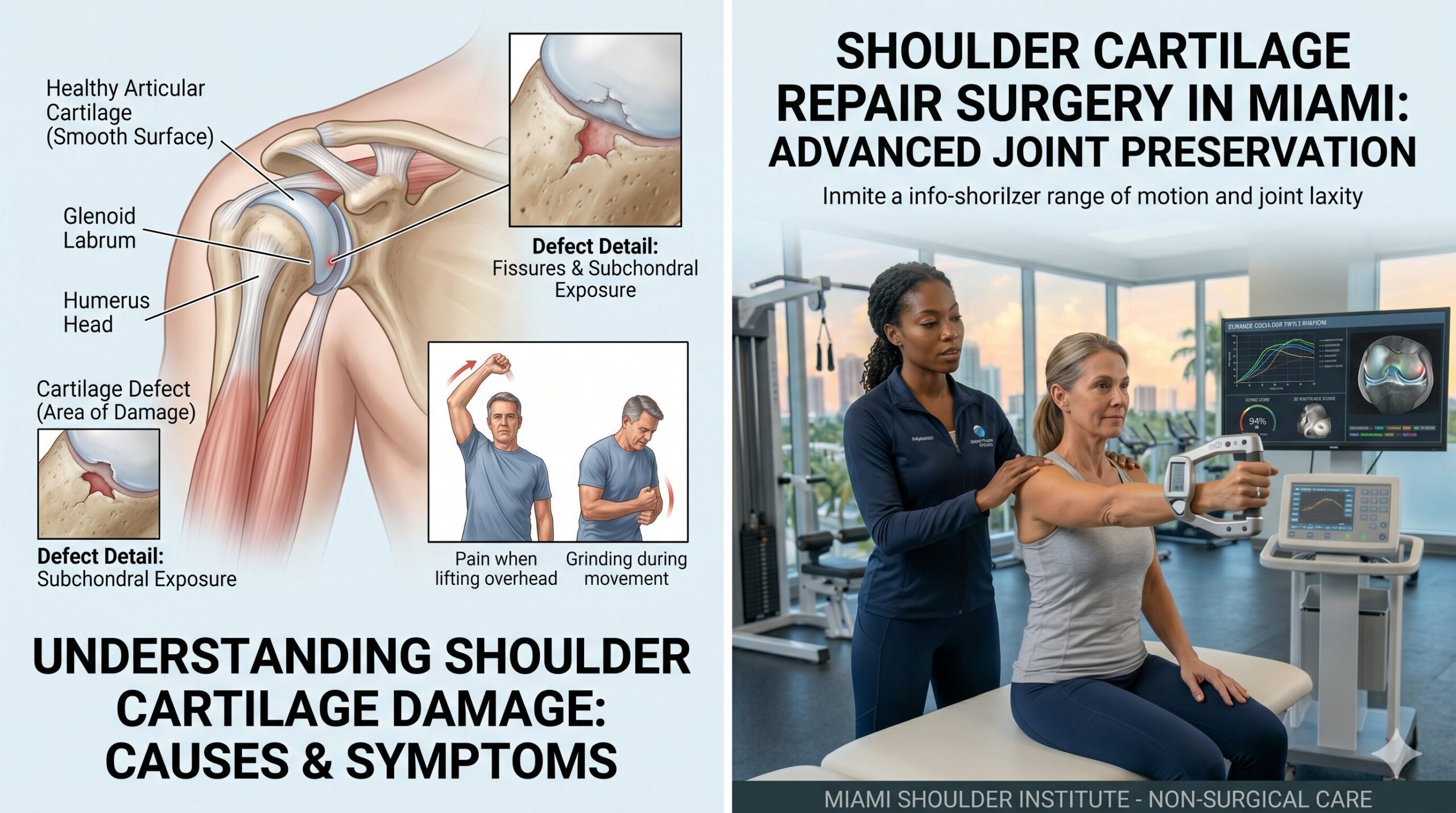
Damage to the shoulder cartilage can lead to persistent pain, stiffness, and reduced mobility. If left untreated, it may progress to more serious joint conditions, affecting long-term shoulder function. When non-surgical treatments are no longer effective, shoulder cartilage repair surgery Miami patients consider can help preserve the joint and restore smooth movement. At Miami Shoulder Institute, care focuses on early diagnosis and advanced surgical techniques aimed at joint preservation and recovery.
Cartilage is a smooth, protective tissue that covers the ends of bones within the shoulder joint. It allows friction-free movement and absorbs shock during activity. When cartilage becomes damaged, it can lead to:
Cartilage injuries may occur due to trauma, repetitive stress, or age-related degeneration.
You may need assessment for cartilage repair if you experience:
Early diagnosis helps determine whether surgical intervention is necessary.
Not all cartilage injuries require surgery. However, shoulder cartilage repair surgery Miami may be recommended when:
Consultation with a shoulder arthroscopy surgeon helps identify the most suitable treatment plan.
Many cartilage repair procedures are performed using minimally invasive shoulder surgery techniques. Arthroscopy allows surgeons to access the joint through small incisions using a camera and specialised instruments.
Benefits include:
This modern approach is widely used in advanced shoulder surgery Miami techniques.
Cartilage repair surgery focuses on restoring the damaged joint surface and improving function. Depending on the condition, procedures may include:
The goal is to preserve the natural joint and delay or prevent the need for joint replacement.
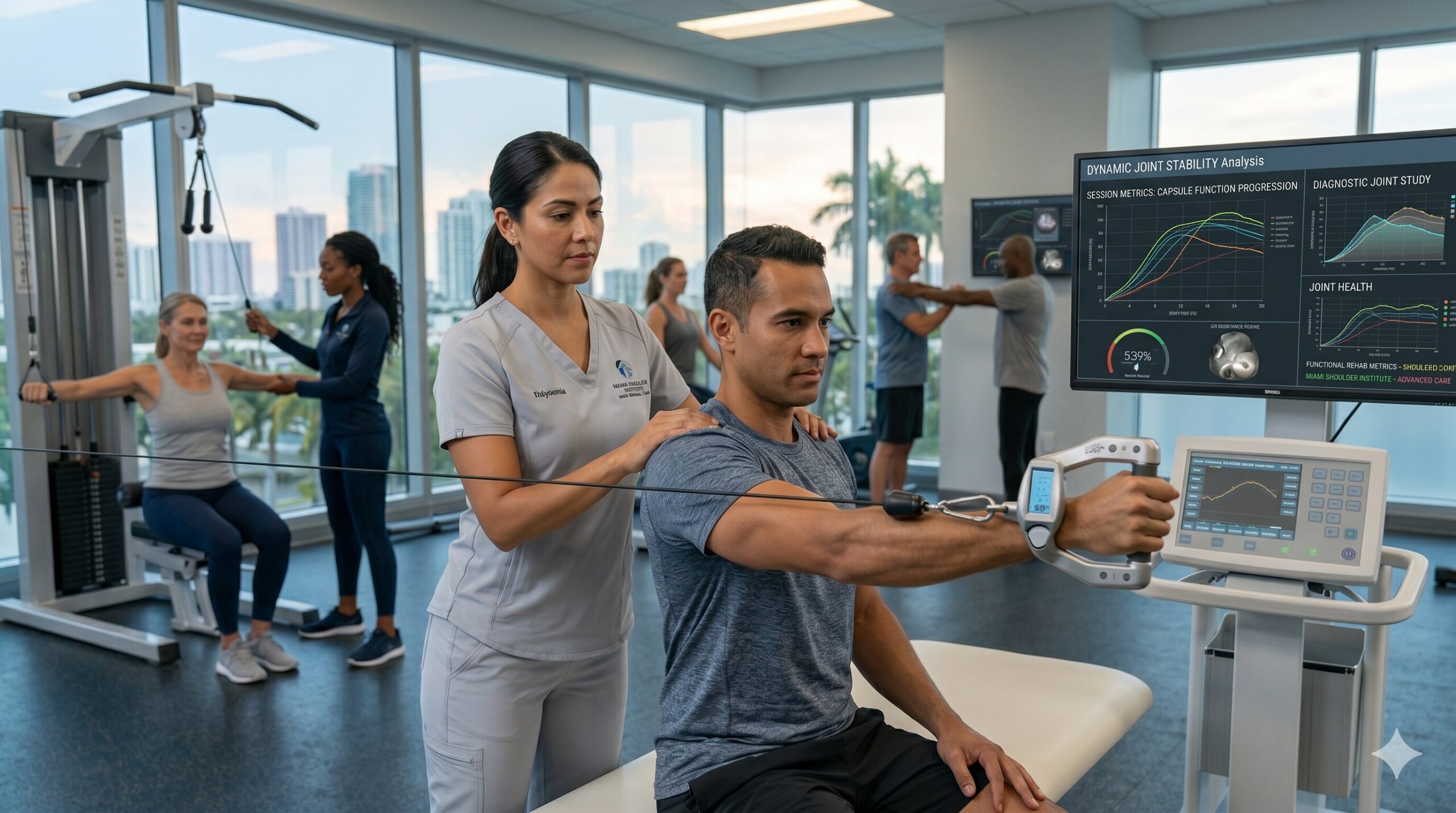
Recovery after cartilage repair surgery is gradual and requires structured rehabilitation. Patients typically follow a plan that includes:
Adherence to rehabilitation is essential for long-term success.
With expert care and proper rehabilitation, many patients experience reduced pain and improved joint function. Early treatment plays a key role in preserving shoulder health and preventing further degeneration.
It can result from injuries, repetitive stress, or age-related wear and tear.
No. Many cases improve with non-surgical treatment, but surgery is recommended when symptoms persist.
Recovery varies but may take several months depending on the procedure and rehabilitation.
Certain procedures stimulate new cartilage growth, helping improve joint function.
If pain, stiffness, or limited movement persists, evaluation is recommended.