
 EN EN
EN EN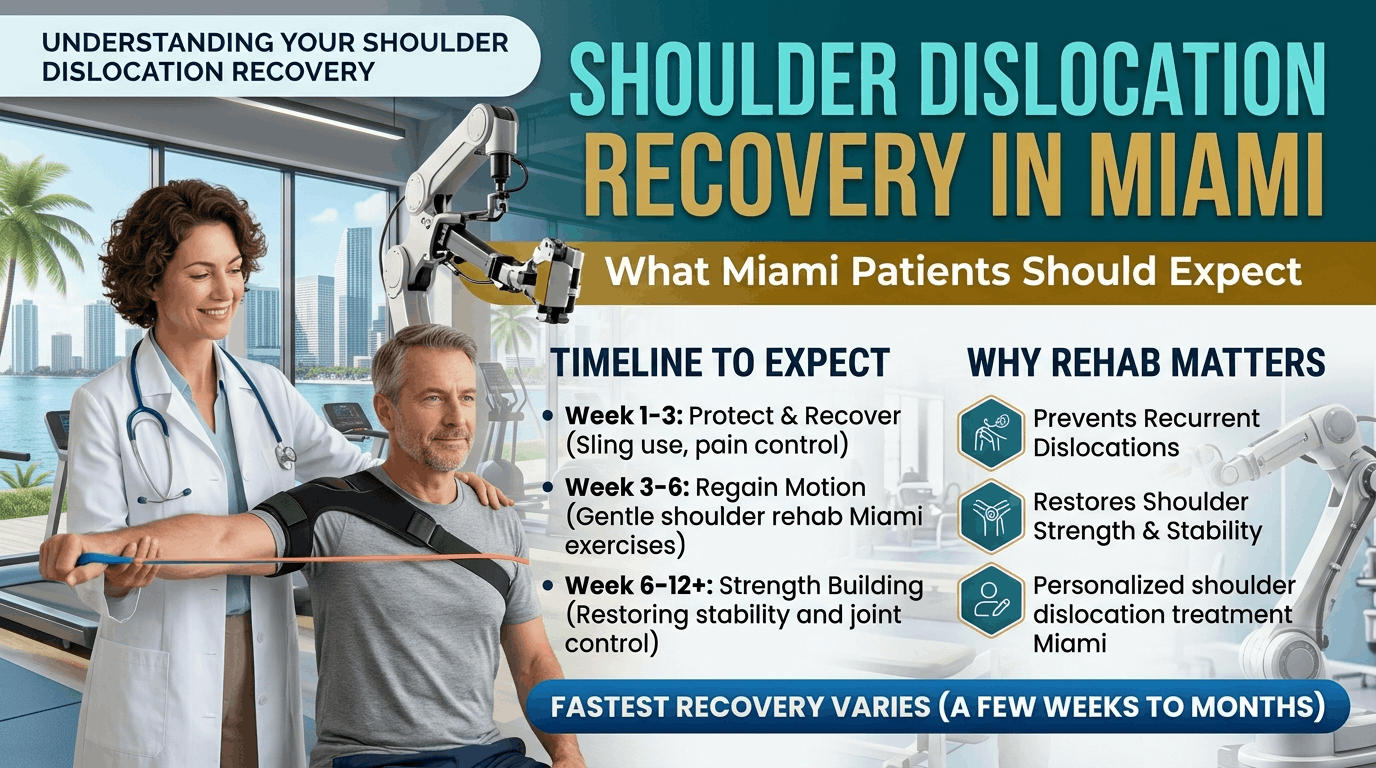
A shoulder dislocation is a painful injury that occurs when the upper arm bone (humerus) comes out of the shoulder socket. Recovery time depends on several factors, including age, activity level, severity of the injury, whether associated tissue damage occurred, and whether surgery is required.
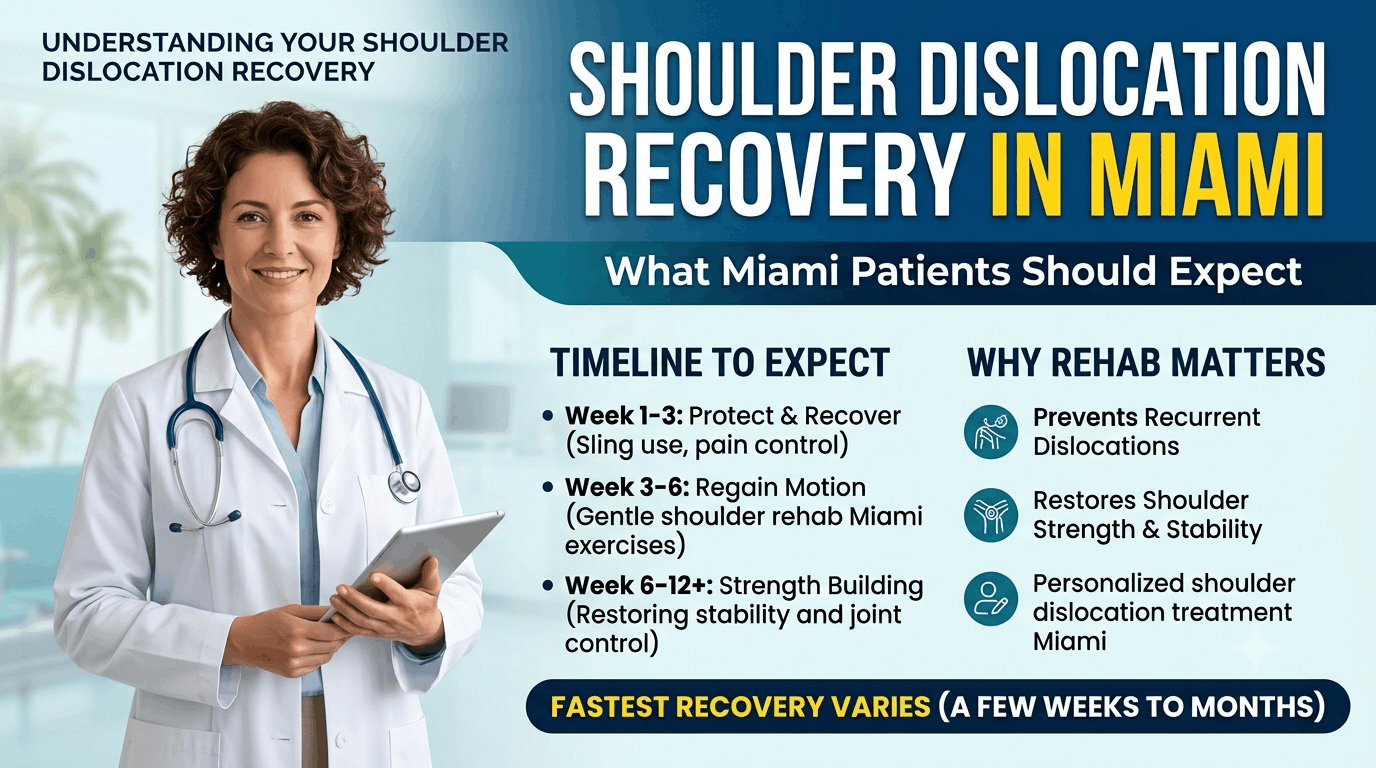
In general, shoulder dislocation recovery Miami patients experience may take anywhere from a few weeks to several months. Mild first-time dislocations treated conservatively often recover faster, while recurrent dislocations or injuries involving labral tears, ligament damage, or fractures may require longer rehabilitation or surgery.
At Miami Shoulder Institute, treatment plans for shoulder dislocation treatment Miami are personalized to restore stability, reduce pain, and help patients safely return to work, sports, and daily activities.
The shoulder is the most mobile joint in the body, which also makes it one of the most prone to dislocation.
The shoulder works as a ball-and-socket joint:
Because the socket is relatively shallow, strong soft tissues are needed to keep the joint stable.
A dislocation occurs when the ball moves completely out of the socket.
This may cause damage to:
These associated injuries often influence recovery time.
Dislocations usually occur after significant force or trauma.
Common causes include:
Sports Injuries
Especially in contact sports or overhead sports.
Examples:
Falls
Landing on an outstretched arm is a common cause.
Motor Vehicle Accidents
High-energy trauma may cause severe instability.
Previous Shoulder Instability
Once the shoulder dislocates, future dislocations become more likely.
Read More – Shoulder Surgery in Miami: Cost, Insurance, and What to Expect
A dislocation often causes immediate and severe symptoms.
Common symptoms include:
Prompt evaluation is important to prevent complications.
The first step in shoulder dislocation treatment Miami is reducing the dislocation—placing the shoulder back into the socket.
Once reduced, treatment may include:
After the shoulder is relocated, the recovery process begins.
Not every dislocation heals the same way.
Recovery depends on several important factors.
1. First-Time vs Recurrent Dislocation
First-time dislocations often recover faster.
Repeated dislocations usually indicate chronic instability and may require more advanced treatment.
2. Age
Younger athletes often have a higher risk of repeat dislocations.
Older adults may have a higher risk of:
3. Severity of Soft Tissue Damage
Recovery becomes longer if the injury causes:
4. Need for Surgery
Patients requiring surgery usually have longer recovery timelines but may achieve better long-term stability.
Understanding the recovery timeline helps patients set realistic expectations.
Week 1: Acute Recovery Phase
During the first week, the focus is on:
Common recommendations include:
Pain is usually most intense during this phase.
Weeks 2–3: Early Healing
Pain typically begins improving.
Goals include:
Many patients still feel:
This is normal.
Weeks 3–6: Regaining Motion
This stage focuses on restoring mobility.
Patients may begin guided shoulder rehab Miami exercises.
Goals include:
Recovery progression depends on stability.
Weeks 6–12: Strength Building
As healing improves, rehabilitation becomes more active.
Therapy may focus on:
This stage is critical for preventing future instability.
3–6 Months: Return to Sports or Heavy Activity
Athletes and active patients gradually return to:
Return depends on:
Rushing back too early increases reinjury risk.
Read More – Difference Between an Orthopedic Shoulder Specialist and a General Orthopedic Doctor
A structured shoulder rehab Miami program is one of the most important factors in successful recovery.
Rehabilitation helps restore:
Skipping rehab can increase the risk of:
Rehab is often just as important as the initial treatment.
Unfortunately, yes.
Recurrent instability is common—especially in:
Each repeated dislocation can cause additional damage.
That is why preventing recurrence is a major goal of shoulder dislocation treatment Miami.
Positive recovery signs include:
Progress is usually gradual rather than immediate.
Contact your provider if you experience:
Prompt evaluation helps prevent complications.
Not every dislocation requires surgery.
However, surgery may be recommended if:
Surgery may restore long-term stability.
Depending on the injury, procedures may include:
Repairs torn cartilage.
Shoulder Stabilization Surgery
Tightens stabilizing structures.
Bone Reconstruction Procedures
Used for significant bone loss.
Most modern procedures are performed arthroscopically.
Post-surgical recovery usually involves:
Early Protection
Sling use and pain control.
Rehabilitation
Progressive mobility and strengthening.
Return to Activity
Gradual progression toward sports and heavy activity.
Recovery often takes several months.
Yes—although risk varies.
Helpful strategies include:
Strong muscles improve joint stability.
Miami Shoulder Institute specializes exclusively in diagnosing and treating shoulder conditions, including instability, dislocations, labral injuries, rotator cuff tears, fractures, and arthritis.
Whether recovery requires rehabilitation or surgery, patients receive personalized care designed to restore shoulder function, reduce pain, and prevent future instability.
The goal is long-term stability—not just short-term pain relief.
1. How long does shoulder dislocation recovery take?
Recovery may take several weeks to several months depending on injury severity and treatment type.
2. Can I move my arm after a dislocation?
Movement restrictions depend on the stage of recovery and provider recommendations.
3. Will I need surgery after a shoulder dislocation?
Not always. Many first-time dislocations are treated without surgery.
4. Can a shoulder dislocate again?
Yes. Recurrent instability is common, especially in younger active individuals.
5. Why is rehab important after a dislocation?
Rehab restores strength, stability, mobility, and reduces reinjury risk.
6. When can I return to sports?
Return depends on strength, stability, and recovery progress.
7. Is shoulder dislocation recovery painful?
Pain is usually worst early after injury and improves gradually with treatment.
Also Read About – How to Find the Best Shoulder Surgeon in Miami: A Patient Guide by Miami Shoulder Institute
Best Shoulder Doctor in Florida: How to Choose the Right Surgeon