
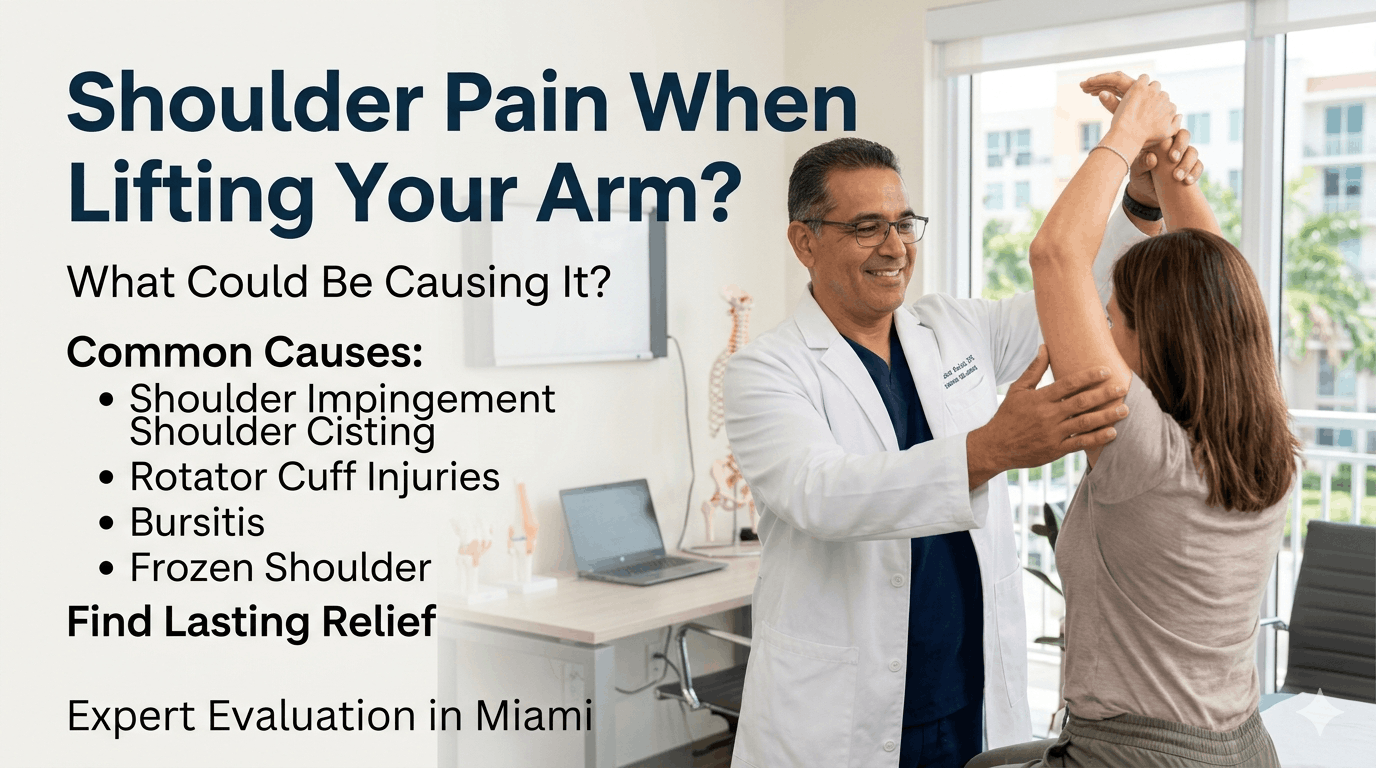
If you experience pain when raising your arm overhead, reaching for an object on a shelf, putting on a shirt, or lifting weights, you are not alone. Shoulder pain lifting arm Miami patients experience is one of the most common reasons people seek shoulder care.
Several conditions can cause pain during arm elevation, including shoulder impingement, rotator cuff injuries, bursitis, frozen shoulder, arthritis, labral tears, and shoulder instability. While some cases improve with rest and rehabilitation, persistent pain should be evaluated by a shoulder specialist Miami patients trust to determine the underlying cause and develop an effective treatment plan.
At Miami Shoulder Institute, patients receive comprehensive evaluations designed to identify the source of pain and restore shoulder function.
The shoulder is the most mobile joint in the human body. This remarkable mobility allows us to:
However, this mobility also makes the shoulder vulnerable to injury.
When the arm is lifted, multiple structures must work together smoothly, including:
When one or more of these structures become injured or inflamed, pain may occur during movement.
1. Shoulder Impingement
One of the most common causes of shoulder pain lifting arm Miami patients experience is shoulder impingement Miami specialists frequently diagnose.
Shoulder impingement occurs when soft tissues become compressed between bones during arm movement.
Common symptoms include:
Many patients describe a “painful arc” while raising their arm.
2. Rotator Cuff Tendonitis
The rotator cuff helps stabilize the shoulder and control arm movement.
When these tendons become irritated or inflamed, symptoms may include:
Rotator cuff tendonitis is especially common among:
3. Rotator Cuff Tears
A rotator cuff tear may begin gradually or occur suddenly after an injury.
Common signs include:
Unlike simple inflammation, tears often cause noticeable strength loss.
Read More – Shoulder Surgery in Miami: Cost, Insurance, and What to Expect
4. Shoulder Bursitis
The shoulder contains fluid-filled sacs called bursae that reduce friction between tissues.
When a bursa becomes inflamed, patients may experience:
Bursitis frequently occurs alongside shoulder impingement.
5. Frozen Shoulder
Frozen shoulder causes thickening and tightening of the shoulder capsule.
Symptoms include:
Patients often notice both pain and severe restriction in movement.
6. Labral Tears
The labrum is a ring of cartilage that helps stabilize the shoulder joint.
Labral injuries may cause:
Athletes commonly experience this type of injury.
7. Shoulder Arthritis
Arthritis gradually wears away cartilage inside the shoulder joint.
Symptoms may include:
Lifting the arm may become increasingly uncomfortable as arthritis progresses.
Because shoulder impingement Miami patients frequently experience is one of the leading causes of lifting-related pain, it deserves special attention.
During normal movement, tendons glide through a narrow space beneath the acromion.
When this space becomes crowded, tendons may become compressed.
This can result in:
Early treatment often prevents more serious problems from developing.
Not all shoulder pain is dangerous, but certain symptoms should prompt evaluation.
Consider seeing a shoulder specialist Miami patients rely on if you experience:
Persistent Pain
Pain lasting more than a few weeks.
Significant Weakness
Difficulty lifting everyday objects.
Night Pain
Pain that interferes with sleep.
Limited Motion
Inability to raise the arm normally.
Previous Injury
Pain following a fall or accident.
Recurrent Symptoms
Pain that repeatedly returns after activity.
Many patients notice pain only during specific movements.
This often happens because:
The exact location and timing of pain can provide important clues about the underlying condition.
At Miami Shoulder Institute, evaluation typically begins with:
Medical History
Understanding:
Physical Examination
Assessment of:
Imaging Studies
Depending on symptoms, imaging may include:
Accurate diagnosis is the foundation of effective treatment.
Treatment depends on the underlying diagnosis.
Common options include:
Physical Therapy
Improves mobility, strength, and mechanics.
Activity Modification
Reduces aggravating movements.
Anti-Inflammatory Treatment
Helps control swelling and discomfort.
Rehabilitation Programs
Improve shoulder stability and function.
Injections
May provide temporary symptom relief in selected cases.
Surgery
In some situations, surgical treatment may be necessary if conservative treatment fails.
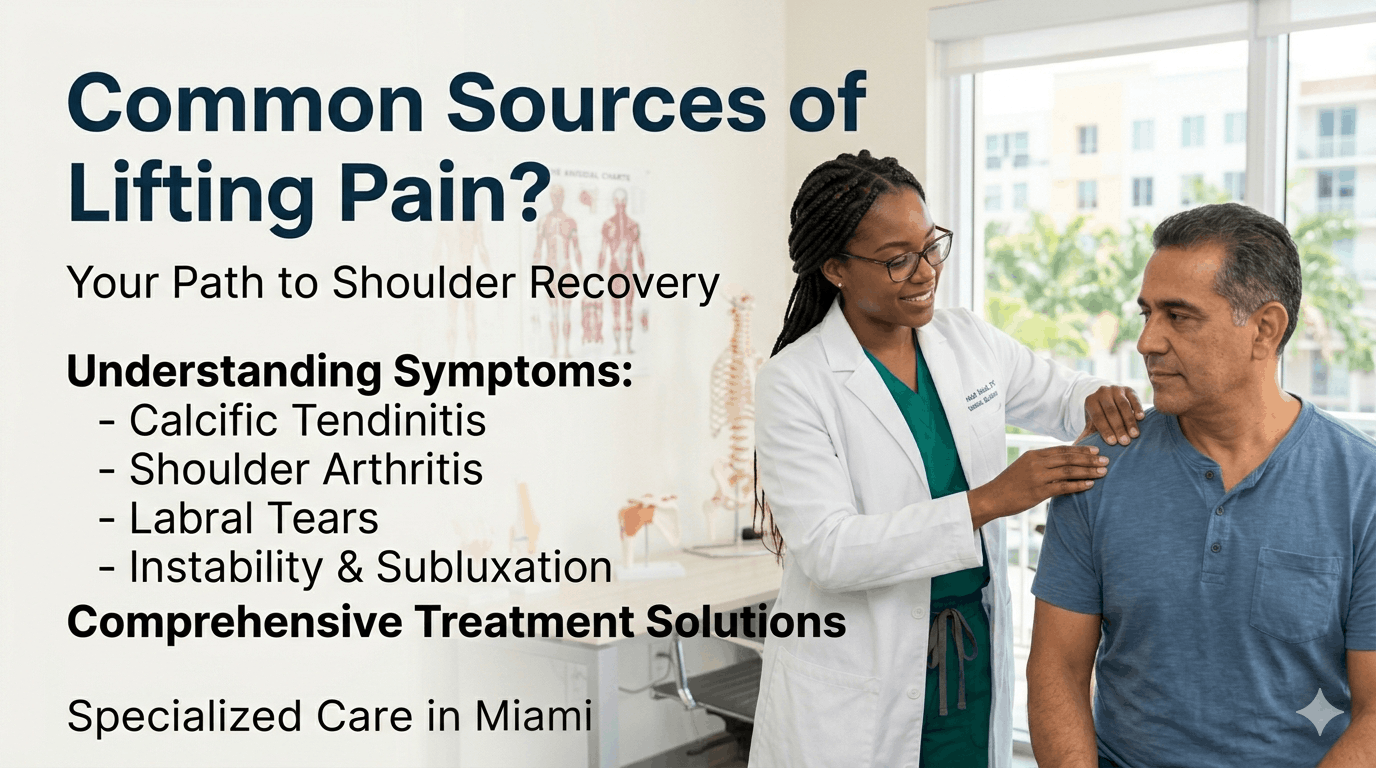
Yes.
Many patients improve through:
Early treatment often prevents symptoms from progressing.
However, structural injuries such as significant tendon tears may eventually require surgical intervention.
Also Read More – 8 Possible Reasons Your Shoulder Pops or Cracks During Workouts
To reduce the risk of future injury:
Prevention often starts with proper movement mechanics.
Miami Shoulder Institute focuses exclusively on diagnosing and treating shoulder conditions. Patients receive specialized care designed to identify the source of pain, restore movement, and improve long-term shoulder health.
Whether symptoms are caused by shoulder impingement, tendon injuries, arthritis, instability, or another condition, treatment plans are tailored to each patient’s goals and lifestyle.
1. Why does my shoulder hurt when I raise my arm?
Common causes include shoulder impingement, rotator cuff injuries, bursitis, frozen shoulder, and arthritis.
2. Is shoulder impingement serious?
It can become more serious if left untreated, potentially leading to tendon damage.
3. Can shoulder pain improve without surgery?
Yes. Many shoulder conditions respond well to physical therapy and conservative treatment.
4. When should I see a shoulder specialist?
If pain lasts several weeks, worsens, causes weakness, or limits daily activities.
5. Does a rotator cuff tear always cause pain?
Not always, but many tears cause pain, weakness, and difficulty lifting the arm.
6. Why is my shoulder pain worse at night?
Inflammation, sleeping position, and underlying tendon injuries often contribute to nighttime discomfort.
7. Can poor posture cause shoulder pain?
Yes. Poor posture can alter shoulder mechanics and contribute to impingement and tendon irritation.
Also Read More – Best Shoulder Surgeon in Miami: Diagnosis, Treatment & Recovery Explained
Top Shoulder Surgeons in Miami Offering Advanced Orthopedic Care