
 EN EN
EN EN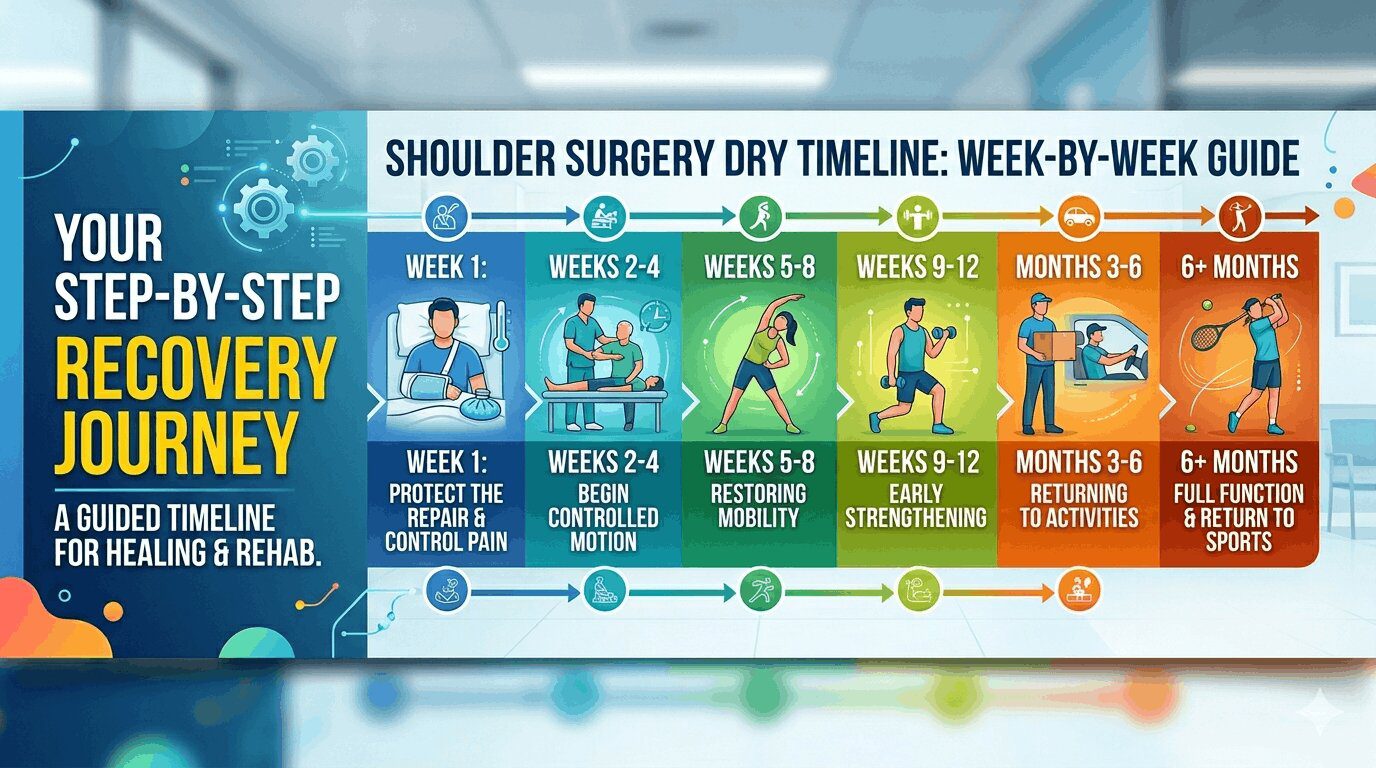
One of the first questions patients ask before undergoing surgery is, “How long will recovery take?” The answer depends on the specific procedure, the severity of the condition, your overall health, and your commitment to rehabilitation.
In general, a shoulder surgery recovery timeline can range from several weeks to several months. While some patients return to routine activities relatively quickly, full recovery for more complex procedures may take six months or longer.
At Miami Shoulder Institute, patients receive individualized recovery plans designed to maximize healing, restore function, and safely return them to work, sports, and daily activities.
Recovery is not a single event—it is a process.
Whether you undergo rotator cuff repair, labral repair, shoulder stabilization, fracture fixation, or shoulder replacement, healing occurs in stages.
Each phase focuses on:
Understanding what to expect during each phase helps patients stay motivated and avoid setbacks.
Not every patient follows the exact same timeline.
Recovery can be influenced by:
Type of Surgery
Different procedures require different healing times.
Age
Younger patients often heal faster, although overall health matters more than age alone.
Tissue Quality
Tendon and bone quality affect healing speed.
Activity Level
Athletes and manual laborers may require additional rehabilitation before returning to full activity.
Commitment to Therapy
Successful shoulder rehab Miami programs often play a major role in long-term outcomes.
The first week focuses on protecting the surgical repair and controlling discomfort.
Patients commonly experience:
During this phase:
The primary goal is healing, not strength.
By the second week, many patients begin feeling more comfortable.
Typical goals include:
Most patients are still avoiding active shoulder use.
Follow-up appointments often occur during this stage to monitor progress.
The body continues forming new tissue around the surgical repair.
Depending on the procedure, patients may begin:
At this point, patients often notice:
However, healing tissues remain vulnerable.
This phase focuses on improving shoulder movement without placing excessive stress on healing structures.
Goals often include:
Many patients begin reducing sling use during this stage, depending on their procedure.
This period represents an important milestone in the shoulder surgery recovery timeline.
Patients generally begin feeling more confident using the arm.
Common improvements include:
Therapy may progress to include:
Although progress becomes more noticeable, full healing is still underway.
By this stage, many repairs have gained sufficient healing to allow controlled strengthening.
Patients may begin:
This is often one of the most rewarding phases because measurable gains become more apparent.
Many patients report:
Most patients continue advancing their rehabilitation.
Goals include:
During this phase, patients may gradually return to:
Recovery speed varies depending on the specific shoulder surgery Miami procedure performed.
This stage often focuses on higher-level functional goals.
Patients may work toward:
Athletes frequently begin sport-related drills under supervision.
Many patients feel significantly improved compared to their preoperative condition.
For some patients, healing continues beyond six months.
This is especially true for:
Long-term goals may include:
Recovery is often a gradual process rather than a single milestone.
One of the biggest predictors of success is participation in a structured shoulder rehab Miami program.
Rehabilitation helps patients:
Skipping therapy or progressing too quickly can increase the risk of complications.
The goal is not simply healing—it is restoring optimal shoulder function.
Recovery is rarely perfectly linear.
Patients may experience:
Temporary Stiffness
Normal as tissues heal.
Sleep Discomfort
Common during the early stages.
Fatigue
The body uses significant energy for healing.
Frustration With Progress
Recovery often occurs gradually rather than day by day.
Understanding these challenges can help patients maintain realistic expectations.
Positive indicators include:
Consistent progress is often more important than rapid progress.

Patients should contact their care team if they experience:
Prompt evaluation can help address concerns before they become larger problems.
A rotator cuff repair and a shoulder replacement do not heal at the same rate.
Similarly, two patients undergoing the same surgery may recover differently due to:
This is why individualized treatment plans are so important.
Miami Shoulder Institute focuses exclusively on shoulder care, helping patients navigate every stage of treatment—from diagnosis through recovery.
Patients benefit from:
The objective is not only successful surgery but also successful recovery.
1. What is the typical shoulder surgery recovery timeline?
Most patients improve over several months, while full recovery may take six months or longer depending on the procedure.
2. When can I drive after shoulder surgery?
This depends on the procedure, sling use, pain levels, and surgeon recommendations.
3. How important is physical therapy?
Physical therapy is one of the most important components of successful recovery.
4. When can I return to work?
Office-based work often returns sooner than physically demanding jobs.
5. Is pain normal during recovery?
Some discomfort is expected, especially during the early healing stages.
6. Can I exercise during recovery?
Yes, but exercises should follow your rehabilitation plan and provider guidance.
7. What happens if I skip rehab?
Skipping rehabilitation can increase stiffness, reduce strength gains, and negatively affect outcomes.