

 EN EN
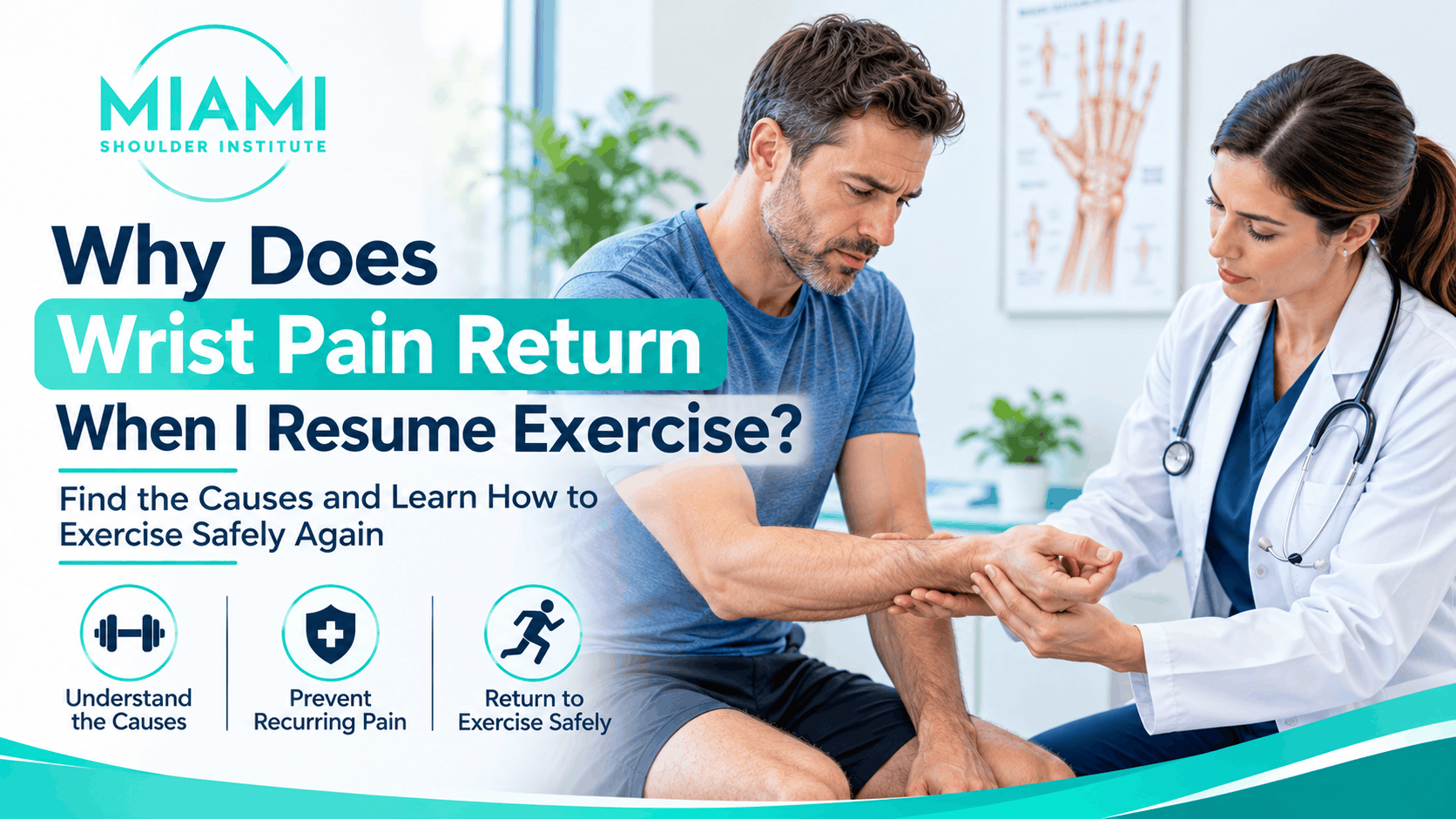
Wrist pain that returns after exercise may indicate that the wrist is being loaded faster than it can comfortably tolerate, that rehabilitation is incomplete, or that an underlying injury has not fully recovered. Recurrent wrist pain can occur after a sprain, tendon irritation, ligament injury, fracture, or repetitive overuse.
Pain returning during exercise does not automatically mean that the wrist has been seriously damaged again. However, repeated flare-ups, swelling, weakness, clicking, or reduced movement may indicate that the activity needs to be modified and the wrist reassessed.
The safest approach is to identify what is triggering the symptoms, adjust exercise intensity, and progress wrist rehabilitation gradually.
Several factors can contribute to recurrent wrist pain when returning to physical activity.
1. Increasing Exercise Intensity Too Quickly
After a period of rest or reduced activity, the wrist may not be ready for its previous training load.
Returning immediately to heavy lifting, repeated push-ups, or high-volume gripping can exceed the wrist’s current capacity. Even if everyday activities feel comfortable, exercise places greater demands on the joints, tendons, ligaments, and surrounding muscles.
A gradual increase in load allows the wrist to adapt more safely.
2. Incomplete Wrist Rehabilitation
Rest may reduce pain, but it does not always restore strength, mobility, coordination, or endurance.
If rehabilitation ends as soon as symptoms improve, the wrist may remain less prepared for demanding activities. Weakness or reduced control can make it harder to tolerate repeated loading during exercise.
A rehabilitation plan may need to address:
3. Wrist Overuse Injury
A wrist overuse injury can develop when repeated movements place more stress on tissues than they can recover from.
Activities involving frequent gripping, wrist extension, twisting, or weight-bearing may contribute to irritation. Examples include weightlifting, racket sports, cycling, and repetitive manual work.
Pain may initially appear only after exercise. If the same loading pattern continues, symptoms may begin earlier during activity or last longer afterwards.
4. An Underlying Injury Has Not Fully Recovered
Recurrent wrist pain may occur when an underlying condition remains symptomatic.
Possible causes include:
The location and pattern of pain can provide clues, but symptoms alone cannot confirm the diagnosis.
Also Read More – When Wrist Pain Appears Only During Rotation: Causes Patients Often Miss
5. Exercise Technique or Wrist Position
Certain wrist positions increase the load placed on specific structures.
For example, push-ups and planks require the wrist to support body weight in an extended position. Some lifting exercises involve forceful gripping or wrist bending. Poorly controlled movement or excessive loading may aggravate symptoms.
Modifying hand position, equipment, range of motion, or exercise selection may reduce stress while maintaining activity.
6. Insufficient Recovery Between Sessions
Tissues need time to recover after demanding exercise. Repeating high-load wrist activities without adequate recovery may contribute to recurrent symptoms.
Recovery needs vary depending on the exercise, injury, training history, and individual response. A useful guide is to monitor how the wrist feels during activity and afterwards, rather than relying only on discomfort at the moment of exercis
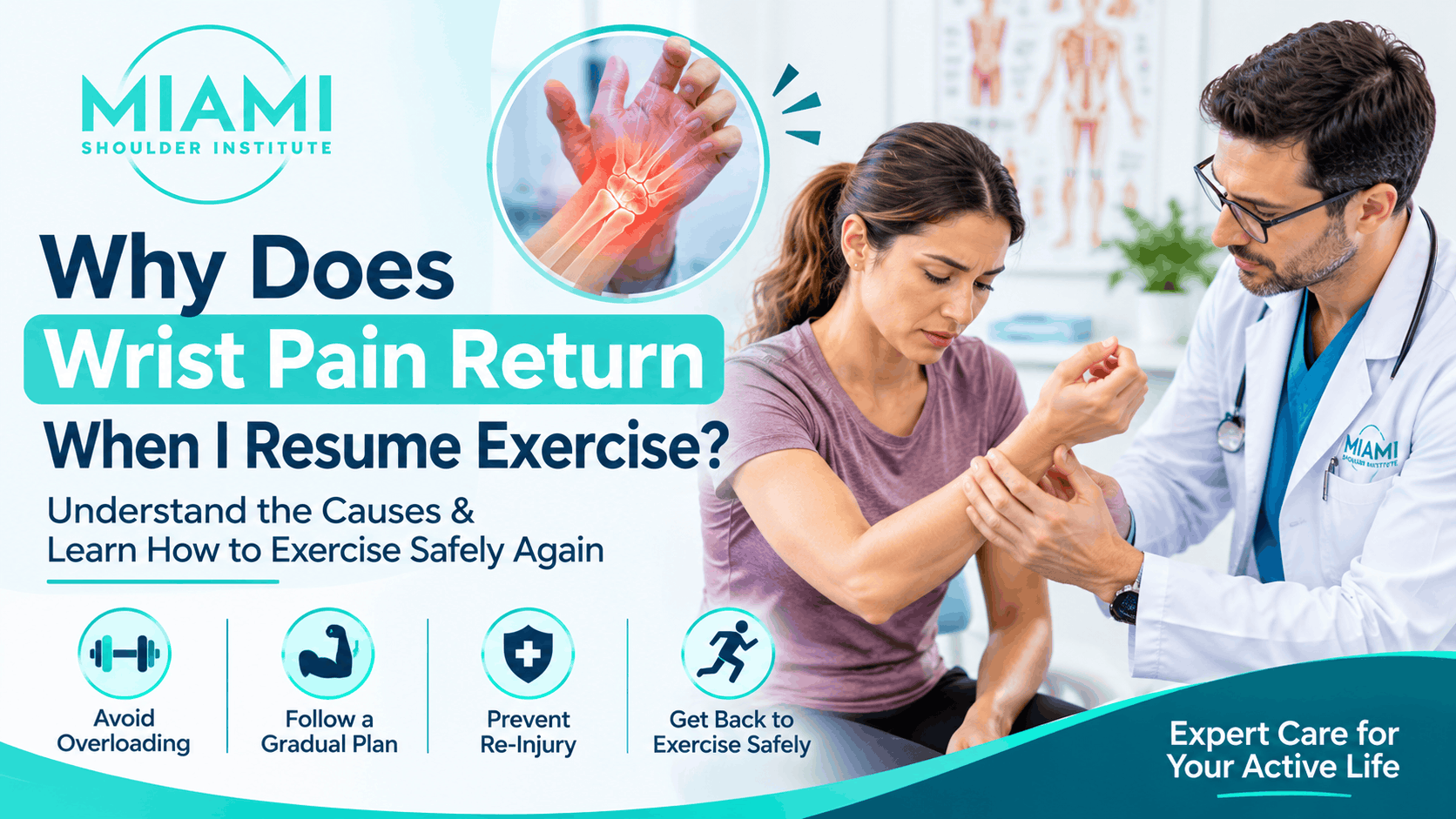
Wrist pain may return during exercises that involve compression, gripping, rotation, or repeated wrist movement.
| Exercise or activity | Possible wrist stress |
| Push-ups and planks | Weight-bearing through an extended wrist |
| Bench press and overhead press | Grip force and wrist stabilisation |
| Deadlifts and pull-ups | Sustained gripping and load transfer |
| Racket sports | Repeated gripping and rapid wrist movement |
| Cycling | Prolonged pressure through the hands and wrists |
| Yoga poses on the hands | Sustained wrist extension and body-weight loading |
These activities are not necessarily harmful. The appropriate choice depends on the underlying condition, symptoms, technique, and current tolerance.
Returning to exercise after wrist pain requires a gradual approach. The aim is to restore capacity while avoiding repeated flare-ups.
1. Reduce the Provoking Load
If a particular exercise triggers pain, reduce its weight, repetitions, duration, or range of motion.
You may also temporarily substitute an exercise that places less stress on the wrist. For example, a modified push-up position or a different upper-body exercise may be more comfortable, depending on the injury.
Do not push through sharp, increasing, or unstable pain.
2. Start With Comfortable Movement
Gentle wrist and forearm movements may help maintain mobility when appropriate for the injury.
Avoid forcing the wrist into painful positions. If the pain began after a significant injury or fracture, follow the treatment and movement restrictions provided by your healthcare professional.
3. Rebuild Strength Gradually
Wrist strengthening may begin with low resistance and controlled movements. Progression can include wrist flexion and extension, forearm rotation, and grip exercises, depending on the diagnosis.
Increase one aspect of training at a time, such as resistance, repetitions, or frequency. This makes it easier to identify which change may be contributing to symptoms.
4. Monitor Symptoms During and After Exercise
Pay attention to how the wrist responds during the session and later that day or the following morning.
If symptoms become more intense, persist longer than usual, or interfere with daily activities, reduce the load and consider seeking advice.
5. Allow Adequate Recovery
Avoid repeatedly training the wrist hard when it remains painful or swollen after a previous session.
A gradual return may involve alternating higher-load and lower-load activities or allowing more recovery time between sessions.
Read More – What Patients Can Learn from the Ram Charan Wrist Surgery Case
Wrist rehabilitation is designed to restore the movement, strength, and functional capacity needed for daily activities and exercise.
The programme depends on the cause of the pain and may include several stages.
Mobility
Gentle, controlled movements may help restore comfortable wrist and forearm range of motion.
Strengthening
Progressive resistance exercises may improve the strength and endurance of the wrist and forearm muscles. Grip strengthening may be included when appropriate.
Stability and Control
Exercises may focus on controlling wrist position during gripping, lifting, and weight-bearing tasks.
Functional Progression
The final stages may involve gradually reintroducing the movements required for work, sport, or exercise.
Rehabilitation should be individualised. An exercise that is suitable for one wrist injury may be inappropriate for another.
Occasional mild discomfort that settles after modifying activity may not require urgent care. However, recurrent wrist pain deserves assessment when it repeatedly limits exercise or daily function.
Consider seeking medical advice if:
Seek urgent medical attention after an injury if there is severe pain, visible deformity, significant swelling, numbness, unusual colour changes, or a cold hand.
Read More – Top Orthopedic Shoulder Surgeons in Miami
A clinician may review the history of the symptoms, exercise routine, previous injuries, and activities that trigger pain.
The examination may assess wrist movement, tenderness, grip strength, and stability. Depending on the suspected cause, imaging may be recommended:
Imaging is not required for every case. The decision depends on the clinical findings and whether the results are likely to change treatment.
Treatment depends on the underlying cause, symptom severity, and the demands placed on the wrist.
Activity Modification
Reducing or changing the movements that provoke symptoms can help manage repeated irritation while maintaining appropriate activity.
Wrist Support
A brace or splint may be recommended for certain injuries to protect the wrist or limit painful movement. The type and duration of support should be guided by the diagnosis.
Medication
Pain-relieving or anti-inflammatory medication may be appropriate for some people. Suitability depends on individual health factors and other medicines, so professional advice is recommended.
Physiotherapy
A tailored rehabilitation programme may address mobility, strength, grip endurance, and movement control. It can also help plan a gradual return to exercise.
Further Treatment or Surgery
If recurrent pain is caused by a structural injury that does not improve with appropriate non-surgical care, further treatment may be considered. Surgery is reserved for selected conditions and is not necessary for every person with recurring wrist pain.
Recurring wrist pain can make it difficult to maintain an exercise routine and may indicate that the wrist needs further assessment.
Miami Shoulder Institute takes an orthopaedic-focused approach to evaluating wrist and hand concerns. Assessment may include reviewing the history of symptoms and exercise-related triggers, examining wrist movement and stability, and considering imaging when appropriate.
Treatment recommendations depend on the diagnosis and individual needs. If wrist pain repeatedly returns when you resume exercise, a specialist evaluation can help clarify the cause and guide appropriate next steps.
Wrist pain that returns when you resume exercise may be related to increased loading, incomplete rehabilitation, overuse, or an underlying injury. Adjusting exercise intensity and progressing wrist strengthening gradually may help, but repeated flare-ups should not be ignored.
If pain persists, worsens, or affects grip strength and everyday activities, a clinical assessment can help identify the cause and determine an appropriate treatment plan.
1. Why does my wrist hurt again when I start exercising?
Wrist pain may return because the exercise load has increased too quickly, rehabilitation is incomplete, or an underlying injury remains symptomatic. Exercise technique and insufficient recovery may also contribute.
2. Is it normal for wrist pain to return after rest?
Pain returning after rest can happen if the wrist has not regained enough strength or tolerance for the activity. Repeated symptoms may also indicate an injury that needs assessment.
3. Should I stop exercising if my wrist hurts?
Stop or modify the specific activity if it causes sharp, increasing, or significant pain. Avoid repeatedly pushing through symptoms. If pain persists or keeps returning, seek medical advice.
4. How can I strengthen my wrist after an injury?
Wrist strengthening should progress gradually and be appropriate for the injury. A rehabilitation plan may include controlled wrist movements, forearm exercises, and grip strengthening, with resistance increased as tolerated.
5. Can push-ups cause recurrent wrist pain?
Yes. Push-ups place body weight through the wrist, often in an extended position. If the wrist is sensitive or has not fully recovered, this load may trigger symptoms. Modifying the position or choosing another exercise may help.
6. How long should I wait before exercising after wrist pain?
There is no single timeline for every wrist condition. Return to exercise depends on the diagnosis, symptom improvement, movement, strength, and tolerance for the required load. Follow the advice of your healthcare professional.
7. Can a wrist overuse injury heal without surgery?
Many overuse injuries improve with activity modification, appropriate rehabilitation, and other non-surgical care. Persistent symptoms may require further assessment to identify the cause and determine whether additional treatment is needed.
8. When should I see a wrist specialist for recurring pain?
Seek assessment if pain repeatedly returns, limits daily activities, or is accompanied by swelling, weakness, painful clicking, or instability. Pain following a significant injury should also be evaluated.