

 EN EN

Wrist weakness after fracture is common, even when an X-ray or clinical assessment confirms that the bone has healed. A fracture and the period of immobilisation can lead to muscle weakness, joint stiffness, reduced grip strength and difficulty coordinating wrist movements. The surrounding tendons and soft tissues may also need time to regain normal function.
Weak grip after wrist fracture can make everyday activities such as opening jars, carrying groceries, lifting objects or turning a door handle difficult. Recovery depends on the fracture’s severity, the treatment received, the duration of immobilisation and whether other structures were injured.
Appropriate wrist fracture recovery often involves gradually restoring movement, strength and functional use of the hand. A structured wrist rehabilitation programme may include mobility exercises, progressive strengthening and guidance on returning to normal activities.
However, persistent or worsening weakness should not automatically be attributed to normal healing. Ongoing pain, numbness, significant stiffness, clicking or reduced function may indicate a complication or an additional injury. A wrist specialist can assess the cause and recommend further treatment when needed.
Read More – When Wrist Pain Appears Only During Rotation: Causes Patients Often Miss
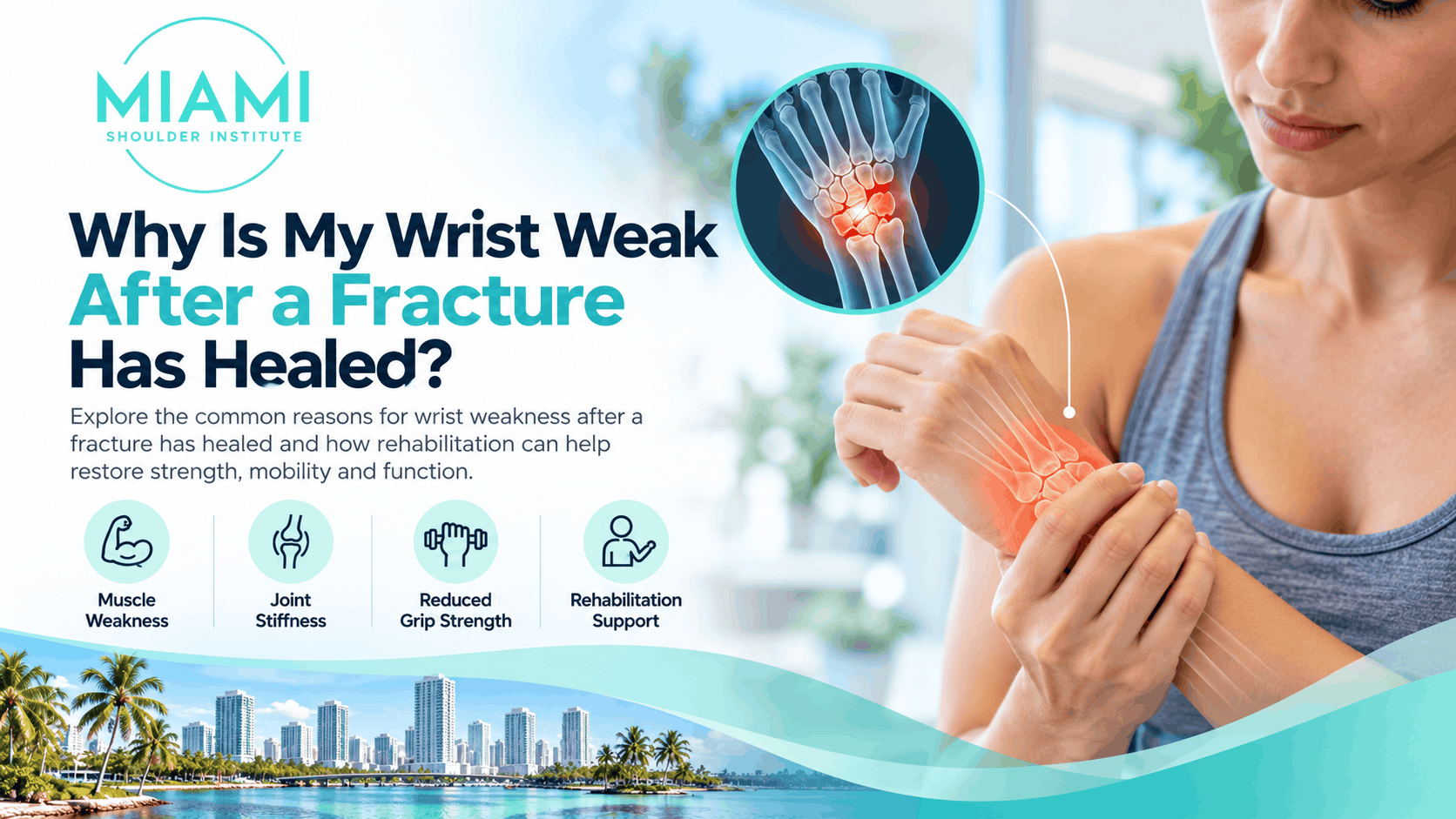
A healed fracture means the bone has made sufficient progress in healing. It does not necessarily mean the entire wrist has returned to its previous strength and function.
After a wrist fracture, the hand and wrist may remain immobilised in a cast or splint for several weeks. During that period, the muscles receive less use, the joints move less frequently and the surrounding soft tissues may become stiff.
When the cast is removed, it is common to notice weakness, discomfort and restricted movement. These symptoms may continue for weeks or months as normal activity gradually resumes.
Several factors can explain persistent weakness.
Muscles become weaker when they are used less than usual.
During fracture healing, you may avoid gripping, lifting and wrist movements to protect the injured bone. This reduction in activity can affect the muscles of the hand and forearm.
As a result, you may find it difficult to:
This is a common reason for wrist weakness after fracture.
Strength generally improves as appropriate activity and rehabilitation progress, although the pace varies from person to person.
A wrist that has been immobilised for several weeks can become stiff.
Reduced movement may affect wrist bending, straightening and forearm rotation. If you cannot move the wrist comfortably through its usual range, gripping and lifting may also become more difficult.
Stiffness can therefore contribute to weak grip even when the muscles themselves are not the only problem.
Restoring mobility is often an important part of wrist rehabilitation. The exercises should be appropriate for the fracture and the stage of healing.
Pain can make you reluctant to squeeze or lift with the injured hand.
Even if the bone has healed, the surrounding tissues may remain sensitive while strength and movement recover.
This can cause weak grip after wrist fracture, particularly during activities that require sustained gripping or heavier loads.
Pain should gradually improve as recovery progresses. Persistent, severe or worsening pain, however, deserves reassessment rather than simply being pushed through during exercise.
A fracture can affect more than bone. The surrounding tendons, ligaments, muscles and other soft tissues may also be injured or become stiff during immobilisation.
These structures contribute to coordinated hand and wrist movement.
If they remain irritated or restricted, you may notice weakness when bending the wrist, moving the fingers or gripping objects.
A clinical examination can help determine whether symptoms are consistent with ordinary recovery or suggest an additional problem.
Read More – Why Does My Wrist Hurt When I Put Weight on My Hand?
After a fracture, some people feel hesitant about using the injured wrist.
They may avoid certain movements because the wrist feels vulnerable, even when the bone has healed sufficiently for light activity.
Reduced use can slow the return of strength and coordination.
Gradually resuming appropriate daily activities, following the clinician’s guidance, can help restore confidence and function without placing excessive stress on the healing wrist.
Not all wrist fractures are alike.
Some involve a relatively simple break, while others affect the joint surface, involve multiple bone fragments or occur alongside ligament and soft-tissue injuries.
More complex fractures may require longer recovery and can leave greater stiffness or functional limitations.
A healed fracture may therefore still require a prolonged rehabilitation period to restore the best possible movement and strength.
Persistent weakness is not always caused by muscle loss.
Depending on the original injury, other possibilities may include:
These possibilities cannot be distinguished reliably from symptoms alone. If recovery has stalled or the wrist is becoming less functional, further assessment may be appropriate.
Grip weakness can appear in several ways.
You may notice that:
Some weakness is expected after immobilisation, but the overall trend should generally be towards gradual improvement.
If grip strength is declining rather than improving, or you are repeatedly dropping objects, arrange a clinical assessment.
There is no single recovery timeline for every patient.
Many wrist fractures take approximately six to twelve weeks for initial recovery, but the return of full strength and function can take longer. More severe injuries may require several months of rehabilitation.
| Recovery stage | What you may notice |
| After cast or splint removal | Stiffness, weakness, discomfort and reduced movement |
| Early rehabilitation | Gradual improvement in mobility and tolerance for light activities |
| Progressive strengthening | Better grip strength and ability to perform everyday tasks |
| Later recovery | Continued gains in strength, endurance and coordination |
These stages are general guidance, not a fixed timetable. Recovery depends on the fracture type, treatment, age, general health and any additional injuries.
A bone can be sufficiently healed while strength and movement are still recovering.
Wrist rehabilitation is the process of restoring movement, strength and functional use of the wrist and hand after injury.
The programme should reflect the fracture type, how it was treated and whether the bone is ready for the required movements and loads.
Once movement is permitted, exercises may help improve:
The goal is to restore comfortable movement gradually, rather than forcing the wrist into painful positions.
After movement improves and strengthening is approved, exercises may be introduced to help restore grip.
Depending on the recovery stage, these may include gentle hand squeezes or controlled gripping activities.
Resistance should increase gradually. Strong squeezing or heavy resistance may be inappropriate if the fracture or surrounding structures have not recovered sufficiently.
A rehabilitation plan may progress to exercises that strengthen the wrist and forearm muscles.
The exact exercises and resistance depend on the injury. A physiotherapist or treating clinician can determine when to begin and how to progress safely.
Functional rehabilitation helps prepare the wrist for tasks such as carrying objects, opening containers, dressing and using tools.
Start with manageable activities and gradually increase the demands as strength and comfort improve.
Heavy manual work, contact sports and demanding weight-bearing exercises may require additional time and clearance.
Mild stiffness or discomfort can occur when movement is reintroduced. However, exercise should not cause severe or progressively worsening pain.
Stop an exercise and seek advice if it causes new symptoms, marked swelling or a significant deterioration in function.
The appropriate exercises depend on whether the fracture has healed sufficiently and whether movement or resistance is permitted.
Common rehabilitation categories include:
Gentle finger movement: Opening and closing the hand can help maintain finger mobility.
Wrist range-of-motion exercises: Controlled bending and straightening may be introduced when approved.
Forearm rotation: Turning the palm up and down may help restore rotation when appropriate.
Gentle grip exercises: These may help rebuild grip strength during the strengthening stage.
Progressive resistance exercises: More demanding exercises can be introduced as healing and function allow.
Do not begin a generic exercise routine without considering the fracture and treatment plan. Some injuries require more protection than others, and exercises that are appropriate for one patient may be unsuitable for another.
Read More – 8 Possible Reasons Your Shoulder Pops or Cracks During Workouts
Some weakness is common after a cast is removed, but certain symptoms deserve further assessment.
Contact your treating clinician if:
Seek urgent medical care if your hand or fingers suddenly become cold, pale or blue, if you develop sudden major weakness or loss of sensation, or if severe pain and swelling develop.
These symptoms should not automatically be attributed to normal fracture recovery.
A wrist specialist can assess persistent weakness after a fracture and determine whether the symptoms reflect expected recovery or a problem that requires additional treatment.
The evaluation may include:
Treatment may involve modifying rehabilitation, addressing stiffness, managing pain or investigating a possible complication.
Surgery is not automatically necessary because weakness persists. The appropriate treatment depends on the cause, functional limitations and findings from the assessment.
Wrist weakness after fracture is common because bone healing and functional recovery are not the same process. Even after the fracture has healed, the muscles, joints and surrounding tissues may need additional time and rehabilitation to regain strength and mobility.
Weak grip after wrist fracture can make ordinary activities difficult, but gradual progress is often possible with an appropriate recovery plan. The key is to restore movement first when permitted, rebuild strength progressively and avoid loads that are not yet safe for the injury.
If weakness is not improving, grip strength is declining or pain and numbness persist, arrange a reassessment rather than assuming that the symptoms are simply part of healing. A wrist specialist can help identify the cause and guide the next stage of wrist fracture recovery.
Why is my wrist weak even though the fracture has healed?
The bone may have healed while the muscles remain weaker from reduced use. Stiffness, pain and reduced coordination can also limit strength. Recovery often continues after the cast is removed.
How can I improve weak grip after a wrist fracture?
Follow a clinician-approved rehabilitation programme that gradually restores movement and grip strength. Start with appropriate activities and increase resistance only when the fracture and surrounding tissues can tolerate it.
How long does wrist fracture recovery take?
Initial recovery often takes around six to twelve weeks, but regaining full strength and function can take several months or longer, particularly after complex fractures.
Should I lift weights if my wrist is still weak?
Avoid heavy lifting until your treating clinician confirms it is safe. Begin with appropriate activities and increase the load gradually as healing, movement and strength improve.
Is wrist stiffness normal after cast removal?
Yes. Stiffness and weakness are common after immobilisation. Gentle movement and appropriate rehabilitation can help, but persistent or worsening stiffness should be reassessed.
Can a healed wrist fracture still cause pain?
Yes. Some discomfort can persist during recovery, but severe, continuous or worsening pain should be evaluated to check for a complication or another cause.
Can I do wrist rehabilitation at home?
Some exercises can be performed at home when they have been recommended for your injury. The programme should be tailored to the fracture and recovery stage, particularly before resistance or weight-bearing exercises are introduced.
When should I see a wrist specialist?
Seek assessment if weakness is worsening, grip strength is not returning, pain persists, movement remains restricted or numbness and tingling develop.
Does wrist weakness mean the bone has not healed properly?
Not necessarily. Muscle weakness and stiffness are common after immobilisation even when the fracture is healing as expected. If recovery is not progressing, your clinician can determine whether further examination or imaging is needed.
Can wrist strength return completely after a fracture?
Many people regain substantial strength and function, but the outcome varies with fracture severity, associated injuries and rehabilitation. Some complex injuries can leave lasting limitations.