Most shoulder surgeries successfully relieve pain and restore function. However, in some cases, patients continue to experience pain, weakness, stiffness, instability, or loss of motion after surgery. When symptoms persist or new problems develop because of complications, incomplete healing, implant issues, or reinjury, revision shoulder surgery may be recommended.
Revision surgery is a specialized procedure performed to correct or improve the results of a previous shoulder operation. Depending on the underlying problem, treatment may involve repairing a recurrent tendon tear, correcting instability, revising a shoulder replacement, or addressing scar tissue and hardware problems. At Miami Shoulder Institute, every patient receives a thorough evaluation to identify why symptoms persist before recommending failed shoulder surgery treatment.
Revision shoulder surgery is a secondary operation performed after a previous shoulder procedure has not produced the expected outcome or when new problems develop over time.
Unlike an initial shoulder operation, revision surgery is often more complex because the surgeon must evaluate:
The goal is to reduce pain, restore shoulder function, and improve quality of life.
No.
Most shoulder procedures—including rotator cuff repair, labral repair, fracture surgery, stabilization surgery, and shoulder replacement—are highly successful when patients are properly selected and rehabilitation is completed.
However, even successful surgery cannot completely eliminate the possibility of:
Understanding the reason for persistent symptoms is essential before considering revision surgery.
Read More – Types of Shoulder Surgery: Which Procedure Is Right for Your Condition?
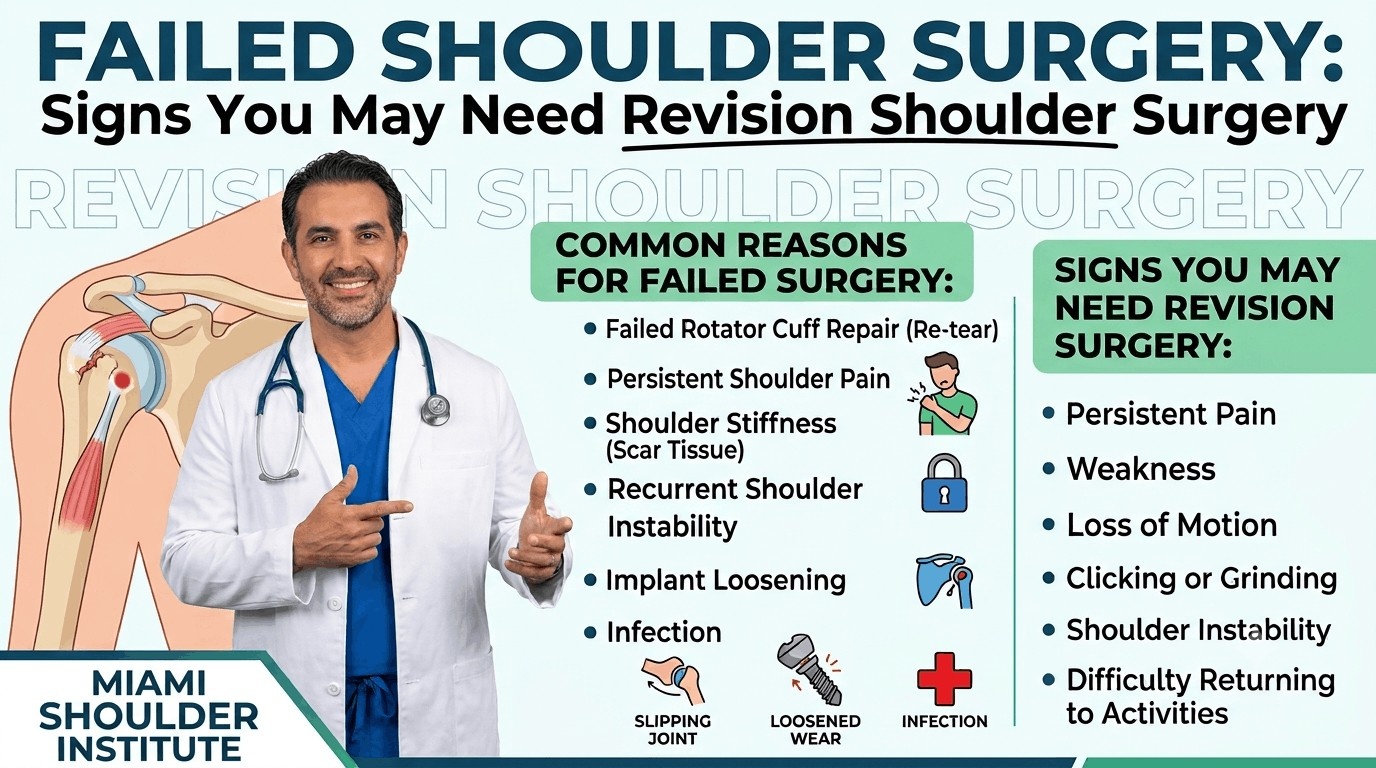
Several conditions can lead to persistent symptoms after shoulder surgery.
Failed Rotator Cuff Repair
One of the most common reasons for revision surgery is failed rotator cuff repair.
A repaired tendon may:
Patients often notice recurring pain and weakness.
Persistent Shoulder Pain
Pain that continues months after surgery should be evaluated.
Possible causes include:
Shoulder Stiffness
Excessive scar tissue can restrict motion.
Patients may struggle with:
Recurrent Shoulder Instability
After stabilization surgery, some patients continue to experience:
Further evaluation may be necessary.
Implant Loosening
Patients who have undergone shoulder replacement may develop implant loosening over time.
Symptoms include:
In some cases, revision shoulder replacement becomes necessary.
Infection
Although uncommon, infection remains one of the most important causes of persistent pain following surgery.
Signs may include:
Prompt evaluation is essential.
Certain symptoms may indicate that additional evaluation is needed.
Persistent Pain
Pain that never improves—or returns after initial improvement—should not be ignored.
Weakness
Difficulty lifting the arm or carrying objects may suggest tendon failure or muscle dysfunction.
Loss of Motion
Increasing stiffness may indicate scar tissue or joint problems.
Clicking or Grinding
Mechanical symptoms may occur if implants loosen or repaired tissues fail.
Shoulder Instability
The feeling that the shoulder is slipping or moving abnormally should be evaluated promptly.
Difficulty Returning to Activities
If recovery stalls and daily tasks remain difficult, further assessment may be appropriate.
Read More – Best Shoulder Surgeon in Miami: Diagnosis, Treatment & Recovery Explained
A failed rotator cuff repair can occur for several reasons.
Common causes include:
Not every recurrent tear requires another operation, but persistent weakness or pain often warrants specialist evaluation.
Revision shoulder replacement involves replacing or correcting a previous shoulder replacement implant.
Reasons may include:
Revision replacement is generally more complex than the initial procedure and requires careful surgical planning.
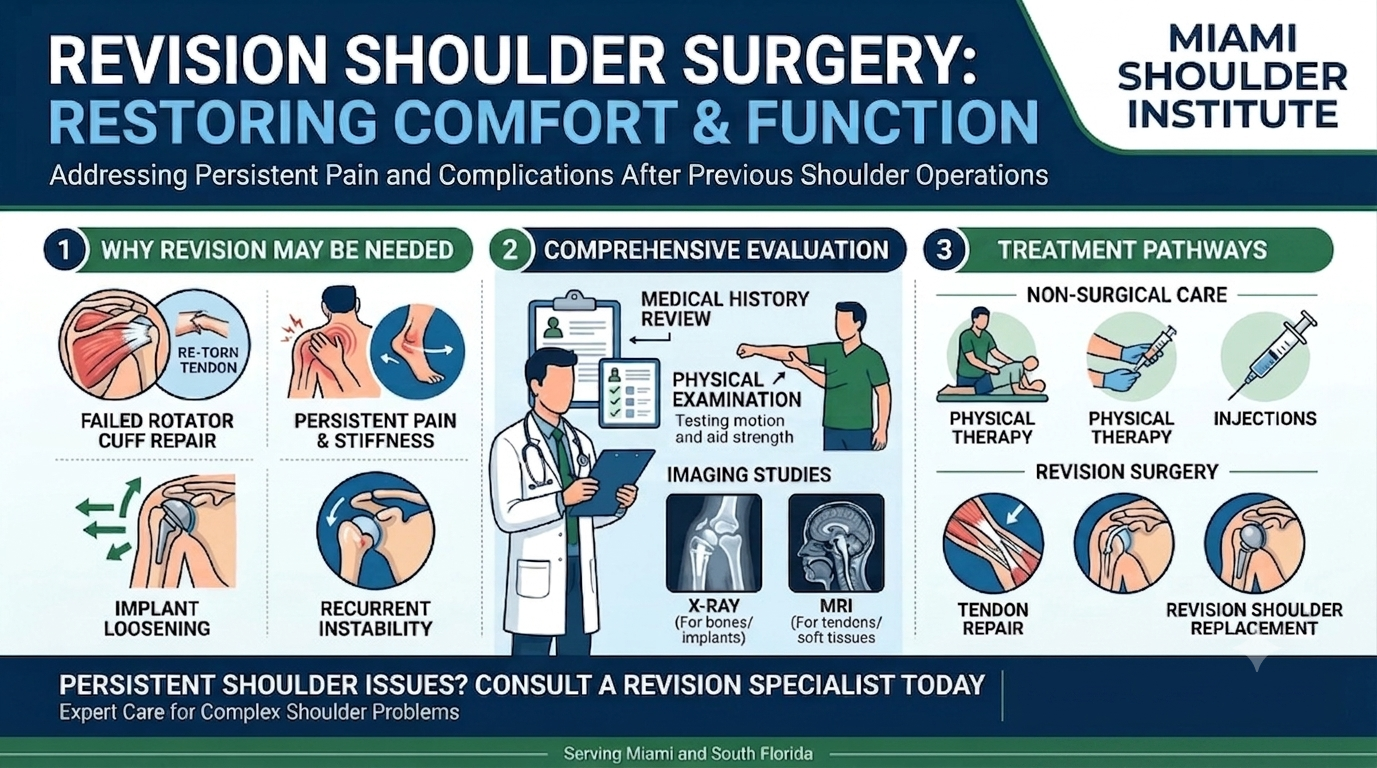
At Miami Shoulder Institute, diagnosis begins with identifying the true source of persistent symptoms.
Medical History
Your provider will review:
Physical Examination
Assessment includes:
X-rays
Helpful for evaluating:
MRI
Used to assess:
CT Scan
Often recommended when bone quality or implant positioning requires detailed evaluation.
Laboratory Testing
If infection is suspected, blood tests or joint fluid analysis may be performed.
Read more – Most Common Sports Shoulder Injuries and Their Treatments
No.
Many patients improve without another operation.
Depending on the diagnosis, failed shoulder surgery treatment may include:
Revision surgery is considered only when conservative treatment is unlikely to resolve the problem.
Revision surgery may be appropriate when:
The decision depends on the underlying diagnosis rather than symptoms alone.
Every revision procedure is unique.
Depending on the problem, surgery may involve:
The surgical plan is individualized after comprehensive evaluation.
Recovery often requires more time than the original procedure.
Weeks 1–2
Focus on:
Weeks 2–6
Patients gradually begin:
Weeks 6–12
Therapy progresses toward:
Months 3–6+
Recovery continues with:
Recovery varies depending on the complexity of the revision.
Read More – Top Shoulder Surgeons in Miami Offering Advanced Orthopedic Care
Yes.
Many patients experience meaningful improvements in:
Success depends on:
Setting realistic expectations is an important part of treatment.
Although not every complication is preventable, patients can improve long-term outcomes by:
Long-term shoulder health depends on both surgery and rehabilitation.
Consult a shoulder revision specialist if you experience:
Early evaluation may prevent further damage and expand treatment options.
Miami Shoulder Institute specializes exclusively in shoulder care, including revision surgery, rotator cuff repair, shoulder replacement, instability treatment, fractures, arthritis, and complex reconstructive procedures.
Whether you require failed shoulder surgery treatment, management of a failed rotator cuff repair, or revision shoulder replacement, every treatment plan is designed to identify the underlying cause of symptoms and restore long-term shoulder function.
The goal is not simply performing another surgery—it is helping patients regain comfort, confidence, and quality of life.
1. What is revision shoulder surgery?
Revision shoulder surgery is a secondary operation performed to correct problems following a previous shoulder procedure.
2. Does persistent pain always mean shoulder surgery failed?
No. Persistent pain can have many causes, and a thorough evaluation is necessary before considering revision surgery.
3. What causes a failed rotator cuff repair?
Common causes include re-tears, poor tendon quality, reinjury, incomplete healing, or excessive strain during recovery.
4. What is revision shoulder replacement?
It is a procedure that replaces or corrects a previous shoulder replacement implant because of loosening, wear, infection, or instability.
5. How long does recovery take after revision shoulder surgery?
Recovery varies but often takes several months depending on the complexity of the revision procedure.
6. Can failed shoulder surgery be treated without another operation?
Yes. Many patients improve with rehabilitation, physical therapy, medications, or other non-surgical treatments.
7. When should I see a shoulder revision specialist?
Persistent pain, weakness, instability, or loss of function after shoulder surgery should be evaluated by a specialist.
Also Read More – Shoulder Surgery in Miami: Cost, Insurance, and What to Expect