
 EN EN
EN EN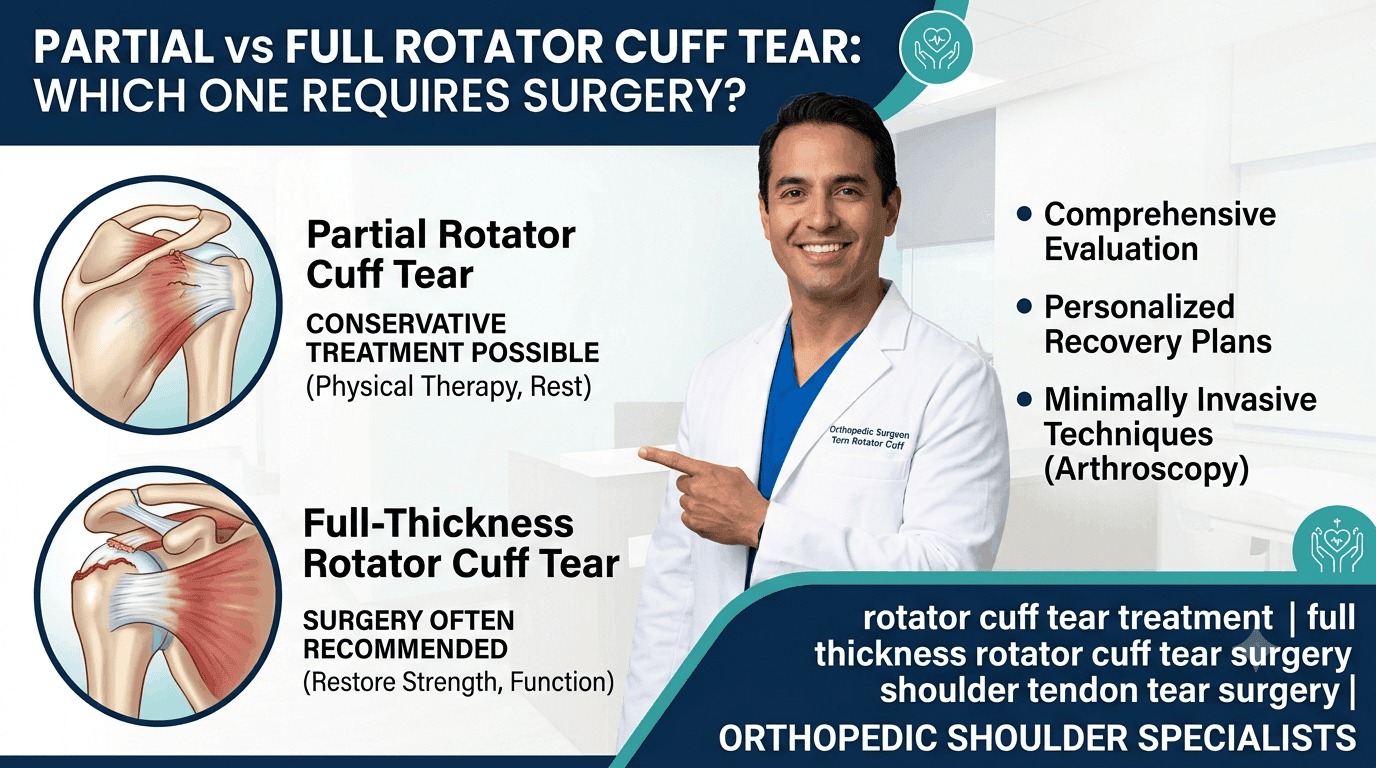
No. Not every rotator cuff tear requires surgery. Many partial rotator cuff tears respond well to conservative rotator cuff tear treatment, including physical therapy, activity modification, and rehabilitation. However, full-thickness tears, traumatic injuries, persistent weakness, or tears that significantly affect shoulder function are more likely to require rotator cuff surgery.
Understanding whether your tear is partial or full-thickness is one of the most important factors in determining the best treatment plan. At Miami Shoulder Institute, every patient receives a comprehensive evaluation to determine the severity of the tear, the condition of the tendon, and whether surgery or non-surgical care offers the best chance for recovery.
The rotator cuff is a group of four muscles and their tendons that stabilize the shoulder joint and allow smooth arm movement.
These muscles help you:
When one or more tendons become damaged, pain, weakness, and reduced mobility can develop.
A rotator cuff tear occurs when one or more tendons become damaged or detach from the bone.
Tears can develop:
Not every tear causes severe symptoms, but untreated injuries may worsen over time.
One of the most common questions patients ask is:
“What’s the difference between a partial and full tear?”
The answer is important because treatment recommendations often depend on tear severity.
Read More – Top Shoulder Surgeons in Miami Offering Advanced Orthopedic Care
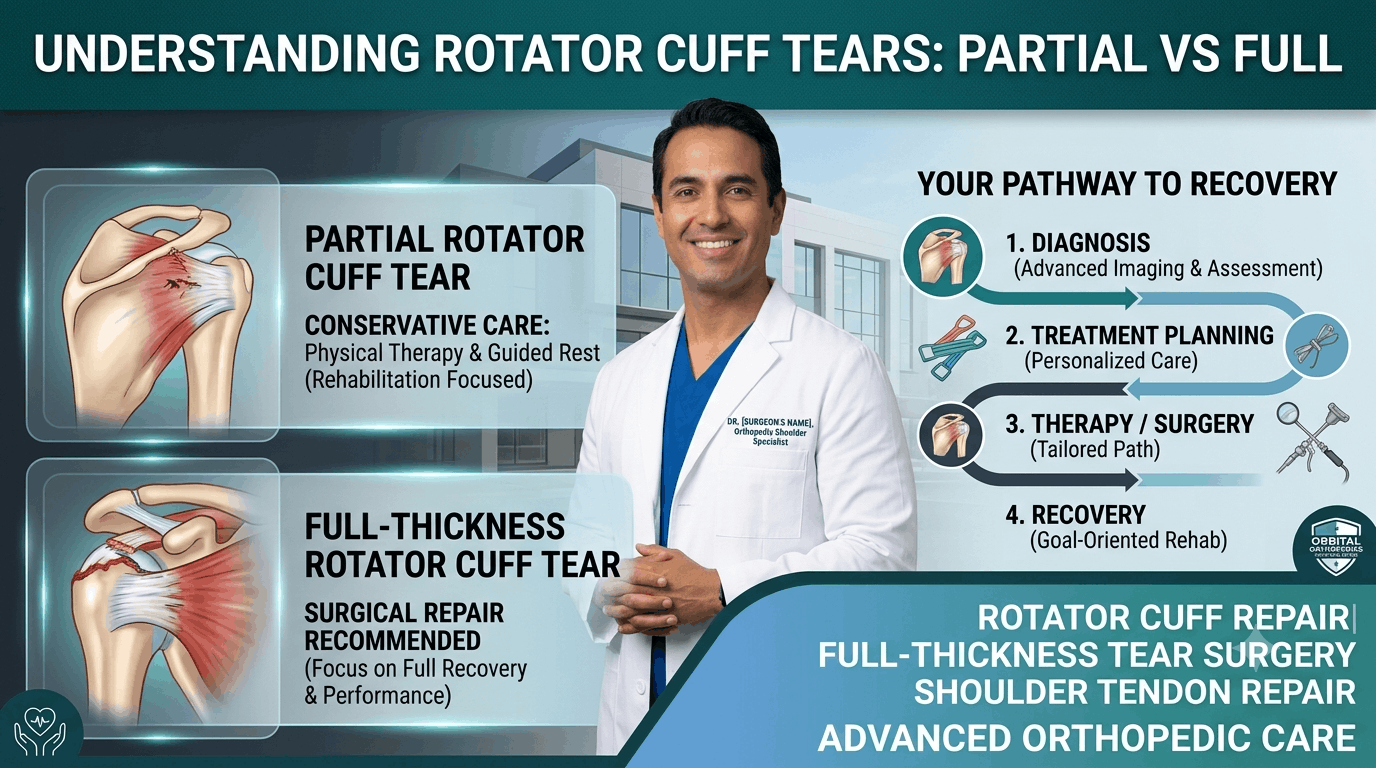
A partial tear means only a portion of the tendon is damaged.
Some tendon fibers remain attached to the bone.
Characteristics include:
Many partial tears respond well to non-surgical rotator cuff tear treatment.
A full-thickness tear means the tendon has torn completely through its entire thickness.
The tendon may separate from the bone.
Symptoms often include:
Large full-thickness tears are more likely to require full thickness rotator cuff tear surgery.
Several factors increase the risk of tendon injury.
Age-Related Degeneration
Natural tendon wear becomes more common after age 40.
Repetitive Overhead Motion
Frequent overhead activities place stress on the rotator cuff.
Examples include:
Sports Injuries
Sudden trauma may produce acute tears.
Falls
Landing on an outstretched arm is a common cause of traumatic tears.
Heavy Lifting
Lifting excessive weight can overload weakened tendons.
Symptoms vary depending on tear size and severity.
Common symptoms include:
Large tears often produce more weakness than pain.
At Miami Shoulder Institute, diagnosis begins with a comprehensive evaluation.
Medical History
Your provider reviews:
Physical Examination
The examination assesses:
Special tests help identify tendon involvement.
X-rays
Useful for evaluating:
Although tendons cannot be seen directly, X-rays help identify contributing conditions.
MRI
MRI is the gold standard for evaluating:
Ultrasound
In some cases, ultrasound provides dynamic tendon evaluation.
Read More – Types of Shoulder Surgery: Which Procedure Is Right for Your Condition?
Many patients recover without surgery.
Conservative rotator cuff tear treatment may include:
Physical Therapy
Therapy focuses on:
Activity Modification
Avoiding painful overhead activities reduces tendon stress.
Anti-Inflammatory Treatment
Reducing inflammation often improves pain.
Rehabilitation Programs
Structured rehabilitation restores shoulder function.
Injections
Selected patients may benefit from injections to reduce inflammation.
Although many partial tears improve without surgery, an operation may be considered when:
Treatment decisions depend on symptoms—not imaging alone.
Many full thickness rotator cuff tear surgery candidates have:
Early evaluation is important because delayed treatment may allow the tendon to retract and become more difficult to repair.
Rotator cuff surgery repairs the torn tendon and reattaches it to the bone.
The goals are to:
The surgical approach depends on tear size, tissue quality, and patient goals.
The rotator cuff is one of several tendons within the shoulder.
Shoulder tendon tear surgery may involve:
The exact procedure depends on the injury pattern.
Most modern rotator cuff surgery is performed arthroscopically.
This minimally invasive technique uses:
Potential advantages include:
At Miami Shoulder Institute, arthroscopic techniques are used whenever appropriate.
Read More – 8 Possible Reasons Your Shoulder Pops or Cracks During Workouts
Recovery takes time because tendons heal gradually.
Weeks 1–2
Goals include:
Weeks 2–6
Patients begin:
Weeks 6–12
Therapy progresses toward:
Months 3–6
Patients continue improving in:
Return to sports depends on healing and rehabilitation progress.
Untreated tears may lead to:
Not every tear worsens, but monitoring is important.
If symptoms persist, consider evaluation by a torn rotator cuff specialist.
Look for a physician who:
Specialized expertise improves diagnosis and treatment planning.
Although not every injury is preventable, risk may be reduced by:
Healthy shoulder mechanics reduce tendon stress.
Miami Shoulder Institute specializes exclusively in shoulder care, providing advanced diagnosis and treatment for rotator cuff tears, tendon injuries, instability, arthritis, fractures, sports injuries, and revision surgery.
Whether treatment involves rehabilitation, rotator cuff surgery, or shoulder tendon tear surgery, every care plan is individualized to restore shoulder strength, relieve pain, and help patients safely return to their daily activities.
The goal is not simply repairing a tendon—it is restoring long-term shoulder performance and quality of life.
1. Does every rotator cuff tear need surgery?
No. Many partial tears improve with conservative treatment and rehabilitation.
2. What is the difference between a partial and full-thickness tear?
A partial tear damages only part of the tendon, while a full-thickness tear extends completely through the tendon.
3. When is full thickness rotator cuff tear surgery recommended?
Surgery is often recommended for complete tears, significant weakness, traumatic injuries, or failed conservative treatment.
4. What is shoulder tendon tear surgery?
It refers to surgical repair of damaged shoulder tendons, including rotator cuff tendon repairs.
5. How long is recovery after rotator cuff surgery?
Recovery usually takes several months and includes structured rehabilitation.
6. Can a rotator cuff tear heal without surgery?
Some partial tears become manageable without surgery, although complete healing is uncommon.
7. When should I see a torn rotator cuff specialist?
Persistent pain, weakness, or difficulty lifting the arm should be evaluated by a shoulder specialist.
Also Read About – Most Common Sports Shoulder Injuries and Their Treatments