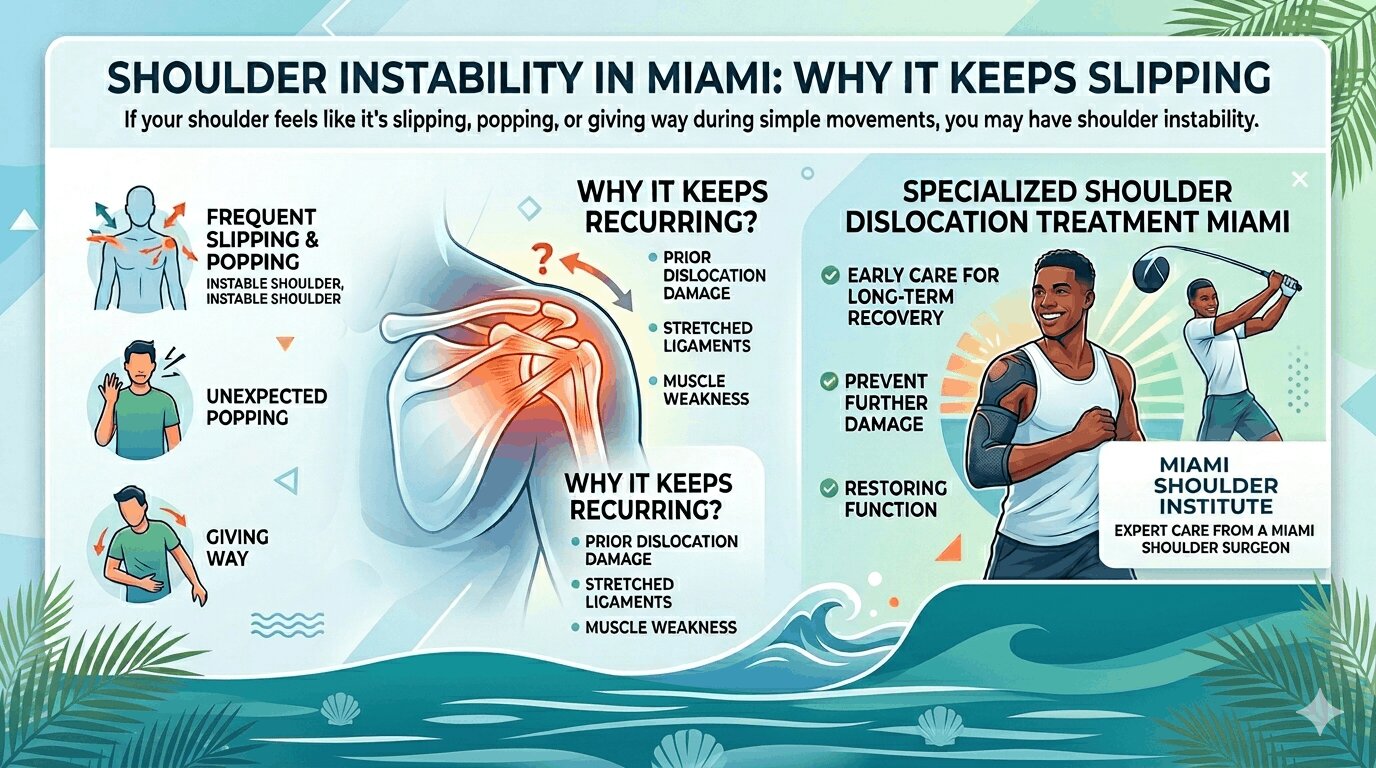
If your shoulder feels like it’s slipping out of place, popping unexpectedly, or giving way during simple movements, you may be dealing with shoulder instability. This condition can be frustrating, painful, and limiting—especially if it happens repeatedly.
Understanding the causes of shoulder instability Miami, why it keeps recurring, and how shoulder dislocation treatment Miami can help is essential for long-term recovery. Whether you’re an athlete, a fitness enthusiast, or someone recovering from an injury, early care from a shoulder surgeon in Miami can prevent further damage. At MIAMI SHOULDER INSTITUTE, patients receive specialised treatment focused entirely on restoring shoulder stability and function.
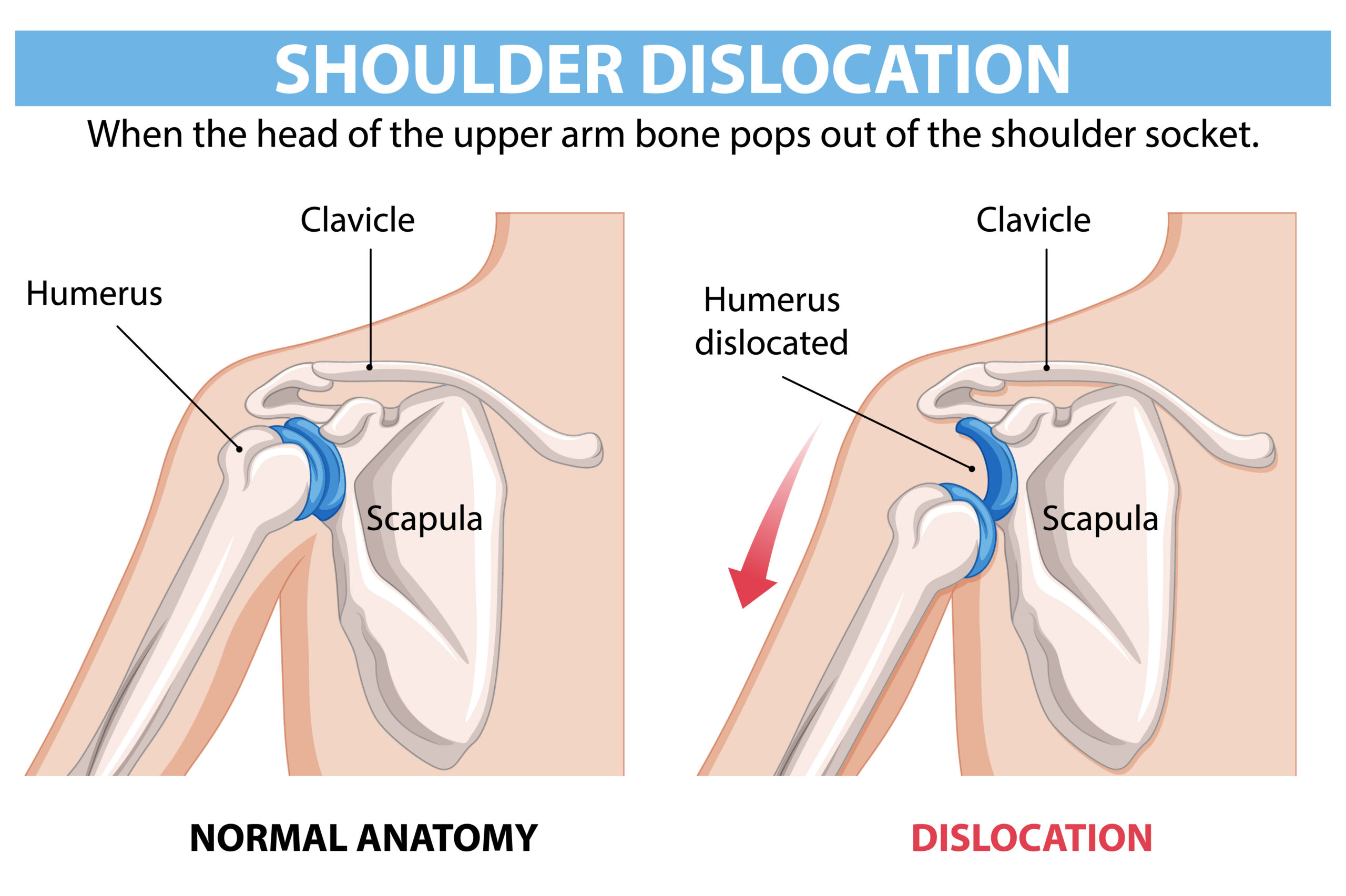
Shoulder instability occurs when the structures that keep the shoulder joint in place are weakened or damaged. The shoulder joint is designed for mobility, which makes it more prone to instability compared to other joints.
The joint consists of:
When these stabilising structures are compromised, the shoulder may partially slip (subluxation) or completely dislocate.
One of the most common concerns patients have is: “Why does my shoulder keep slipping?”
There are several reasons why shoulder instability Miami can become a recurring issue.
1. Previous Dislocation
A prior dislocation is the leading cause of recurrent instability. Once the joint has been displaced, the ligaments may not heal tightly, increasing the risk of future episodes.
2. Labral Tears
The labrum is a cartilage ring that deepens the socket. When it is torn, the joint loses stability, making slipping more likely.
3. Weak Shoulder Muscles
Muscles around the shoulder play a key role in keeping it stable. Weakness or imbalance can lead to instability.
4. Ligament Laxity
Some individuals naturally have looser ligaments, making their joints more flexible but less stable.
5. Repetitive Overhead Movements
Athletes and individuals performing repetitive overhead actions are at higher risk of instability.
6. Incomplete Rehabilitation
Not completing proper rehab after an injury can leave the shoulder vulnerable to re-injury.
At MIAMI SHOULDER INSTITUTE, identifying the exact cause of instability is crucial for effective treatment.
Recognising symptoms early can help prevent worsening of the condition.
Common signs include:
If you experience these symptoms, seeking shoulder dislocation treatment Miami early can prevent long-term damage.
A shoulder dislocation occurs when the ball of the joint comes out of the socket completely. Proper treatment is essential to restore stability and prevent recurrence.
Immediate Treatment:
Follow-Up Care:
At MIAMI SHOULDER INSTITUTE, treatment is tailored to both immediate recovery and long-term prevention.
Accurate diagnosis is key to effective treatment.
At MIAMI SHOULDER INSTITUTE, the evaluation includes:
Medical History
Understanding past injuries, dislocations, and activity levels.
Physical Examination
Assessing joint stability, strength, and movement.
Imaging Tests
This comprehensive approach ensures precise diagnosis.
Not all cases require surgery. Many patients benefit from conservative treatment.
1. Physical Therapy
The cornerstone of treatment.
Focus Areas:
2. Activity Modification
Avoiding activities that trigger instability helps prevent further damage.
3. Bracing
In some cases, braces provide temporary support during recovery.
4. Pain Management
Medications and ice therapy help control symptoms.
At MIAMI SHOULDER INSTITUTE, non-surgical options are prioritised whenever possible.
While conservative treatment can be effective, some cases require surgical intervention.
You may need surgery if:
A shoulder surgeon Miami at MIAMI SHOULDER INSTITUTE will evaluate your condition and recommend the best approach.
Also Read More – 8 Possible Reasons Your Shoulder Pops or Cracks During Workouts
Modern surgical techniques are highly effective and minimally invasive.
Arthroscopic Stabilisation
Procedure:
Benefits:
At MIAMI SHOULDER INSTITUTE, advanced surgical techniques ensure optimal outcomes.
Recovery requires commitment and structured rehabilitation.
Immediate Phase:
Rehabilitation Phase:
Return to Activities:
Following your recovery plan is essential for success.
Ignoring shoulder instability Miami can lead to:
Early treatment prevents these complications.
Taking preventive measures can reduce recurrence.
Tips:
At MIAMI SHOULDER INSTITUTE, patients receive guidance on long-term shoulder care.
Returning to activity requires careful planning.
Safe Return Tips:
A guided return reduces the risk of re-injury.
When dealing with shoulder instability, specialised care is essential.
MIAMI SHOULDER INSTITUTE offers:
The goal is to restore stability, reduce pain, and help patients return to an active lifestyle.
1. What causes shoulder instability Miami?
It is commonly caused by previous dislocations, ligament damage, or muscle weakness.
2. Can shoulder instability heal on its own?
Mild cases may improve with therapy, but recurrent instability often requires treatment.
3. What is shoulder dislocation treatment Miami?
It includes repositioning the joint, rehabilitation, and sometimes surgery.
4. When should I see a shoulder surgeon Miami?
If instability persists or dislocations recur, professional evaluation is necessary.
5. Is surgery always required?
No, many cases can be managed without surgery.
6. Can I return to sports after treatment?
Yes, with proper rehabilitation, most patients return to their activities.
Shoulder instability can be both physically and mentally challenging, especially when it keeps recurring. However, with the right diagnosis and treatment plan, it is highly manageable.
If you’re experiencing shoulder instability Miami, seeking expert care from a shoulder surgeon Miami at MIAMI SHOULDER INSTITUTE ensures accurate diagnosis and effective treatment. Early intervention can restore stability, prevent future injuries, and help you regain confidence in your shoulder.
Read About- Top Orthopedic Shoulder Surgeons in Miami