
 EN EN
EN EN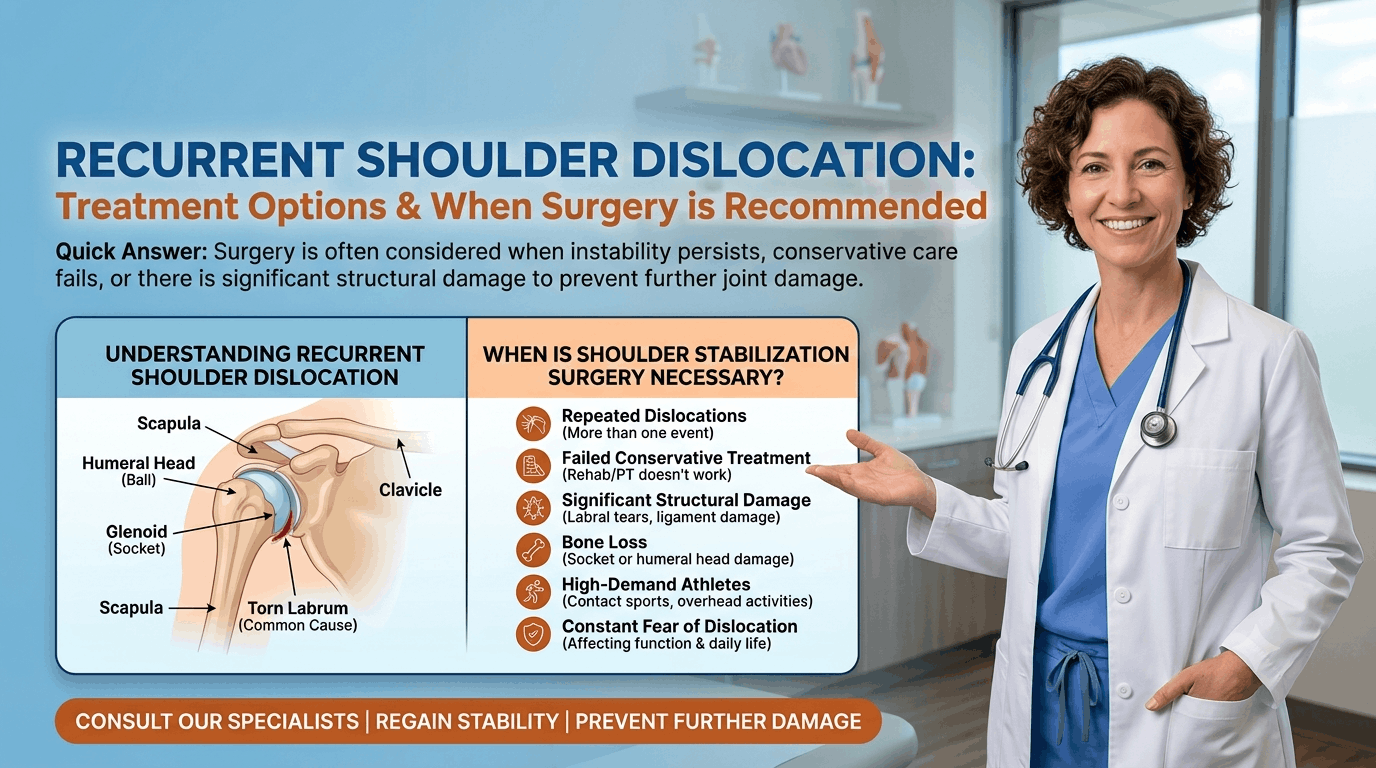
A first-time shoulder dislocation does not always require surgery. However, when the shoulder repeatedly slips out of place or feels unstable, the risk of further damage increases significantly. In these situations, shoulder stabilization surgery may be recommended to restore joint stability and prevent future dislocations.
Patients with repeated instability episodes, labral tears, ligament damage, bone loss, or failure of conservative care may benefit from recurrent shoulder dislocation surgery. At Miami Shoulder Institute, treatment decisions are based on the severity of instability, imaging findings, activity level, and long-term functional goals.
The shoulder is the most mobile joint in the human body, making it highly functional—but also more vulnerable to instability.
The shoulder joint consists of:
These structures work together to keep the joint stable during movement.
When one or more stabilizing structures become damaged, the shoulder may partially or completely dislocate.
Read More – What Happens During Your First Shoulder Specialist Appointment?
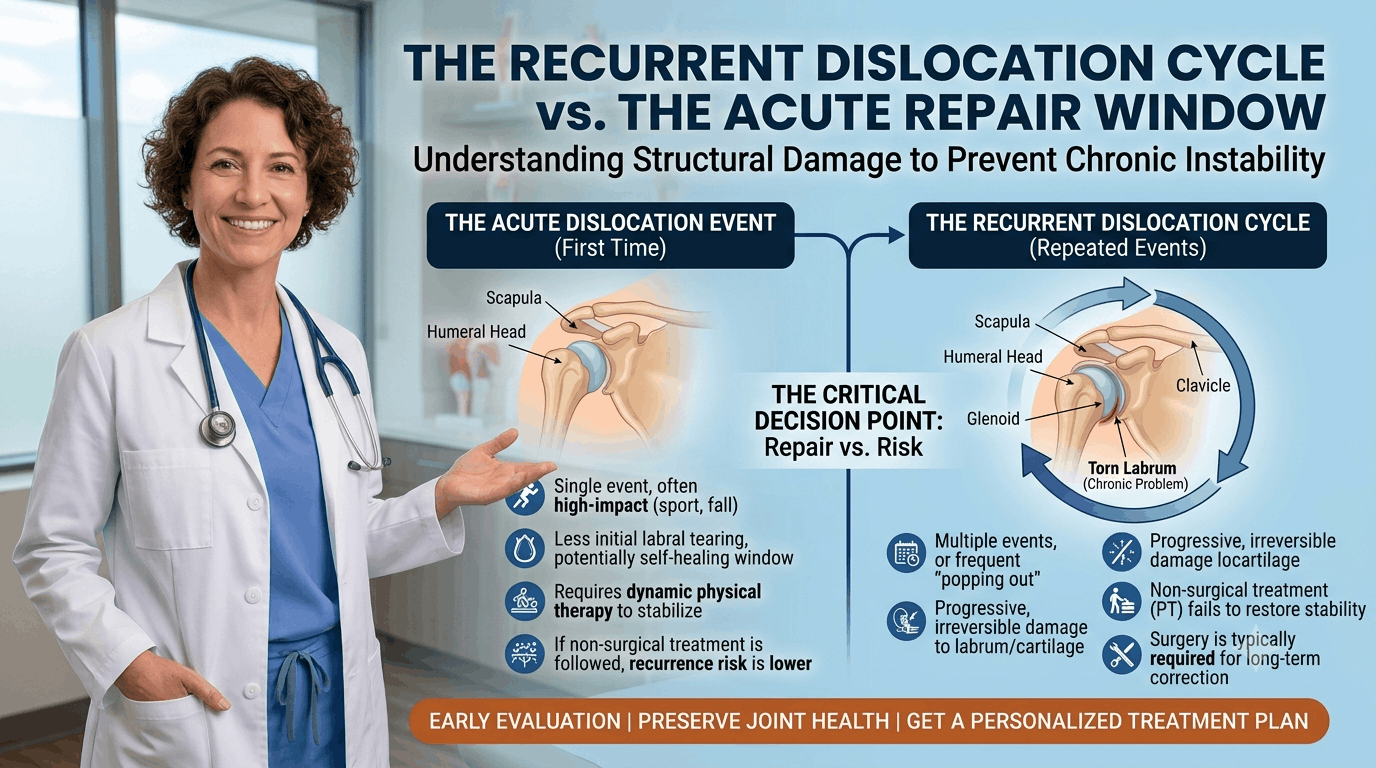
A shoulder dislocation occurs when the ball of the upper arm bone moves out of the socket.
This may happen:
Dislocations can cause injury to:
The more structures involved, the greater the chance of chronic instability
Recurrent dislocation means the shoulder continues to dislocate or slip repeatedly after the initial injury.
Some patients experience:
Repeated instability is a major reason patients seek shoulder instability treatment.
Once the shoulder dislocates, supporting structures may not heal properly.
Common reasons for recurrence include:
Labral Tears
A torn labrum reduces socket stability.
This is one of the most common causes of recurrent instability.
Stretched Ligaments
Ligaments may become permanently loosened.
Loose ligaments increase joint mobility.
Bone Loss
Repeated dislocations may damage the socket or humeral head.
Bone loss makes future instability more likely.
Muscle Weakness
Weak stabilizing muscles reduce dynamic control.
Read More – Types of Shoulder Surgery: Which Procedure Is Right for Your Condition?
Certain patients are more likely to experience repeat dislocations.
High-risk groups include:
Younger, active patients often have the highest recurrence rates.
Symptoms may be obvious or subtle.
Common signs include:
Many patients describe feeling like the shoulder “might pop out again.”
Yes—and this is why repeated instability should not be ignored.
Each dislocation can cause additional injury to:
Repeated episodes may lead to:
Early shoulder dislocation treatment may help reduce long-term damage.
Not every instability case requires surgery.
However, shoulder stabilization surgery may be recommended in specific situations.
1. Repeated Dislocations
If the shoulder repeatedly dislocates, surgery is often considered.
This is one of the clearest indications for recurrent shoulder dislocation surgery.
2. Failed Conservative Treatment
Many patients first attempt non-surgical treatment.
This may include:
If instability persists, surgery may offer better long-term results.
3. Labral Tears on MRI
Structural damage often predicts recurrent instability.
Significant labral injury increases surgical consideration.
4. Bone Loss
Loss of bone from the socket or humeral head increases recurrence risk.
These patients often need surgical stabilization.
5. High-Demand Athletes
Athletes participating in:
often require a highly stable shoulder for safe performance.
6. Fear of Shoulder Movement
Psychological apprehension matters too.
If patients constantly avoid motion because they fear dislocation, function suffers.
Read More- Shoulder Surgery in Miami: Cost, Insurance, and What to Expect
Not every dislocation leads to surgery.
Non-surgical shoulder instability treatment may be appropriate if:
Many first-time dislocations recover well conservatively.
Before surgery, conservative care may include:
Physical Therapy
Therapy focuses on:
Strong muscles improve dynamic stability.
Activity Modification
Avoiding risky movements reduces reinjury risk.
Bracing
In selected athletes, bracing may help.
Rehabilitation Programs
Structured rehab remains central to recovery.
The goal of shoulder stabilization surgery is to restore structures that keep the shoulder centered.
Surgery helps:
The exact procedure depends on the cause of instability.
One of the most common procedures.
Used to repair:
Often performed through small incisions.
Capsular Repair or Shift
Tightens loose capsule tissue.
Helpful in patients with excessive laxity.
Bone Reconstruction Procedures
Used when significant bone loss exists.
These procedures improve socket stability.
Revision Stabilization Surgery
Needed in complex cases or failed previous repairs.
Modern stabilization procedures are frequently arthroscopic.
Benefits may include:
However, some complex cases require open procedures.
Procedure selection depends on:
Recovery requires patience and rehabilitation.
Weeks 1–4: Protection Phase
Goals include:
Movement restrictions are common.
Weeks 4–8: Early Mobility
Therapy focuses on:
Repair protection remains critical.
Weeks 8–16: Strengthening Phase
Rehabilitation progresses toward:
Confidence gradually improves.
4–6 Months: Return to Activity
Patients gradually return to:
Return timing depends on healing and functional testing.
Read More – Torn Rotator Cuff: Signs, Symptoms and How to Heal
The goal of surgery is exactly that.
Most patients experience significant improvements in:
However, success depends heavily on:
No surgery guarantees zero recurrence, but stabilization significantly reduces risk.
Ignoring chronic instability can lead to:
Early evaluation can improve treatment options.
Miami Shoulder Institute specializes exclusively in shoulder care, including instability, labral injuries, rotator cuff tears, fractures, arthritis, and complex revision cases.
Whether treatment involves rehabilitation or shoulder stabilization surgery, care is individualized to restore long-term stability, reduce pain, and help patients safely return to sports and daily activities.
The goal is not just preventing dislocations—it is protecting the long-term health of the shoulder.
1. When do you need shoulder stabilization surgery?
Surgery is often recommended when dislocations recur, instability persists, or structural damage is significant.
2. Can shoulder instability improve without surgery?
Yes. Some first-time dislocations improve with rehabilitation and strengthening.
3. What is recurrent shoulder dislocation surgery?
It refers to surgical procedures that repair damaged stabilizing structures to prevent future dislocations.
4. How long is recovery after shoulder stabilization surgery?
Recovery typically takes several months depending on healing and rehabilitation progress.
5. Can repeated dislocations cause permanent damage?
Yes. Recurrent instability can damage cartilage, bone, and soft tissues.
6. Is shoulder stabilization surgery arthroscopic?
Many modern procedures are arthroscopic, though complex cases may require open surgery.
7. Will surgery guarantee the shoulder never dislocates again?
No surgery guarantees zero recurrence, but stabilization surgery significantly reduces the risk.
Also Read About – 8 Possible Reasons Your Shoulder Pops or Cracks During Workouts