

 EN EN
EN EN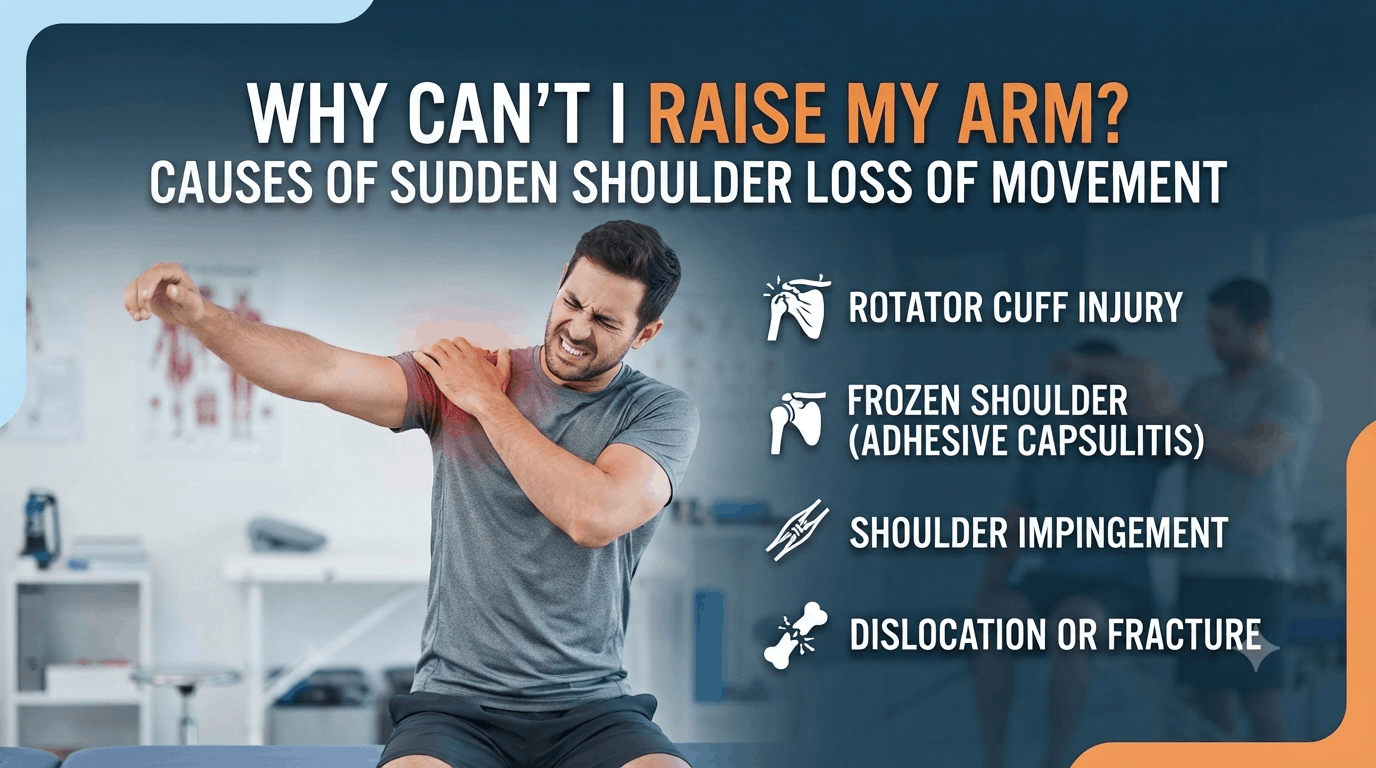
If you cannot raise your arm shoulder movement may be limited because of pain, swelling, stiffness, muscle or tendon injury, nerve problems, or a more serious structural injury. Sudden loss of movement after a fall, lifting injury, sports injury, or dislocation deserves prompt evaluation.
Common causes include rotator cuff injuries, shoulder dislocation, fractures, frozen shoulder, severe inflammation, arthritis, and nerve-related problems. Shoulder weakness can occur alongside these conditions, while shoulder pain may make it difficult to move the arm even when the muscles themselves are capable of producing force.
One important distinction is whether you cannot raise your arm because it hurts or because your shoulder genuinely feels too weak to lift it. This difference can provide an important clue during a shoulder diagnosis.
At Miami Shoulder Institute, evaluation focuses on identifying the underlying cause of restricted shoulder movement and determining an appropriate treatment approach.
Being unable to raise your arm is not a diagnosis by itself. It is a symptom that can result from several different conditions.
You might suddenly notice that you cannot lift your arm after:
In other situations, movement may gradually become restricted because of arthritis, frozen shoulder, or a chronic tendon problem.
The most important question is:
Is your arm difficult to raise because of pain, stiffness, weakness, or an actual mechanical blockage?
These possibilities can look similar to a patient but may require very different treatments.
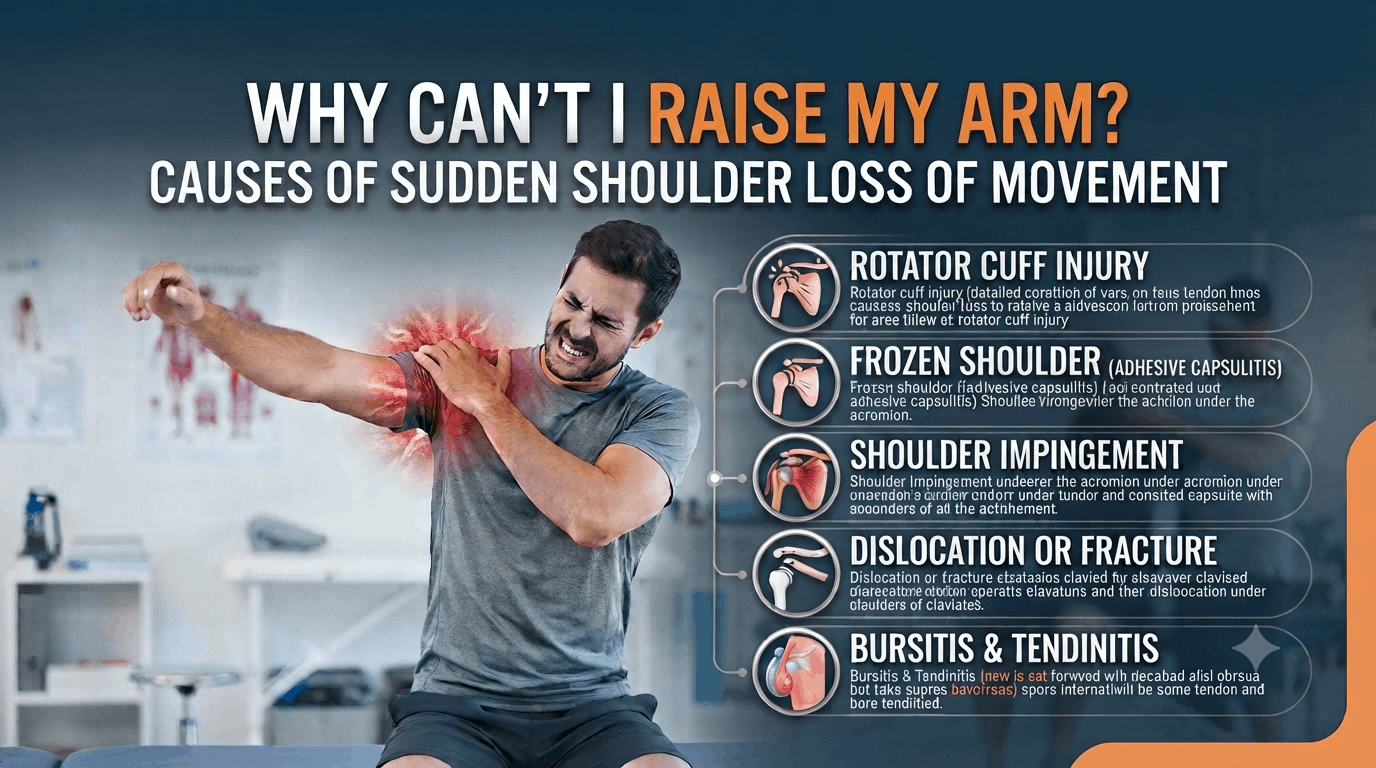
There are several ways this symptom can present.
You can move the arm but it hurts
This may suggest that pain or inflammation is limiting movement.
You try to lift the arm, but it feels weak
This may indicate a tendon, muscle, or nerve-related problem.
Your shoulder feels completely stiff
Restricted joint movement can occur with conditions such as frozen shoulder or arthritis.
Your shoulder suddenly stops working after an injury
This can indicate a significant structural injury and should be assessed promptly.
Your shoulder feels like it has slipped out
This may indicate a dislocation or instability problem.
Understanding which pattern applies to you can help guide the evaluation.
Read More – 8 Possible Reasons Your Shoulder Pops or Cracks During Workouts
A rotator cuff injury is one of the important causes to consider when someone suddenly loses the ability to raise an arm.
The rotator cuff consists of four tendons that help stabilize and move the shoulder.
A tear can occur after:
Rotator Cuff Tear Symptoms
Common rotator cuff tear symptoms include:
A significant tear may cause a noticeable loss of strength.
However, not every person with a rotator cuff tear becomes completely unable to move the arm.
A proper evaluation is necessary to determine whether a tendon injury is responsible.
A shoulder dislocation occurs when the upper arm bone comes out of its normal position in the shoulder socket.
It commonly happens after:
A dislocated shoulder can cause:
A suspected dislocation requires urgent medical attention.
Do not attempt to force the shoulder back into position yourself.
After a dislocation has been treated, additional evaluation may be necessary to identify associated damage to the labrum, bones, tendons, or other structures.
A fracture can make raising the arm extremely painful or impossible.
Shoulder fractures can involve different bones, including the upper arm bone near the shoulder.
A fracture may occur after:
Symptoms may include:
If you suddenly cannot raise your arm after a significant injury, a fracture should be considered.
X-rays are commonly used to evaluate suspected fractures.
Not every loss of shoulder movement is caused by a sudden injury.
Frozen shoulder, also known as adhesive capsulitis, can progressively restrict movement.
People with frozen shoulder often have difficulty:
Unlike an acute traumatic injury, frozen shoulder usually develops over time.
The shoulder may become painful and increasingly stiff.
Eventually, even simple movements can become difficult.
Treatment is generally focused on improving pain and restoring mobility, with the appropriate approach depending on the stage and severity of the condition.
5. Severe Shoulder Inflammation
Inflammation involving the tendons or structures around the shoulder can make movement painful.
For example, irritation of the rotator cuff or other soft tissues can cause substantial shoulder pain during movement.
You may feel as though you cannot raise your arm, even though the main limitation is pain rather than true muscle weakness.
This distinction is important.
If movement becomes possible when the arm is supported or when pain is reduced, the problem may be different from a complete loss of muscle function.
Arthritis can cause gradual loss of shoulder movement.
As cartilage and joint structures change, you may develop:
Advanced arthritis can make overhead movement particularly difficult.
Unlike a sudden traumatic injury, arthritis often develops gradually, although symptoms can sometimes worsen noticeably over a short period.
7. Nerve-Related Problems
Nerves control the muscles that move your shoulder and arm.
A problem affecting a nerve can result in weakness or difficulty lifting the arm.
Possible symptoms include:
The source may be in the neck, shoulder region, or along the nerves supplying the arm.
When loss of movement is accompanied by neurological symptoms, a thorough evaluation is particularly important.
One of the most useful distinctions during a shoulder evaluation is whether you are unable to raise your arm because of shoulder pain or because of genuine shoulder weakness.
Pain-Limited Movement
You try to raise your arm but stop because the movement hurts.
This may occur with:
True Weakness
You attempt to raise the arm, but the muscles do not generate enough force.
This may occur with:
These conditions can require different treatment approaches.
A sudden inability to raise your arm is more concerning when it occurs after trauma.
For example, if you were previously able to lift your arm normally and suddenly cannot do so after:
you should consider getting evaluated.
A significant tendon injury, fracture, or dislocation may require prompt diagnosis.
Early assessment does not automatically mean surgery.
It means determining what happened and understanding your treatment options.
Read More – Night Shoulder Pain in Miami: Why It Gets Worse in Bed
Seek prompt medical evaluation if loss of movement occurs with:
A medical emergency may also be present when shoulder or arm symptoms occur together with concerning chest, breathing, neurological, or systemic symptoms.
A proper shoulder diagnosis begins with a detailed history and physical examination.
A specialist may ask:
The physical examination may evaluate:
The appropriate tests depend on the suspected condition.
X-Ray
X-rays can help identify:
MRI
An MRI can provide detailed information about soft tissues, including:
MRI can be particularly useful when a tendon or soft-tissue injury is suspected.
Ultrasound
Ultrasound can help evaluate certain tendon conditions and can sometimes assess the shoulder dynamically while it moves.
The best imaging test depends on the findings from your examination.
This situation deserves attention.
A significant loss of movement with relatively little pain may sometimes suggest weakness rather than pain-limited movement.
Potential causes include tendon or nerve problems.
For example, some patients with a rotator cuff injury experience weakness that is more noticeable than their pain.
This is one reason not to judge the seriousness of a shoulder problem based solely on pain intensity.
A significant rotator cuff injury can make lifting the arm very difficult.
However, complete inability to raise the arm can have multiple causes, including pain, stiffness, dislocation, fracture, nerve problems, or other structural injuries.
The presence of weakness does not automatically prove that you have a rotator cuff tear.
Imaging and clinical examination may be needed to establish the diagnosis.
Treatment depends entirely on the cause.
There is no single treatment for everyone who cannot raise their arm.
Possible treatments include:
Activity Modification
Temporarily avoiding movements that aggravate symptoms may help protect an injured shoulder.
Physical Therapy
A structured rehabilitation program may improve:
Medication
Medication may sometimes be recommended to control pain or inflammation when medically appropriate.
Injections
Certain shoulder conditions may respond to injections as part of a broader treatment plan.
Surgery
Surgery may be considered when there is a significant structural injury and symptoms or functional limitations persist despite appropriate non-surgical management.
Depending on the diagnosis, procedures may address:
The decision should be based on the actual injury rather than the symptom alone.
Yes.
Many causes of restricted movement can be managed without surgery.
For example, patients with certain inflammatory conditions, stiffness, mild tendon problems, or some stable injuries may improve with conservative care.
Physical therapy can be particularly important when stiffness or muscle weakness contributes to the problem.
However, a significant traumatic injury may require a different approach.
The key is getting an accurate diagnosis first.
When your arm suddenly becomes difficult to raise, aggressively forcing it through pain is not necessarily helpful.
If a fracture, dislocation, or significant tendon injury is present, excessive movement could potentially aggravate the injury.
Until the cause is understood, avoid activities that cause severe pain or significantly worsen symptoms.
If you suspect a dislocation or fracture, seek appropriate medical attention rather than attempting to manipulate the joint yourself.
Consider evaluation by a shoulder specialist if:
A specialist can determine whether your problem is related to the rotator cuff, joint, nerves, bones, or another shoulder structure.
Miami Shoulder Institute provides specialized evaluation and treatment for conditions affecting shoulder movement, strength, stability, and function.
If you are asking, “Why can’t I raise my arm?”, the most important step is identifying the underlying reason.
Whether your symptoms are caused by shoulder pain, shoulder weakness, a rotator cuff injury, stiffness, arthritis, instability, trauma, or another condition, treatment should be based on an accurate diagnosis.
A comprehensive evaluation can help determine whether you may benefit from activity modification, physical therapy, medication, injections, additional imaging, or surgical treatment.
If you experience sudden loss of shoulder movement following an injury, prompt assessment can help identify significant injuries and guide the next steps.
1. Why can’t I raise my arm?
You may be unable to raise your arm because of pain, weakness, stiffness, inflammation, a rotator cuff injury, fracture, dislocation, arthritis, frozen shoulder, or a nerve-related problem.
2. Is inability to raise the arm a sign of a rotator cuff tear?
It can be. Rotator cuff tear symptoms may include pain and weakness when lifting the arm. However, several other conditions can produce similar symptoms.
3. What causes sudden loss of shoulder movement?
Sudden loss of movement can result from a traumatic rotator cuff injury, dislocation, fracture, severe pain, inflammation, or nerve-related problems.
4. Is shoulder weakness different from shoulder pain?
Yes. Pain may prevent you from moving the arm even when your muscles can generate force. Shoulder weakness means the shoulder or arm cannot produce normal strength.
5. Should I see a doctor if I suddenly cannot raise my arm?
Yes, particularly if the problem occurred after an injury or is accompanied by severe pain, deformity, swelling, numbness, or significant weakness.
6. What tests are used for a shoulder diagnosis?
Depending on the suspected condition, evaluation may include a physical examination, X-ray, MRI, ultrasound, or other testing.
7. Can a frozen shoulder prevent me from raising my arm?
Yes. Frozen shoulder can cause significant stiffness and pain that restrict active and passive shoulder movement.
8. Can a shoulder fracture make it impossible to raise the arm?
Yes. A shoulder fracture can cause severe pain and loss of movement, particularly after a significant fall or impact.
9. Can shoulder problems improve without surgery?
Yes. Depending on the diagnosis, treatment may include physical therapy, activity modification, medication, or other non-surgical approaches. Some structural injuries may require surgery.
10. When should I see a shoulder specialist?
You should consider seeing a shoulder specialist when loss of movement persists, develops suddenly, follows an injury, or occurs with significant pain or weakness.
Also Read More – Best Shoulder Doctor in Florida: How to Choose the Right Surgeon