

 EN EN
EN EN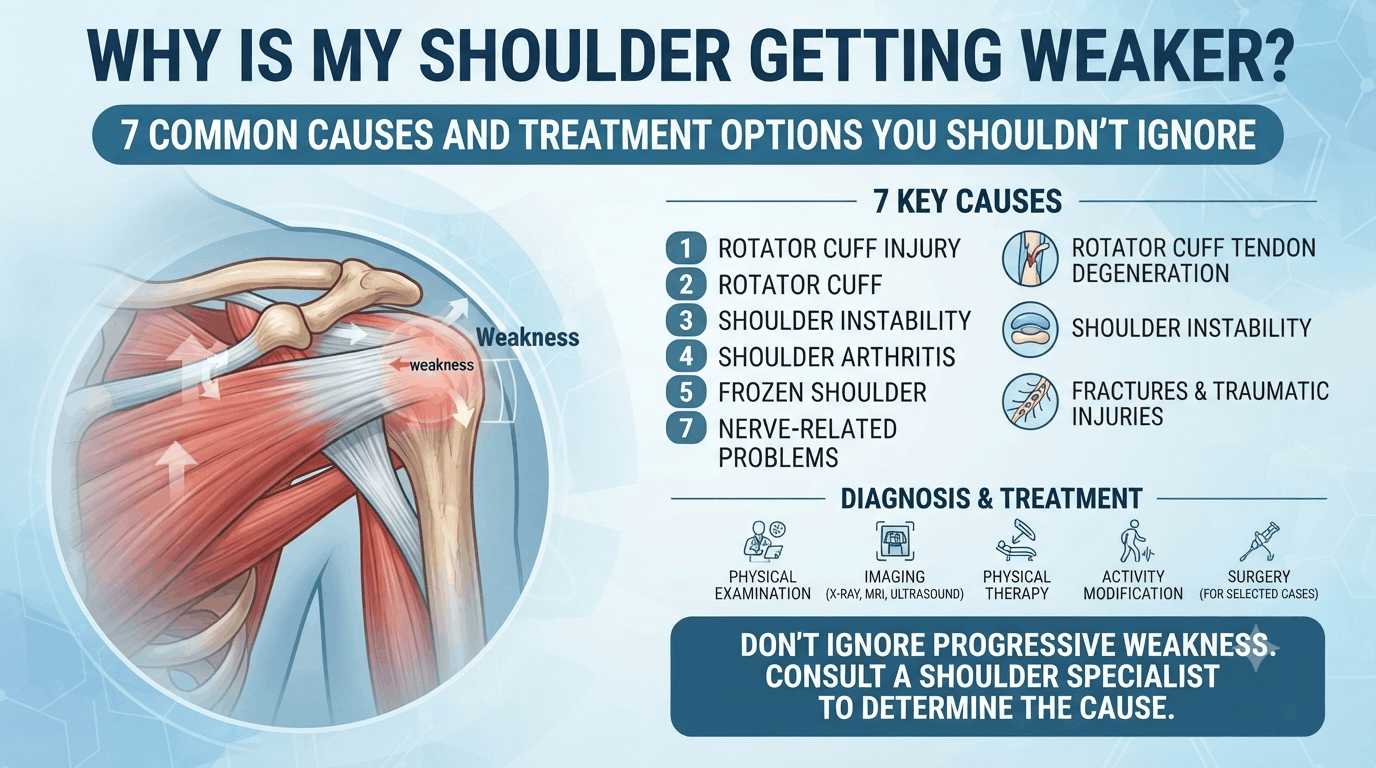
Shoulder weakness can happen after overuse, an injury, inflammation, nerve irritation, or a problem involving the rotator cuff or shoulder joint. Mild weakness that improves with rest may not indicate a serious problem, but sudden shoulder weakness, progressive loss of strength, or weakness accompanied by pain or reduced movement should be evaluated.
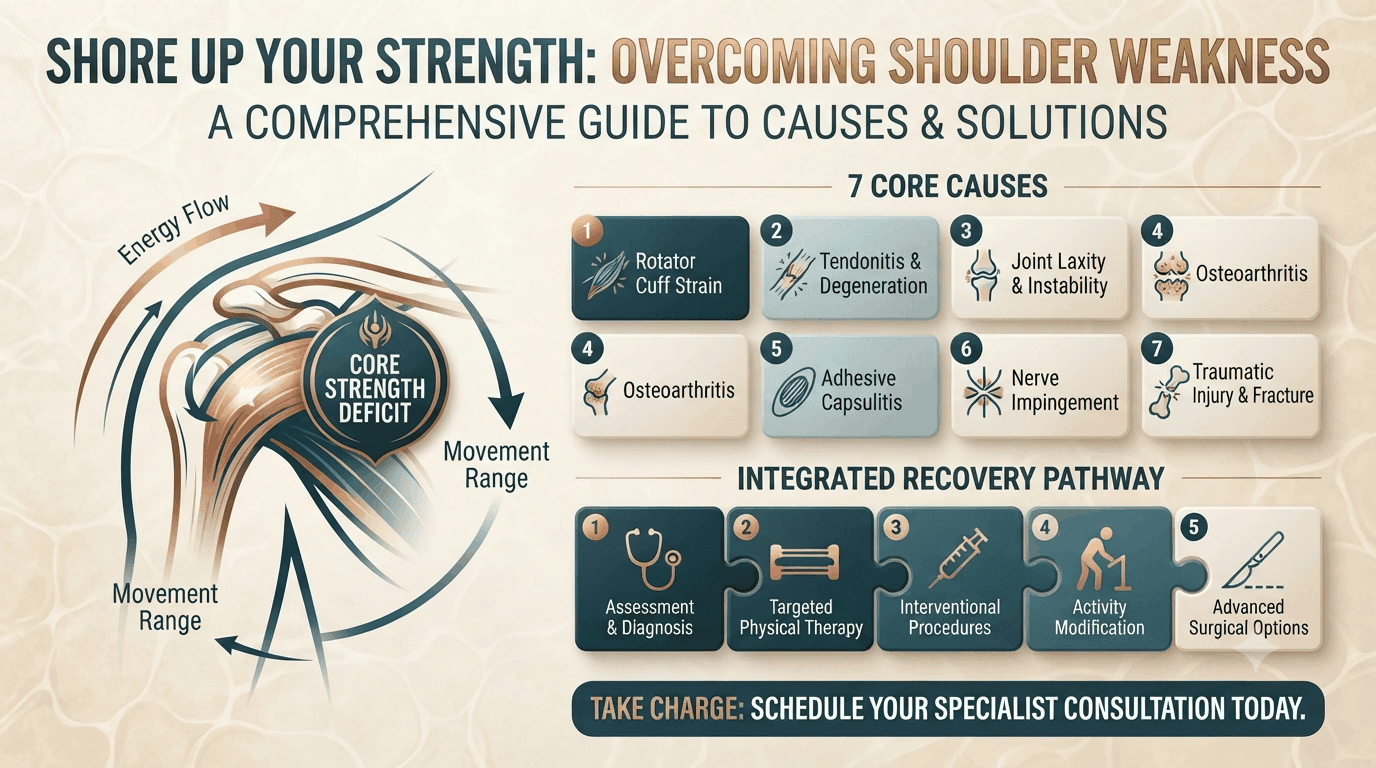
Common shoulder weakness causes include rotator cuff injuries, tendon inflammation, shoulder instability, arthritis, frozen shoulder, nerve-related problems, and injuries such as fractures or dislocations.
The right shoulder weakness treatment depends on what is causing the weakness. Treatment may range from activity modification and physical therapy to injections or surgery for selected structural injuries.
If your shoulder is becoming progressively weaker or you can no longer perform movements that were previously easy, a shoulder specialist can help determine whether the problem is related to the tendons, joint, nerves, or another structure.
At Miami Shoulder Institute, evaluation focuses on identifying the underlying cause of shoulder weakness and determining an appropriate treatment plan.
Shoulder weakness is more than simply having a tired arm after exercise.
True weakness means your shoulder or arm cannot generate the same force or perform the same movements it once could. You may notice difficulty lifting your arm overhead, carrying objects, reaching into a cabinet, putting on a shirt, or performing sports and work activities.
Some causes are temporary and respond well to conservative treatment. Others can indicate a structural injury that needs specialist assessment.
The most important shoulder weakness causes include:
The timing of the weakness matters too.
Sudden shoulder weakness after an injury can be more concerning than gradual weakness after increased activity. Progressive weakness without an obvious injury also deserves attention.
Shoulder weakness can be difficult to distinguish from pain-related movement limitations.
For example, if your shoulder hurts when you lift your arm, you may stop using it because of pain. That is different from being physically unable to generate the necessary strength.
You might notice true weakness when:
These symptoms can provide important clues about the underlying condition.
Also Read More – After Shoulder Surgery Therapy in Miami: Best Practices for a Smooth Recovery
1. Rotator Cuff Injury
One of the most important shoulder weakness causes is a rotator cuff problem.
The rotator cuff consists of four muscles and their tendons that help stabilize and move the shoulder.
Rotator cuff problems can range from irritation and tendinopathy to partial or complete tears.
A rotator cuff injury may cause:
What Is Rotator Cuff Weakness?
Rotator cuff weakness can develop when a tendon is injured or when the muscles responsible for shoulder movement are not functioning normally.
A person with a rotator cuff tear may have particular difficulty with movements such as lifting the arm away from the body or reaching overhead.
However, weakness does not automatically mean that surgery is necessary.
The appropriate treatment depends on the severity of the injury, symptoms, functional limitations, and other individual factors.
2. Rotator Cuff Tendon Degeneration
Not every rotator cuff problem is caused by a sudden tear.
Tendons can gradually change over time because of:
This can cause pain and reduced strength.
Sometimes a person notices that their shoulder has gradually become weaker without remembering a specific injury.
This type of gradual change should not automatically be assumed to be normal aging.
A proper evaluation can help distinguish normal changes from a condition requiring treatment.
3. Shoulder Instability
Shoulder instability occurs when the joint does not remain securely centered during movement.
Some people describe the sensation as:
Instability can cause weakness because the muscles around the shoulder may struggle to control the joint effectively.
It can develop after a dislocation, injury, or repetitive stress.
If your shoulder repeatedly feels unstable, a shoulder specialist can evaluate the structures responsible for stabilizing the joint.
Arthritis can also contribute to weakness.
When the shoulder joint becomes damaged, movement may become painful and restricted.
You may begin using the arm less because movement hurts. Over time, reduced use can contribute to muscle deconditioning and functional weakness.
Common symptoms include:
Early arthritis may often be managed with non-surgical measures.
Advanced arthritis that significantly affects quality of life may require more specialized treatment.
5. Frozen Shoulder
Frozen shoulder, also called adhesive capsulitis, can produce severe stiffness and pain.
The condition often progresses through stages, with movement becoming increasingly restricted.
You may find it difficult to:
Because movement becomes painful and restricted, the shoulder may feel weak.
In many cases, the primary problem is actually stiffness rather than loss of muscle strength.
This distinction matters because shoulder weakness treatment for frozen shoulder can differ significantly from treatment for a rotator cuff tear.
6. Nerve-Related Problems
The shoulder and arm depend on nerves to transmit signals between the brain, spinal cord, and muscles.
A problem affecting these nerves can cause weakness even when the shoulder structures themselves are not the primary source of the problem.
Possible symptoms include:
The source may involve the neck, shoulder region, or peripheral nerves.
If weakness is accompanied by numbness or tingling, a thorough evaluation becomes particularly important.
7. Fractures, Dislocations, or Other Traumatic Injuries
Trauma is another important cause of weakness.
A fall, collision, sports injury, or sudden force can damage:
Sudden shoulder weakness after an injury should not automatically be treated as a simple muscle strain.
If you cannot raise your arm after a significant injury, experience severe pain, notice deformity, or have substantial swelling, prompt medical evaluation is appropriate.
The way weakness develops can provide useful information.
Sudden Shoulder Weakness
Sudden weakness may occur after:
It can sometimes indicate an acute structural problem.
Gradual Shoulder Weakness
Gradual weakness may develop because of:
Gradual does not necessarily mean harmless.
Progressive weakness should still be evaluated when it affects normal function.
You may notice subtle changes before significant weakness develops.
Ask yourself:
Can you lift the same objects?
If a bag that was previously easy to carry suddenly feels difficult, your shoulder strength may have changed.
Can you raise your arm as high?
Compare your current movement with your normal range.
Can you perform your usual workouts?
Difficulty with presses, raises, swimming, tennis, or other activities can reveal strength loss.
Is one arm noticeably weaker?
A difference between the two sides may be significant.
Are you compensating with your neck or body?
Changing how you move to complete a task can indicate that your shoulder is not functioning normally.
Not every episode of weakness requires immediate specialist care.
Temporary fatigue after exercise is normal.
However, you should consider professional evaluation when:
The combination of pain and weakness can be especially important when evaluating potential tendon injuries.
Sudden weakness after a significant injury requires prompt assessment, especially if accompanied by:
Sudden arm or shoulder weakness accompanied by other neurological symptoms or symptoms affecting other parts of the body can indicate a medical emergency unrelated to the shoulder itself and requires immediate medical attention.
Finding the correct cause starts with a detailed evaluation.
A shoulder specialist may ask:
The physical examination may evaluate:
Imaging may then be considered depending on the findings.
Different imaging tests provide different information.
X-Ray
X-rays can show:
MRI
MRI can provide detailed information about soft tissues such as:
Ultrasound
Ultrasound can be useful for evaluating certain tendon problems and may allow dynamic assessment during movement.
The appropriate imaging depends on the suspected diagnosis.
Read More – How to Find the Best Shoulder Surgeon in Miami: A Patient Guide by Miami Shoulder Institute
There is no single shoulder weakness treatment that works for everyone.
Treatment should address the underlying cause.
Activity Modification
Reducing activities that aggravate symptoms may allow irritated structures to recover.
This does not necessarily mean complete inactivity.
A specialist can help identify which activities should be modified.
Physical Therapy
Physical therapy can help improve:
For certain conditions, rehabilitation may be the primary treatment.
Medication
Depending on your health and diagnosis, medication may sometimes be used to manage pain or inflammation.
Medication should be used according to appropriate medical guidance.
Injections
Certain shoulder conditions may benefit from injections as part of a broader treatment plan.
Whether an injection is appropriate depends on the diagnosis.
Surgery
Surgery may be considered when a significant structural problem causes persistent symptoms or functional limitations and conservative treatment is unlikely to provide adequate improvement.
Possible procedures depend on the underlying condition and may include:
The presence of weakness alone does not automatically mean surgery is required.
Yes.
Many causes of shoulder weakness can improve with non-surgical treatment.
For example, weakness associated with pain, deconditioning, inflammation, or some overuse conditions may improve with appropriate rehabilitation.
However, certain structural injuries may require surgical consideration.
This is why determining the cause is more important than treating weakness as a standalone symptom.
Yes.
A rotator cuff tear can produce weakness, particularly when the tear affects the tendons responsible for lifting and rotating the arm.
However, the severity and progression vary.
Some people with rotator cuff tears maintain relatively good function, while others develop substantial weakness.
If strength continues to decline, evaluation is important.
People sometimes assume that shoulder weakness is simply part of getting older.
While strength naturally changes over time, noticeable or progressive weakness should not automatically be dismissed.
Ignoring symptoms may allow an underlying problem to continue without appropriate treatment.
The earlier the cause is understood, the more clearly you can evaluate your options.
This does not mean every problem needs immediate surgery.
It means you should know what you are treating.
Consider seeing a shoulder specialist if:
A specialist evaluation can help distinguish between a condition that can be managed conservatively and one that may require more advanced treatment.
Read More – Signs You Might Need Shoulder Replacement Surgery – Expert Insights from Miami
Miami Shoulder Institute provides specialized evaluation and treatment for shoulder conditions that affect pain, strength, stability, and mobility.
If you are experiencing unexplained weakness, pain with lifting, reduced shoulder function, or sudden shoulder weakness after an injury, identifying the cause is an important first step.
A detailed evaluation can determine whether your symptoms are related to the rotator cuff, joint, nerves, instability, arthritis, trauma, or another condition.
The appropriate shoulder weakness treatment will depend on the diagnosis. Some patients may benefit from rehabilitation and activity modification, while others may require additional imaging or surgical consideration.
The goal is to create a treatment approach based on your specific condition and functional needs.
1. What are the most common shoulder weakness causes?
Common shoulder weakness causes include rotator cuff injuries, tendon degeneration, shoulder instability, arthritis, frozen shoulder, nerve-related conditions, and traumatic injuries.
2. What causes sudden shoulder weakness?
Sudden shoulder weakness can occur after a fall, sports injury, heavy lifting, dislocation, or acute tendon injury. Sudden weakness without an obvious cause also deserves medical evaluation.
3. Can rotator cuff problems cause shoulder weakness?
Yes. Rotator cuff weakness can occur when one or more rotator cuff tendons are injured or when the muscles are not functioning properly.
4. Can shoulder weakness improve without surgery?
Yes. Depending on the cause, weakness may improve through physical therapy, activity modification, medication, or other non-surgical treatments.
5. What is the best shoulder weakness treatment?
There is no universal treatment. Shoulder weakness treatment depends on the underlying diagnosis, severity, symptoms, and functional limitations.
6. When should I see a shoulder specialist for weakness?
You should consider seeing a shoulder specialist if weakness persists, progresses, follows an injury, affects daily activities, or occurs alongside significant pain or loss of movement.
7. Does shoulder weakness always mean I have a rotator cuff tear?
No. Rotator cuff problems are one possible cause, but weakness can also result from arthritis, instability, nerve problems, stiffness, trauma, or reduced conditioning.
8. Can arthritis cause shoulder weakness?
Yes. Arthritis can cause pain and stiffness that limit shoulder use. Reduced use can contribute to weakness and loss of function.
9. Is sudden shoulder weakness after a fall serious?
It can be. Sudden weakness after a fall may indicate a significant injury, including a rotator cuff tear, fracture, or dislocation. Prompt evaluation may be appropriate.
10. Will I need surgery if my shoulder is weak?
Not necessarily. Surgery depends on the underlying condition. Many causes of shoulder weakness can initially be treated without surgery.
Also Read More – Best Shoulder Doctor in Florida: How to Choose the Right Surgeon