

 EN EN
EN EN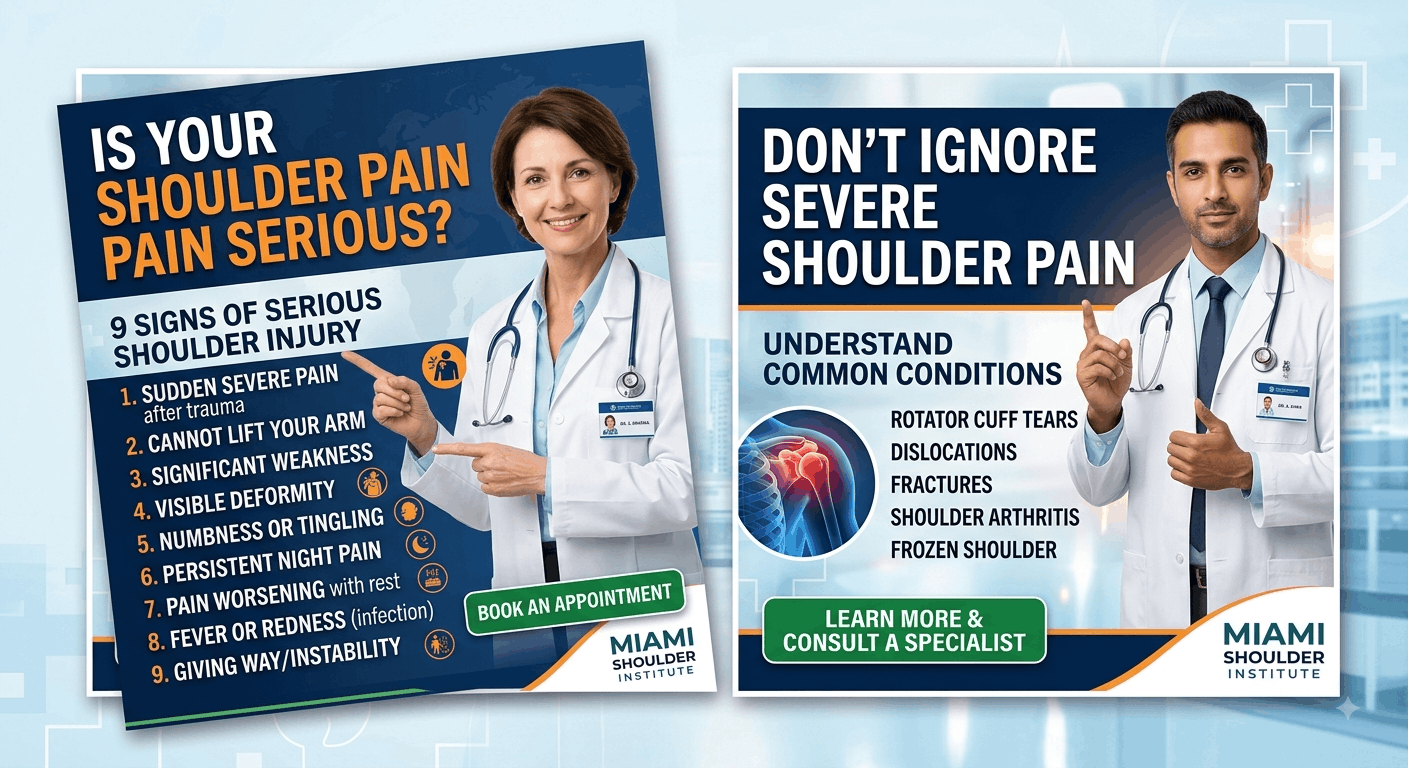
Shoulder pain may be caused by something as simple as temporary muscle soreness, but serious shoulder pain can sometimes indicate a rotator cuff tear, shoulder dislocation, fracture, tendon injury, infection, arthritis, or another condition requiring medical attention.
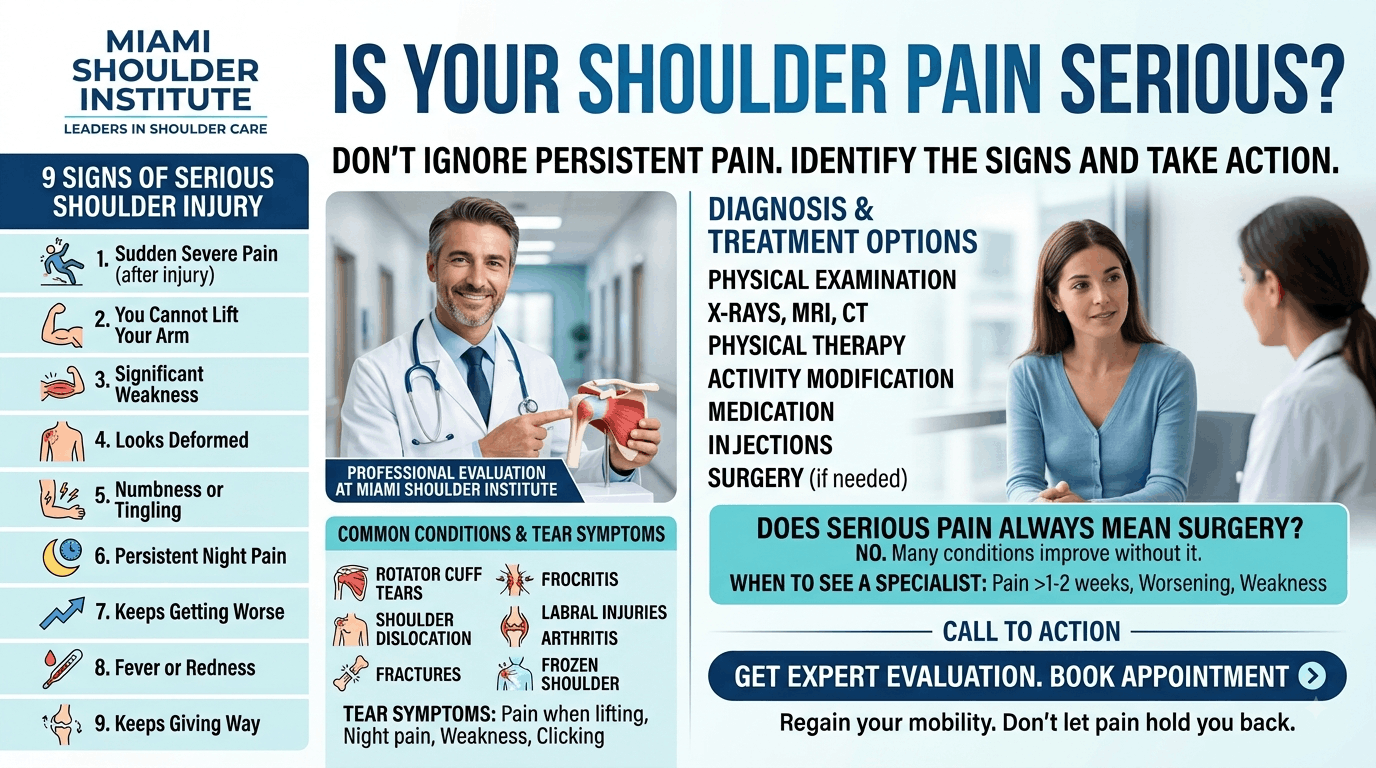
Warning signs include sudden severe pain after an injury, inability to lift the arm, significant weakness, visible deformity, swelling, numbness or tingling, persistent night pain, and pain that continues to worsen despite rest.
The most important factor is not pain intensity alone. Severe shoulder pain symptoms combined with loss of movement, weakness, trauma, or neurological symptoms deserve prompt evaluation. A proper shoulder pain diagnosis can identify the underlying problem and determine whether conservative care, rehabilitation, or surgery is appropriate.
At Miami Shoulder Institute, shoulder conditions are evaluated based on the patient’s symptoms, physical examination, medical history, and appropriate imaging.
Shoulder pain is serious when it is severe, persistent, progressively worsening, follows significant trauma, or occurs with symptoms such as weakness, loss of motion, deformity, numbness, swelling, or fever.
Some common causes of serious shoulder pain include:
Not every painful shoulder requires surgery. Many conditions improve with physical therapy, activity modification, medication, injections, and other conservative approaches. However, delaying evaluation of a significant injury can sometimes lead to worsening symptoms, stiffness, weakness, or additional structural damage.
Knowing the signs of serious shoulder injury can help you determine when professional evaluation is necessary.
Pain by itself does not always indicate a severe injury.
For example, temporary soreness after exercise may be uncomfortable but usually improves with rest.
More concerning symptoms include:
The combination of symptoms is often more important than pain intensity alone.
1. Sudden Severe Pain After an Injury
One of the strongest warning signs is pain that begins immediately after:
A traumatic injury can damage the rotator cuff, labrum, ligaments, bones, or tendons.
If pain is accompanied by swelling or an inability to move the arm, prompt evaluation is recommended.
Also Read More – Shoulder Surgery in Miami: Cost, Insurance, and What to Expect
2. You Cannot Lift Your Arm
Difficulty lifting the arm can occur with several conditions.
Potential causes include:
Sudden loss of active shoulder movement is particularly concerning after trauma.
3. Significant Shoulder Weakness
Pain-related weakness and true muscle weakness are not always the same.
If you can move your shoulder when someone else moves your arm but cannot lift it yourself, a tendon or nerve problem may be involved.
Persistent weakness may occur with:
This is an important reason to seek a professional assessment.
4. Your Shoulder Looks Deformed
A visible change in shoulder shape following an injury can indicate:
Do not attempt to force the shoulder back into position yourself.
Urgent medical evaluation is appropriate.
5. Numbness or Tingling
Numbness, tingling, or unusual sensation may indicate nerve involvement.
These symptoms are particularly concerning when they occur after trauma or alongside:
Prompt assessment can help determine whether a nerve has been compressed or injured.
6. Persistent Night Pain
Night pain is common with several shoulder conditions.
It may occur with:
If pain repeatedly wakes you from sleep or prevents you from finding a comfortable position, it should be evaluated rather than continuously managed at home.
7. Shoulder Pain Keeps Getting Worse
Pain that progressively worsens instead of improving may indicate an underlying problem that requires treatment.
For example, an untreated tendon injury may become more symptomatic when the shoulder continues to experience repetitive stress.
Persistent worsening pain should prompt an evaluation.
8. Shoulder Pain Is Associated With Fever or Redness
Shoulder pain accompanied by:
may indicate an infection.
A joint infection requires prompt medical attention because infection can damage joint structures.
Read More – How to Find the Best Shoulder Doctor Near You: Step-by-Step Guide
9. Your Shoulder Keeps Giving Way
A shoulder that repeatedly slips, catches, or feels as though it may dislocate may indicate instability.
Repeated instability can damage:
Early assessment may help prevent recurrent injury.
Several conditions can produce significant symptoms.
The rotator cuff consists of four tendons that help stabilize and move the shoulder.
A tear may cause:
Large or traumatic tears may require surgical evaluation.
A shoulder dislocation occurs when the ball of the upper arm moves out of the socket.
Symptoms often include:
A suspected dislocation requires prompt medical attention.
A fracture may occur after a fall, collision, or high-impact injury.
Symptoms may include:
Imaging is usually necessary to confirm the diagnosis.
The labrum helps stabilize the shoulder socket.
Labral injuries may cause:
Frozen shoulder causes progressive stiffness and pain.
Patients may struggle with:
Early management may help improve mobility and function.
Arthritis occurs when cartilage within the joint deteriorates.
Symptoms may include:
Advanced arthritis may eventually require joint replacement in selected patients.
Shoulder tear symptoms vary according to the structure involved and the severity of the injury.
Common symptoms include:
A traumatic tear may cause sudden pain and weakness, while degenerative tears may develop gradually.
A proper shoulder pain diagnosis requires more than simply identifying where the pain occurs.
At Miami Shoulder Institute, evaluation may include several steps.
Medical History
Your provider may ask:
Understanding the history can provide important clues about the underlying condition.
Physical Examination
The shoulder may be assessed for:
Specialized examination techniques help identify which structures may be involved.
X-Rays
X-rays can help identify:
MRI
MRI provides detailed images of soft tissues, including:
MRI may be recommended when a significant tendon or soft-tissue injury is suspected.
CT Scan
CT imaging can provide detailed information about bone anatomy and may be particularly useful for complex fractures or surgical planning.
Understanding when to see a shoulder specialist can help prevent unnecessary delays.
Consider scheduling an evaluation when:
You should seek urgent medical attention after significant trauma, especially when there is deformity, severe pain, inability to move the arm, or neurological symptoms.
The appropriate shoulder injury treatment depends on the diagnosis.
There is no single treatment that works for every shoulder condition.
Physical Therapy
Physical therapy may help improve:
Activity Modification
Temporarily avoiding painful movements can reduce stress on injured tissues.
Medication
Certain medications may help control pain and inflammation when appropriate.
Injections
Selected patients may benefit from injections as part of a broader treatment plan.
Surgery
Surgery may be considered when:
The decision should be based on the patient’s diagnosis, symptoms, activity level, and treatment goals.
No.
This is an important distinction.
Even patients with significant shoulder pain may improve with non-surgical treatment.
For example, treatment for certain rotator cuff conditions may include:
Surgery is considered when the expected benefits outweigh the risks and conservative treatment is unlikely to provide adequate improvement.
Delaying evaluation can sometimes allow an underlying condition to progress.
Potential consequences include:
Not every untreated shoulder problem will worsen, but persistent symptoms should not be dismissed without understanding their cause.
There is no single timeline for every patient.
A mild strain that is steadily improving may not require immediate specialist evaluation.
However, seek professional assessment sooner if:
For persistent but less urgent pain, an appointment with a shoulder specialist can help determine the cause and appropriate treatment.
Several habits can reduce the risk of shoulder injury:
If pain begins during exercise, do not simply increase the workload and hope it disappears.
Miami Shoulder Institute focuses on the diagnosis and treatment of shoulder conditions, including rotator cuff tears, shoulder instability, arthritis, frozen shoulder, fractures, labral injuries, tendon disorders, and sports-related injuries.
Whether your symptoms require conservative care, rehabilitation, imaging, or surgery, treatment is based on an individualized evaluation.
The goal is to identify the underlying cause of serious shoulder pain, provide appropriate shoulder injury treatment, and help restore comfortable movement and long-term shoulder function.
1. How do I know if my shoulder pain is serious?
Serious symptoms include severe or worsening pain, sudden weakness, inability to move the arm, deformity, numbness, significant swelling, or pain following major trauma.
2. What are the signs of a serious shoulder injury?
The signs of serious shoulder injury may include severe pain, loss of movement, weakness, deformity, swelling, numbness, or instability after an injury.
3. What are severe shoulder pain symptoms that require urgent care?
Severe pain accompanied by trauma, inability to move the arm, visible deformity, numbness, or significant swelling requires prompt evaluation.
4. What are common shoulder tear symptoms?
Common shoulder tear symptoms include pain, weakness, night discomfort, difficulty lifting the arm, clicking, and reduced shoulder function.
5. When should I see a shoulder specialist?
You should consider seeing a shoulder specialist when pain persists, worsens, interferes with sleep or daily activities, or is associated with weakness or limited movement.
6. Does serious shoulder pain always require surgery?
No. Many shoulder conditions can improve with physical therapy, activity modification, medication, injections, and rehabilitation.
7. How is shoulder pain diagnosed?
A shoulder pain diagnosis may involve a medical history, physical examination, X-rays, MRI, CT scans, or other tests depending on the suspected condition.
8. What is the best treatment for a shoulder injury?
The appropriate shoulder injury treatment depends on the specific diagnosis. Treatment may range from conservative care and rehabilitation to surgery for selected structural injuries.
9. Can shoulder pain get worse if I ignore it?
Some shoulder conditions can progress when untreated, potentially causing greater weakness, stiffness, tendon damage, instability, or arthritis.
Also Read More – Finding the Best Shoulder Surgeon in Miami: What Patients Should Look For
Signs You Might Need Shoulder Replacement Surgery – Expert Insights from Miami