

 EN EN
EN EN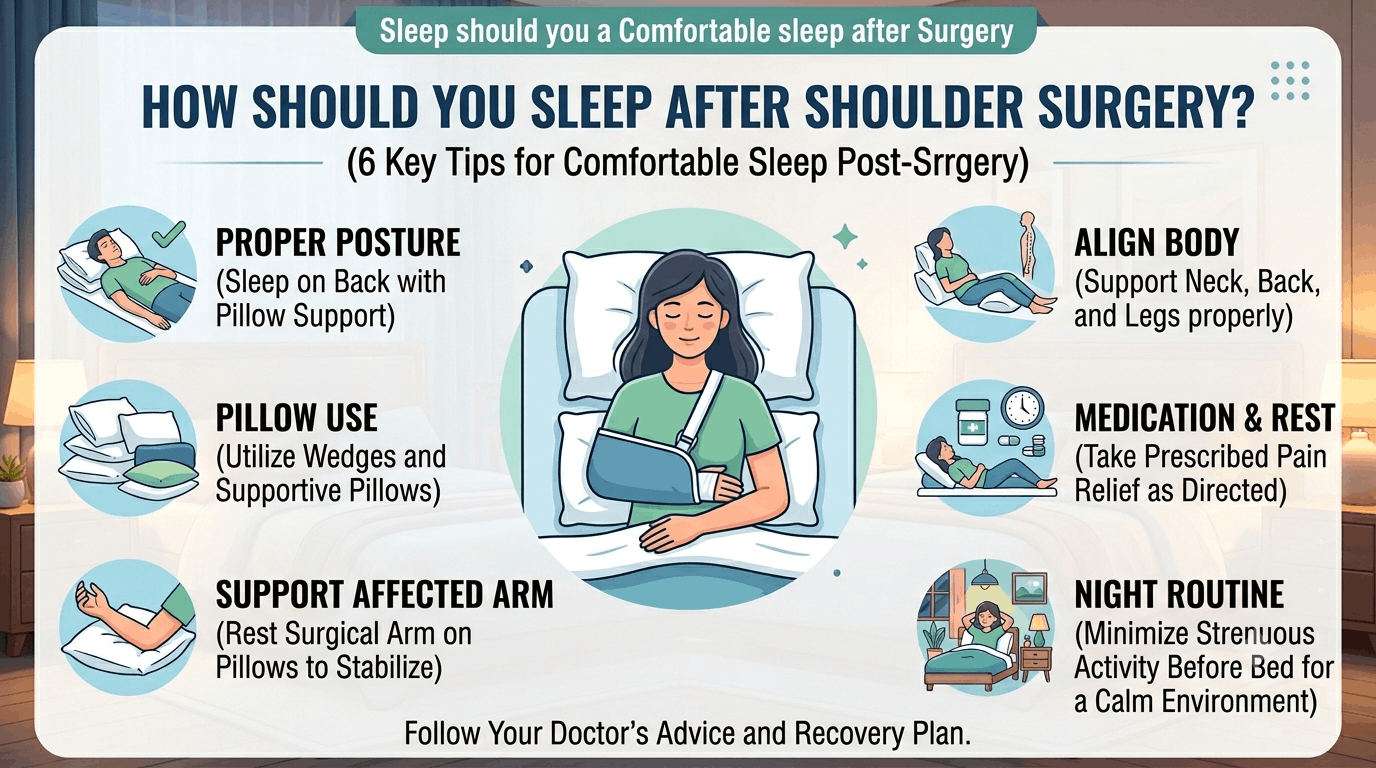
One of the most common challenges patients face after surgery is learning how to sleep after shoulder surgery without causing discomfort or putting stress on the healing shoulder. Sleeping comfortably can feel difficult during the first few weeks, especially if you normally sleep on your side or move frequently during the night.
In general, the safest and most comfortable sleeping positions after shoulder surgery are sleeping on your back in a slightly elevated position or resting in a recliner chair. Using supportive pillows around the surgical arm can reduce strain, improve comfort, and help protect the repair while healing progresses.
At Miami Shoulder Institute, patients undergoing shoulder surgery recovery Miami programs are guided not only through surgical healing but also through practical recovery strategies such as safe sleeping positions, pain management, and rehabilitation planning.
Sleep problems after surgery are extremely common.
Many patients struggle with:
This happens because surgery temporarily causes:
Even small movements during sleep can trigger discomfort during the early stages of recovery.
Quality sleep is one of the most important parts of healing.
During deep sleep, the body works to:
Poor sleep can negatively affect shoulder surgery recovery Miami patients experience by slowing healing and increasing fatigue.
That is why improving sleep comfort should be part of every recovery plan.
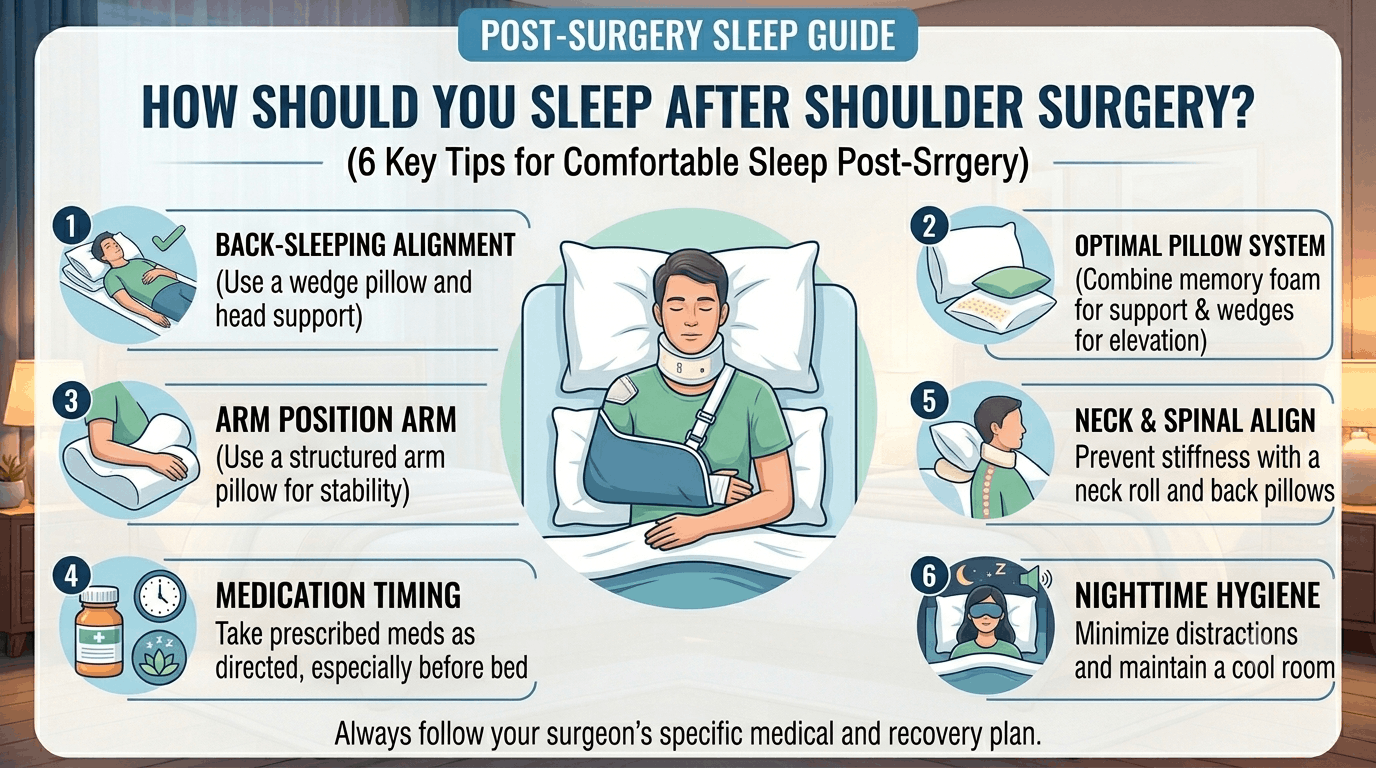
Choosing the right sleeping position can significantly improve comfort.
1. Sleeping on Your Back (Recommended)
For most patients, sleeping on the back is the best option.
Benefits include:
To improve comfort:
This reduces stress on healing tissues.
2. Sleeping in a Recliner
Many patients find recliners extremely helpful during the first few weeks.
Why recliners help:
Patients who struggle sleeping flat often prefer this option.
For many, a recliner becomes the easiest way to sleep after shoulder surgery during early recovery.
3. Elevated Bed Position
If you do not have a recliner, you can recreate a similar setup in bed.
Use:
The goal is to maintain a 30–45 degree incline.
This position often reduces pressure and improves comfort.
Read More – Shoulder Surgery in Miami: Cost, Insurance, and What to Expect
Some positions may increase pain or risk stressing the repair.
Avoid Sleeping on the Surgical Side
This places direct pressure on healing tissues.
It may cause:
Avoid this until your surgeon says otherwise.
Avoid Sleeping on Your Stomach
Stomach sleeping can:
This position is generally discouraged during early recovery.
Be Careful With the Non-Surgical Side
Some patients think sleeping on the opposite side is always safe.
However, if the surgical arm falls forward without support, it may create strain.
If side sleeping is allowed later in recovery:
Pillows can dramatically improve comfort.
Recommended support points:
Under the Elbow
Supports shoulder alignment.
Under the Forearm
Reduces downward pull.
Behind the Back
Prevents rolling.
Under the Knees
May reduce lower back strain when sleeping elevated.
Strategic pillow placement helps create a stable sleeping position.
Many patients must wear a sling during early recovery.
This depends on the procedure.
Common surgeries requiring sling use include:
Wearing the sling helps:
Always follow postoperative instructions from Miami Shoulder Institute.
Many patients notice pain becomes worse at night.
Common reasons include:
Reduced Distractions
During the day, movement and activity distract from discomfort.
At night, pain feels more noticeable.
Stiffness
Remaining still for long periods can increase stiffness.
Inflammation
Postoperative inflammation may accumulate during rest.
Poor Positioning
Improper support can increase strain on the shoulder.
Understanding these causes helps patients manage nighttime discomfort better.
Several strategies may improve sleep comfort.
Ice Before Bed
Cold therapy may help reduce:
Many patients benefit from icing before sleep.
Follow Pain Medication Instructions
Proper timing of prescribed medications can improve nighttime comfort.
Take medications exactly as directed.
Perform Approved Rehab Exercises
Gentle movements recommended during shoulder rehab Miami programs may reduce stiffness before bedtime.
Never perform exercises not approved for your stage of recovery.
Create a Relaxing Sleep Routine
Improved sleep habits can help.
Examples:
Good sleep hygiene supports healing.
Also Read More – Revision Shoulder Surgery in Miami: Fixing Failed Shoulder Procedures
Patients often ask how long sleep disruption lasts.
The answer depends on:
General expectations:
First 1–2 Weeks
Most difficult phase.
Weeks 3–6
Pain often improves gradually.
After 6 Weeks
Many patients sleep more comfortably.
Months Later
Most return to normal sleep patterns.
Complex procedures may require longer adjustment periods.
Different surgeries affect sleep differently.
Often causes significant nighttime discomfort early in recovery due to sling use and tendon healing.
Sleeping may be challenging because stability repairs require careful protection.
Pain often improves significantly after initial recovery, though early sleep disruption is common.
Recovery varies depending on preoperative function and surgical complexity.
Read More – Shoulder Bone Spur Removal Surgery in Miami: Pain Relief Options
A structured shoulder rehab Miami program does more than improve strength.
It helps:
As rehabilitation progresses, sleep often improves as well.
Sleep difficulty alone is common.
However, contact your provider if you experience:
These symptoms may require prompt evaluation.
Avoid these common recovery mistakes:
Removing Sling Too Early
May stress healing tissues.
Sleeping Flat Too Soon
Can worsen pain.
Rolling Onto Surgical Side
Common cause of night discomfort.
Skipping Rehab Exercises
Can increase stiffness.
Following recovery instructions helps reduce complications.
Miami Shoulder Institute specializes exclusively in shoulder care, guiding patients through every stage of treatment—from diagnosis to surgery to rehabilitation.
Whether undergoing rotator cuff repair, instability surgery, labral repair, fracture treatment, or replacement procedures, patients receive individualized care designed to optimize healing, reduce pain, and improve long-term function.
The goal is not just successful surgery—but successful recovery.
1. What is the best position to sleep after shoulder surgery?
Sleeping on your back with the upper body slightly elevated is usually the most comfortable and safest option.
2. Can I sleep on my side after shoulder surgery?
Not during early recovery unless specifically cleared by your surgeon.
3. Is a recliner good after shoulder surgery?
Yes. Many patients find recliners extremely helpful during the first few weeks.
4. Should I wear my sling while sleeping?
Many procedures require sling use during sleep early in recovery. Follow your surgeon’s instructions.
5. Why is shoulder pain worse at night after surgery?
Inflammation, stiffness, poor positioning, and reduced distractions commonly make pain feel worse.
6. How long will sleep be difficult after surgery?
Most patients notice gradual improvement over several weeks, though timelines vary.
7. Can rehab help me sleep better?
Yes. Proper rehabilitation reduces stiffness and improves comfort over time.
Also Read About – Difference Between an Orthopedic Shoulder Specialist and a General Orthopedic Doctor